
Tag: Digital Business Uganda

  • Top 10 Most Impressive Business Websites in Uganda Right Now 

    Top 10 Most Impressive Business Websites in Uganda Right Now 

    Introduction

    Uganda’s digital landscape is changing fast. More businesses are moving online, and having a well-built website is no longer optional, it’s a necessity. From Kampala’s bustling business district to enterprises serving clients across East Africa, companies that invest in strong online presence are pulling ahead of the competition.

    Think of your website as your 24/7 sales representative. It works while you sleep, introduces your brand to strangers, and either wins trust or loses it within seconds. In a market where customers increasingly Google before they buy, the quality of your website can make or break your business.

    In this article, you’ll discover the top 10 most impressive business websites in Uganda right now. You’ll see what they do well, what design lessons you can borrow, and practical steps to level up your own online presence. Whether you’re just starting out or looking to redesign an existing site, this guide will give you real, actionable inspiration.

    1. Why Business Websites Matter in Uganda

    The way customers find and evaluate businesses in Uganda has shifted dramatically. A few years ago, word of mouth was king. Today, people pull out their phones and search online first. If your business doesn’t show up   or shows up with a poor website   you’re likely losing customers before you even know they existed.

    This digital-first customer behavior is not slowing down. With internet penetration growing steadily in Uganda and mobile data becoming more affordable, more people are making purchase decisions based on what they find online. The importance of websites for businesses in Uganda has never been higher.

    A professional website does much more than display contact information. It builds credibility. When a potential client visits your site and finds it polished, easy to navigate, and full of useful information, they trust you more. Trust translates directly into inquiries, sales, and long-term loyalty.

    Beyond trust, websites directly impact your brand visibility. Good Uganda business websites show up in search results, attract organic traffic, and act as a hub for all your digital marketing activities. Social media posts, Google Ads, and email campaigns all drive people back to your website   making it the most valuable digital asset your business owns.

    In short, if you’re serious about growing your business in Uganda today, investing in a strong website isn’t a luxury, it’s a strategic necessity.

    2. What Makes a Great Business Website
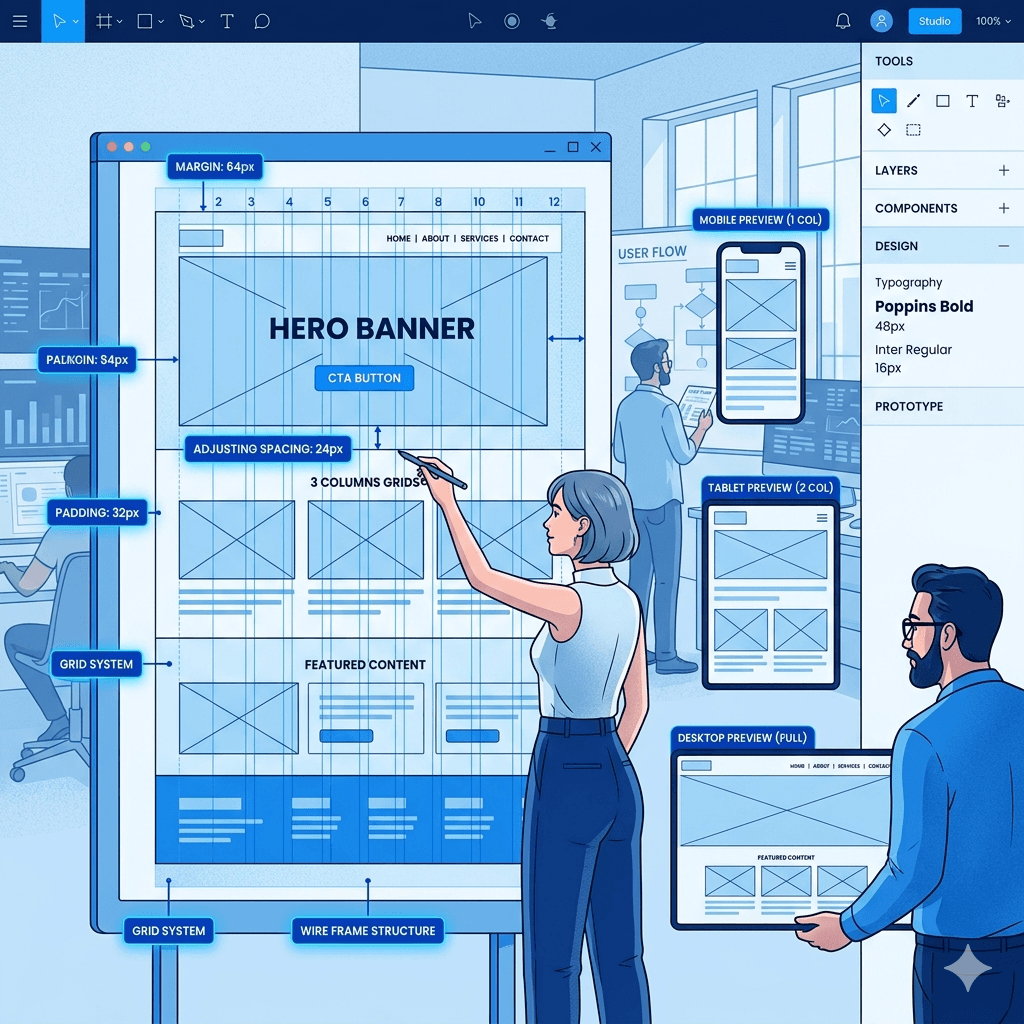
    A highly structured UI design workspace showing a modern website layout being built with grids

    Before we look at the top sites, it helps to understand what separates a great website from a mediocre one. These are the core principles that the best professional websites in Uganda consistently get right.

    Clean and Modern Design: A website that looks cluttered or outdated immediately signals that a business might not be keeping up with the times. Modern web design in Uganda favors clean layouts, plenty of white space, and a clear visual hierarchy. Less is often more. You can learn more about the principles behind effective Web Design and how it applies to local businesses.

    Mobile Responsiveness: Most Ugandans browse the internet on their phones. A website that looks great on desktop but breaks on mobile loses the majority of its potential visitors. Responsive websites in Uganda adapt automatically to any screen size, giving every user a seamless experience.

    Clear Navigation and User Experience: Think of your website like a well-organized shop. Visitors should always know where they are, where to go next, and how to contact you. Good UX design examples on Ugandan websites make it effortless to find information without frustration.

    Strong Branding and Visual Identity: Your website should look like it belongs to your brand. Consistent use of colors, fonts, and imagery creates recognition and professionalism. Corporate branding websites in Uganda that nail this tend to leave lasting impressions on visitors.

    These features of a good business website form the foundation of everything we see in the top sites listed later in this article.

    3. Key Features of High-Performing Ugandan Websites

    Beyond good looks, high-performing Ugandan business websites share a set of technical and strategic features that keep them competitive.

    Fast Loading Speed: Speed matters. Research shows that users abandon websites that take more than three seconds to load. For Ugandan audiences often on mobile data connections, a slow site is a silent killer for business. Optimizing images, using reliable hosting, and minimizing unnecessary code all contribute to speed.

    Local Relevance in Content and Imagery: The best website design companies in Uganda understand the importance of local context. Using imagery that reflects Ugandan people, landscapes, and culture creates an instant connection with local audiences. Generic stock photos from overseas can feel distant and impersonal.

    Integration of Contact Forms and WhatsApp: WhatsApp is deeply embedded in how Ugandans communicate. Adding a WhatsApp chat button to a business website makes it incredibly easy for customers to reach you. Combined with a clean contact form, these tools reduce friction and increase conversions.

    SEO and Search Visibility: A beautiful site that nobody finds is like a signpost in a forest. SEO for business websites in Uganda ensures your site appears when potential customers search for your products or services. Good on-page SEO, fast loading, and quality content all contribute to better rankings. Explore professional SEO Services to see how this works in practice.

    4. Top 10 Most Impressive Business Websites in Uganda
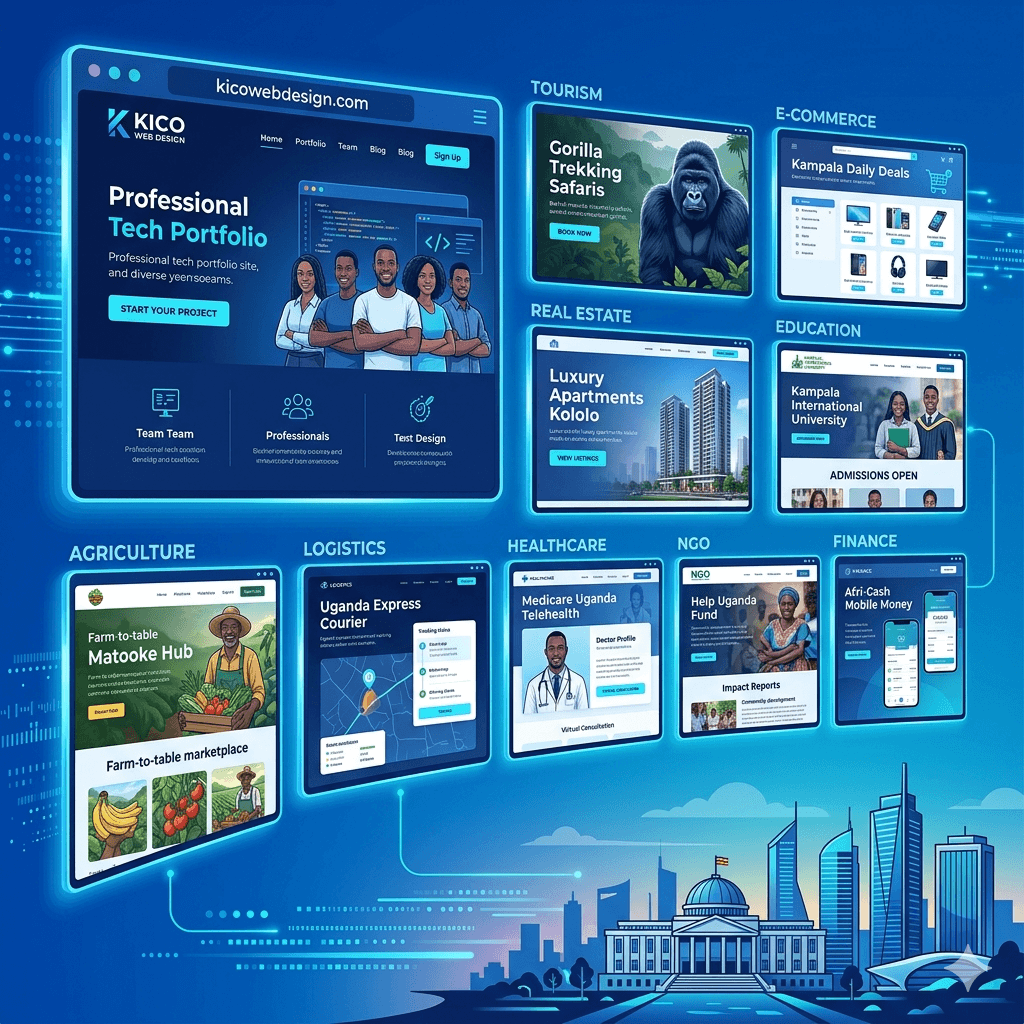
    A digital gallery wall showcasing 10 premium website previews in a sleek grid layout

    Selecting the top 10 best business websites in Uganda wasn’t easy. There are genuinely many impressive sites out there. The selection criteria focused on design quality, mobile usability, brand consistency, loading performance, and overall user experience. These are the Ugandan company websites that consistently stand out from the crowd.

    For real examples of what high-quality local web projects look like, you can browse the Portfolio of completed projects to see Ugandan website design examples in action.

    1. Stanbic Bank Uganda (www.stanbicbank.co.ug)

    Stanbic Bank’s website is one of the most polished corporate websites in Uganda. The design is clean, professional, and instantly communicates stability and trust   exactly what you want from a financial institution. The homepage loads fast, and users can quickly find what they need, whether it’s personal banking, business accounts, or loan products. Navigation menus are logically structured, and the mobile experience is smooth. The consistent use of blue and white reinforces the brand identity across every page.

    2. MTN Uganda (www.mtn.co.ug)

    MTN Uganda’s site is a masterclass in handling a wide range of products and services without overwhelming the user. The bold yellow branding is instantly recognizable, and the layout guides users intuitively toward the information they need   be it mobile money, data bundles, or enterprise services. The site performs well on mobile, which is critical given MTN’s mobile-first customer base. It’s a strong example of how large Ugandan businesses can manage complex digital ecosystems with clarity.

    3. Airtel Uganda (www.airtel.co.ug)

    Airtel Uganda’s website balances visual energy with clear user journeys. The site does a great job of showcasing promotions and products on the homepage without making it feel cluttered. Red is used boldly and effectively throughout, ensuring brand consistency. The site’s structure makes it easy to compare data bundles, find customer service options, and learn about new offerings. It’s a solid example of responsive websites in Uganda done right.

    4. Uganda Airlines (www.ugandaairlines.co.ug)

    Uganda Airlines has invested in a genuinely impressive digital presence. The website feels modern and aspirational, befitting a national carrier. The flight booking interface is user-friendly, and the site’s use of high-quality photography celebrating Ugandan culture and landmarks adds a sense of pride and local identity. The visual storytelling is strong, and the overall experience communicates that Uganda Airlines is serious about its brand on the global stage.

    5. Jumia Uganda (www.jumia.co.ug)

    Jumia Uganda demonstrates what a high-performing e-commerce website looks like in the local market. The site loads quickly despite the large volume of products, and the search and filtering functionality makes finding products effortless. The checkout process is streamlined, and the mobile experience is optimized   essential for a market where most shoppers use phones. Jumia is the benchmark for business website usability best practices in the e-commerce space in Uganda.

    6. Dfcu Bank (www.dfcugroup.com)

    Dfcu Bank’s website strikes a balance between modern aesthetics and professional banking communication. The site uses clean typography, quality imagery, and a logical content structure that makes it easy for both retail and business clients to find what they need. The homepage communicates the bank’s values clearly and quickly. It’s a fine example of how financial institutions in Uganda can use web design to build confidence and trust among their clientele.

    7. Nation Media Group Uganda (www.monitor.co.ug)

    The Daily Monitor website, operated by Nation Media Group, is one of the best media websites in Uganda. It manages the challenge of publishing large volumes of fresh content while keeping the site organized and readable. The design prioritizes readability with good use of fonts and spacing. Navigation by category, trending stories, and featured content make it easy for users to dive into the news they care about. It also performs reasonably well on mobile, a critical metric for a news platform.

    8. Absa Bank Uganda (www.absabank.ug)

    Absa Bank Uganda’s website benefits from the international brand’s global standards while maintaining local relevance. The site is visually clean with a strong color identity   red used confidently without overwhelming the design. Clear calls-to-action guide users toward opening accounts, applying for loans, or accessing digital banking. The UX is well thought out, with a website feature checklist that most business owners could learn from: clear value propositions, easy navigation, and fast performance.

    9. Nile Breweries (www.nilebreweries.com)

    Nile Breweries operates one of the more visually distinctive corporate websites in Uganda. The site uses bold photography, strong brand colors, and a dynamic layout that brings the brand’s energy to life online. The storytelling approach   focusing on brand heritage, sustainability, and community   sets it apart from the typical product-focused corporate site. It’s excellent Uganda web design inspiration for businesses that want their website to communicate more than just what they sell.

    10. Uganda Investment Authority (www.ugandainvest.go.ug)

    The Uganda Investment Authority website represents one of the strongest examples of a government institution using its digital presence effectively. The site is well-organized, informative, and clearly aimed at attracting both local and foreign investors. Resources, reports, and investment guides are well-presented and accessible. The professional, data-rich design reflects the seriousness and ambition of Uganda’s investment promotion efforts. It’s a reminder that even institutional websites can lead with strong design and UX principles.

    5. Design Lessons from These Websites

    A visual breakdown of best design practices such as spacing, typography, color harmony

    Looking across all ten of these top Ugandan company websites, clear patterns emerge. These are not coincidences, they are deliberate design decisions that drive results.

    Common Design Patterns Across Top Sites: Every single one of these sites is mobile-responsive. They all load within acceptable time limits. They use consistent color palettes tied to their brand identity. And they all have clear, prominent calls-to-action   buttons or links that tell users exactly what to do next.

    What Businesses Can Replicate Easily:

    • Use two to three brand colors consistently across every page.

    • Place your most important action (contact, buy, book) prominently above the fold.

    • Use quality photography that reflects your actual customers and environment.

    • Keep navigation menus to five to seven items maximum to avoid overwhelming visitors.

    Mistakes to Avoid: The most common mistakes on Ugandan business websites include using too many fonts (stick to two), neglecting mobile optimization, ignoring page speed, and burying contact information deep in the site. A website without a clear call-to-action is like a shop with no checkout counter. Visitors simply leave without doing anything.

    6. How to Build a High-Quality Business Website

    Understanding how to design a business website in Uganda doesn’t have to feel overwhelming. Breaking it into clear steps makes the entire process manageable.

    Step 1: Define Goals and Target Audience

    Before a single design decision is made, get clarity on what your website needs to achieve. Is it generating leads? Selling products? Building brand awareness? Who are your ideal customers and what do they need when they land on your site? Answering these questions shapes every subsequent decision.

    Step 2: Choose a Platform or Developer

    For small business websites in Uganda with tight budgets, platforms like WordPress offer great flexibility and affordability. For more complex projects, working with a professional local web developer ensures you get a site tailored precisely to your needs. The right choice depends on your budget, technical comfort, and how much customization you require.

    Step 3: Focus on UX and Mobile Design

    Given that most of your visitors will be on mobile, design for mobile first. Prioritize clean layouts, large tap targets, and fast-loading pages. The user journey from landing page to contact or purchase should be intuitive and friction-free.

    Step 4: Optimize for SEO and Speed

    Building SEO into your website from the start is far easier than retrofitting it later. Use descriptive page titles, write quality content, optimize images, and ensure your site loads quickly. For a deeper dive into this, the SEO Guide for small businesses covers every important step in clear, practical detail.

    Step 5: Test and Improve Continuously

    Launching your site is not the finish line, it’s the starting gun. Use tools like Google Analytics to see how visitors behave, which pages perform well, and where people drop off. Regular updates, fresh content, and periodic design refreshes keep your site relevant and competitive.

    7. Cost of Building a Business Website in Uganda
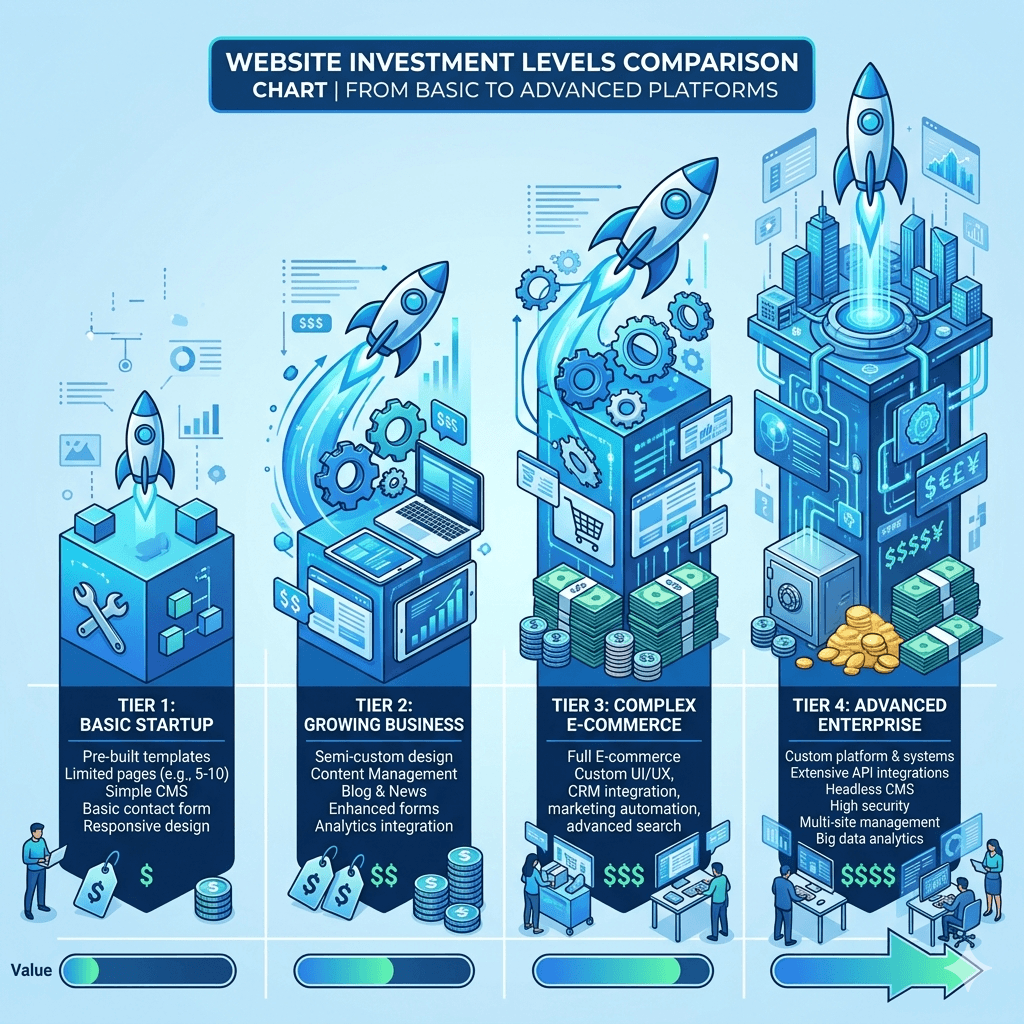
    A visual comparison chart showing different website investment levels

    One of the most common questions entrepreneurs ask is: how much does affordable website design in Uganda actually cost? The answer depends on several factors.

    Factors Affecting Pricing: The complexity of the design, the number of pages, whether e-commerce functionality is needed, and the level of ongoing support all affect the final cost. A simple brochure website for a small business costs significantly less than a full e-commerce platform or a custom corporate site.

    Basic vs Advanced Website Costs: In Uganda, a basic professional website typically ranges from UGX 1,500,000 to UGX 4,000,000. A more advanced site with custom design, SEO setup, and multiple integrations can range from UGX 5,000,000 upwards, depending on the scope and agency.

    The Value of Investing in Quality: Cutting corners on your website often costs more in the long run. A poorly built site requires constant fixes, loads slowly, and fails to convert visitors. Investing in quality design from the start delivers better returns through increased trust, more leads, and better search visibility.

    8. Future Trends in Ugandan Web Design

    Modern web design trends in Uganda are evolving quickly. Staying aware of what’s coming helps businesses plan smarter investments in their digital presence.

    Rise of Mobile-First Design: Mobile-first is no longer a trend, it’s the baseline standard. As smartphone penetration continues to grow in Uganda, websites that aren’t optimized for mobile will fall further behind. Expect even more emphasis on lightweight, fast-loading designs built for low-bandwidth environments.

    Increased Use of AI and Automation: AI-powered chatbots, automated customer service tools, and smart content personalization are beginning to appear on forward-thinking Ugandan business websites. These tools reduce workload while improving the customer experience, a powerful combination for growing businesses.

    Growing Importance of UX and Personalization: Users increasingly expect websites to feel tailored to them. Personalized content, location-aware features, and adaptive user journeys will become more common. Combined with a strong Digital Marketing strategy, UX-focused websites will be at the center of business growth in Uganda’s digital economy.

    9. Conclusion

    Uganda’s digital business landscape is maturing fast, and the websites leading the way share clear, actionable qualities. They’re clean, fast, mobile-friendly, and built with the user’s journey in mind. Whether it’s a national bank, a telecom giant, or an e-commerce platform, the best Ugandan company websites all invest seriously in their online presence.

    The good news is that you don’t need a massive budget to build something impressive. You need clarity of purpose, attention to design fundamentals, and a commitment to continuous improvement. Start by defining what you want your website to achieve. Then build it well, optimize it for search, and keep improving it over time.

    Your website is often the first handshake between your business and a potential customer. Make it count. The examples in this article prove that impressive, effective business websites in Uganda are absolutely achievable   and the businesses that invest in them are reaping real rewards.

    Frequently Asked Questions

    What makes a business website successful in Uganda?

    A successful business website in Uganda combines fast loading speed, mobile responsiveness, clear navigation, strong branding, and locally relevant content. It should also have a clear call-to-action and be optimized for search engines so potential customers can find it.

    How much does it cost to build a website locally?

    Website costs in Uganda vary depending on complexity. A basic professional website typically starts from around UGX 1,500,000. More advanced websites with custom design, e-commerce functionality, or integrations can cost UGX 5,000,000 or more.

    Do small businesses really need a website?

    Absolutely. Even a simple, well-built small business website in Uganda helps you reach more customers, build credibility, and compete with larger brands. Many customers check online before making purchasing decisions, and not having a website means missing out on those opportunities.

    How long does it take to build a website?

    A basic website typically takes two to four weeks to complete. A more complex website with custom design, multiple integrations, or e-commerce functionality can take six to twelve weeks. The timeline depends on how quickly content and feedback are provided.

    What platform is best for beginners?

    WordPress is widely considered the most beginner-friendly platform for building business websites in Uganda. It’s flexible, widely supported, and has thousands of themes and plugins. Wix and Squarespace are also options for very simple sites, though they offer less flexibility as your needs grow.

    How can I improve my website’s SEO?

    Start with the basics: use clear page titles and descriptions, write quality content that answers what your customers search for, ensure your site loads fast, and build quality backlinks from other websites. Consistent publishing of helpful content and technical optimization both contribute significantly to better rankings.

    What are common mistakes Ugandan businesses make online?

    The most common mistakes include neglecting mobile optimization, using low-quality or irrelevant stock photos, failing to update content regularly, hiding contact information, and ignoring site speed. Many businesses also forget to set up Google Analytics, which means they have no data to make informed improvements.

    Is mobile optimization important for local websites?

    It’s absolutely critical. The majority of internet users in Uganda browse on mobile devices. A website that doesn’t display or function properly on a smartphone will lose most of its visitors immediately. Mobile optimization is not optional, it’s one of the most important investments you can make.

    Can I update my website myself after it is built?

    Yes, especially if it’s built on a platform like WordPress. With basic training, most business owners can update text, images, and blog posts themselves. For more complex changes like new page layouts or functionality additions, it’s best to consult your developer.

    How do I attract customers through my website?

    Attracting customers requires a combination of SEO to rank in search results, quality content that answers their questions, and clear calls-to-action that guide them toward contacting you or making a purchase. Integrating tools like WhatsApp chat buttons and contact forms makes it easy for visitors to take the next step. Consistently sharing your website on social media and through digital advertising also drives traffic over time.

  • The Future of E-Commerce in Uganda: What Developers and Entrepreneurs Need to Know

    The Future of E-Commerce in Uganda: What Developers and Entrepreneurs Need to Know

    If you’ve been thinking about starting an online business in Uganda, you’re not alone. Right now, we’re standing at the edge of something big. The way Ugandans shop, sell, and do business online is changing faster than most people realize. Mobile phones are in nearly every pocket, mobile money transactions happen millions of times a day, and young entrepreneurs are finding creative ways to reach customers without ever opening a physical store.

    But here’s the thing: the future of won’t look like a copy-paste version of what’s happening in Europe or America. It’ll be shaped by our unique challenges, our innovative solutions, and the technologies we choose to adopt today. Whether you’re a developer building the next big platform or an entrepreneur ready to launch your first online store, understanding where e-commerce is headed will help you make smarter decisions now. This article breaks down the trends, technologies, and practical steps you need to know to succeed in Uganda’s growing digital marketplace.

    What E-Commerce Looks Like in Uganda Today

    Let’s be honest: e-commerce in Uganda is still finding its feet, but it’s moving in the right direction. We’re not at the level where everyone orders everything online, but we’re way past the days when people thought buying things on the internet was pure magic or risky business.

    Today, you’ll find a mix of local online stores selling everything from electronics to fashion, farm produce to handmade crafts. Platforms like Jumia and SafeBoda have shown Ugandans that ordering online can actually work. Social media has become an unexpected marketplace, with thousands of sellers running entire businesses through Instagram, Facebook, and WhatsApp. It’s not uncommon to see someone build a thriving business just by posting products on their Facebook page and coordinating deliveries through phone calls.

    Most transactions still involve mobile money, with services like MTN Mobile Money and Airtel Money acting as the backbone of digital payments. Credit cards are rare, and trust remains a major factor in whether someone will click “buy now” or walk to a physical shop instead.

    The infrastructure for a proper e-commerce store is improving, with more developers and agencies offering tailored solutions for Ugandan businesses. But compared to mature markets, we’re still in the early adoption phase, which actually presents a massive opportunity for those willing to move now.

    Why the Future of E-Commerce Matters for Ugandan Entrepreneurs

    Think of e-commerce as a door that’s slowly opening. The entrepreneurs who walk through it early won’t just survive; they’ll be the ones setting the rules for everyone else who follows later.

    The future of e-commerce in Uganda matters because it’s directly tied to how competitive your business will be in five or ten years. As internet access spreads to more rural areas and smartphone prices continue to drop, the number of potential online customers will explode. If you’re not building your online presence now, you’ll be playing catch-up when your competitors already have loyal customer bases and established systems.

    For developers, this shift means opportunity. Businesses are looking for people who can build platforms that actually work in the Ugandan context sites that load quickly on slow connections, integrate seamlessly with mobile money, and don’t require a computer science degree to operate. The digital commerce in Uganda is hungry for solutions that fit our reality, not imported templates that assume everyone has fast Wi-Fi and credit cards.

    Entrepreneurs who understand e-commerce trends in Uganda and position themselves early will benefit from lower competition, stronger customer relationships, and the ability to scale without the physical limitations of brick-and-mortar stores. The question isn’t whether e-commerce will grow here; it’s whether you’ll be part of that growth or watching from the sidelines.

    Key Trends Shaping the Future of E-Commerce in Uganda

    Multiple Ugandan consumers shopping on mobile phones with floating icons

    The e-commerce market in Uganda isn’t developing in a vacuum. Several powerful trends are converging right now, and they’re changing how people buy and sell online. Let’s break down the most important ones.

    Mobile-First Shopping Experiences

    If your online store isn’t built for mobile phones first, you’re already behind. In Uganda, most people access the internet exclusively through their smartphones. Desktop computers are luxuries that most small businesses and individual shoppers don’t have. This means mobile commerce in Uganda isn’t just a trend; it’s the foundation of everything.

    The future belongs to websites and apps that load quickly on 3G connections, display perfectly on small screens, and allow customers to browse, select, and pay without frustration. Think of mobile-first design as building a shop where the door is wide enough for your customers to actually walk through. If your site takes forever to load or looks broken on a phone, you’ve essentially locked your customers out.

    Social Commerce and Influencer-Led Sales

    Walk through Kampala and ask young entrepreneurs where they sell their products. Many will point to their Instagram or Facebook page before mentioning any website. Social commerce in Uganda has exploded because it meets people where they already spend their time.

    Customers trust recommendations from influencers and friends more than traditional advertising. A well-timed post from a popular local figure can drive more sales than a month of banner ads. This trend is only getting stronger, with platforms like TikTok and Instagram introducing built-in shopping features that make it easier to sell directly through social media.

    The line between social selling and traditional e-commerce is blurring, and smart entrepreneurs are using both strategies together to maximize their reach.

    Digital Payments and Mobile Money Integration

    Cash on delivery might still be common, but digital payments in Uganda are becoming more trusted and widespread. Mobile money has been the game-changer. Services like MTN Mobile Money and Airtel Money have turned phones into digital wallets, making it possible for people without bank accounts to participate in online commerce.

    The future will see even tighter integration between e-commerce platforms and mobile money systems. Payment gateways that support multiple local options, instant confirmations, and low transaction fees will become standard. This shift reduces friction, builds trust, and makes online transactions feel as natural as handing over cash in person.

    Artificial Intelligence in Online Selling

    AI might sound like something from science fiction, but it’s already quietly working behind the scenes in e-commerce. Think of chatbots that answer customer questions instantly, recommendation engines that suggest products based on browsing history, or pricing tools that adjust automatically based on demand.

    In Uganda, AI in e-commerce is still in its infancy, but early adopters are using it to compete with larger businesses. Small online stores can now offer 24/7 customer support through AI-powered chat, analyze sales data to predict which products will sell best, and personalize shopping experiences without hiring large teams. As these tools become more affordable and accessible, they’ll level the playing field for entrepreneurs who are willing to learn and experiment.

    How Emerging Technologies Will Transform Online Businesses

    Technology isn’t just changing what’s possible in e-commerce; it’s rewriting the entire playbook. Here are the tools and innovations that will separate thriving online businesses from struggling ones in the coming years.

    Using AI for Personalization and Customer Support

    Imagine walking into a store where the shopkeeper remembers your name, knows what you bought last time, and suggests new products based on your taste. That’s what AI-powered personalization does online. It tracks customer behavior, identifies patterns, and creates unique shopping experiences for each visitor.

    AI-powered chatbots are becoming smarter and more conversational. They can handle common questions like “Do you deliver to Mbarara?” or “What sizes do you have?” without needing a human on standby. This means customers get instant answers, and business owners save time and money. For small businesses in Uganda, this technology is becoming affordable through platforms that offer chatbot services specifically designed for African markets. The key is choosing tools that understand local context and can handle conversations in the way Ugandans actually communicate.

    Augmented Reality for Product Visualization

    Augmented reality (AR) might sound fancy, but it’s basically letting customers see how products will look in their space or on their body before they buy. Think of trying on sunglasses virtually through your phone camera or placing a digital version of a sofa in your living room to see if it fits.

    While AR shopping experiences are still rare in Uganda, they’re coming. International e-commerce platforms are already using this technology to reduce returns and increase customer confidence. Local entrepreneurs and developers who understand how to implement AR features will have a competitive edge, especially in industries like furniture, fashion, and home decor where visualizing the product makes a huge difference in the buying decision.

    Automation Tools for Order and Inventory Management

    Running an online business manually is like trying to fill a swimming pool with a bucket. It works, but you’ll exhaust yourself before you get anywhere. Automation in e-commerce handles repetitive tasks like updating inventory, processing orders, sending confirmation emails, and tracking shipments without constant human intervention.

    In Uganda, automation tools are becoming more accessible to small businesses. You don’t need to be a tech genius to set up systems that automatically notify customers when their order ships or alert you when stock runs low. These tools free up time for entrepreneurs to focus on growth, marketing, and customer relationships rather than drowning in administrative tasks.

    Data Analytics for Smarter Business Decisions

    Here’s a simple truth: you can’t improve what you don’t measure. Data analytics tools help you understand which products are selling, where your customers are coming from, what time of day they shop, and which marketing campaigns actually work.

    Instead of guessing, you make decisions based on real information. Analytics platforms can show you that most of your sales happen on Friday evenings, or that customers from Kampala prefer different products than those from Gulu. Armed with this knowledge, you can adjust your inventory, tailor your marketing, and optimize your website for better results. The best part? Many analytics tools offer free versions that are powerful enough for small and medium-sized businesses to start making data-driven decisions today.

    Benefits of Adopting E-Commerce Early in Uganda

    Entrepreneurs celebrating growing online sales with packages and graphs rising around them

    Moving into e-commerce now, while the market is still developing, is like claiming land before everyone else realizes it’s valuable. Here’s what early adopters stand to gain.

    First, you’ll build customer loyalty before the market gets crowded. When you’re one of the few reliable online stores in your niche, customers remember you. They come back, they recommend you to friends, and they trust you because you were there when options were limited. That trust is harder to earn once competition intensifies.

    Second, you’ll learn faster and cheaper. Mistakes in a developing market cost less because stakes are lower and customers are more forgiving of hiccups. You can test different approaches, figure out what works in the Ugandan context, and refine your processes before the market matures and customer expectations skyrocket.

    Third, you’ll access opportunities that won’t exist later. Early e-commerce adopters in Uganda are getting attention from investors, partnerships with tech platforms, and media coverage simply because they’re pioneers. Being part of the early wave of online business in Uganda opens doors that might be closed or more competitive in a few years.

    Finally, you’ll build infrastructure and systems that become harder to implement later. Setting up proper inventory management, reliable delivery networks, and customer databases is easier when your business is growing gradually than when you’re suddenly trying to scale during a rush of demand. Starting now gives you the runway to build solid foundations.

    Challenges Facing E-Commerce Growth in Uganda

    Let’s not sugarcoat it: building an online business in Uganda comes with real obstacles. Understanding these challenges is the first step to overcoming them.

    Internet Access and Infrastructure Gaps

    Uganda’s internet penetration is growing, but it’s not universal yet. Many rural areas still lack reliable connectivity, and even in cities, slow internet speeds and frequent data outages are common. For customers, this means websites that don’t load quickly will simply be abandoned. For businesses, it means you can’t assume everyone has stable access to browse your store.

    The infrastructure for logistics is also uneven. While Kampala and major towns have decent road networks, reaching customers in remote areas can be difficult and expensive. These gaps mean e-commerce platforms need to be designed with offline-first thinking, where basic functions can work even with intermittent connectivity, and delivery strategies need to be creative and flexible.

    Trust, Fraud, and Online Security Concerns

    Trust is currency in e-commerce, and in Uganda, it’s still being built. Many people have heard stories of fake online sellers who take money and disappear, or customers who receive products that don’t match what was advertised. This history makes new customers hesitant to hand over their money to strangers on the internet.

    Security concerns around online transactions are real. People worry about whether their payment information is safe, whether the website will actually deliver, and whether they have any recourse if something goes wrong. Building trust requires transparency, reliable service, clear communication, and visible social proof like reviews and testimonials from real customers.

    Logistics and Last-Mile Delivery Issues

    Getting products from your warehouse to the customer’s door is one of the biggest challenges of e-commerce in Uganda. Unlike countries with established courier networks, Uganda’s delivery infrastructure is still developing. Many areas don’t have street names or formal addresses, which makes finding customers’ locations a challenge.

    Delivery costs can be high, especially for businesses trying to reach rural customers. Coordinating multiple deliveries across different regions becomes complicated and expensive. Some entrepreneurs are getting creative by partnering with existing transport networks like boda-boda riders or using pickup points in local shops, but last-mile delivery remains a puzzle that requires constant problem-solving.

    Skills and Technical Knowledge Gaps

    Many entrepreneurs want to start an online business in Uganda but don’t know where to begin. They lack technical skills to build websites, integrate payment systems, or manage digital marketing campaigns. Developers might have coding skills but lack understanding of business needs and local market realities.

    This knowledge gap creates barriers to entry and slows growth. Training and accessible resources are improving, but there’s still a shortage of people who can bridge the technical and business sides of e-commerce. Entrepreneurs who invest in learning or partnering with skilled developers and agencies will have a significant advantage over those who try to figure everything out alone.

    How Entrepreneurs Can Prepare for the Future of E-Commerce

    Multiple entrepreneurs collaboratively planning on a futuristic digital interface

    The good news is that you don’t need to be a tech expert or have a huge budget to start preparing for the future of digital commerce. Here are practical steps you can take today.

    Choosing the Right E-Commerce Platform

    Your platform is the foundation of your online business, so this decision matters. Should you build a custom website, use a ready-made platform like Shopify or WooCommerce, or sell exclusively through social media? The answer depends on your budget, technical skills, and business goals.

    For most Ugandan entrepreneurs, starting with established selling platforms makes sense. They offer templates, payment integrations, and support without requiring you to code from scratch. As your business grows, you can invest in custom solutions that give you more control and unique features. The key is choosing a platform that integrates well with mobile money, works on slow internet connections, and doesn’t lock you into expensive long-term contracts before you’ve proven your business model.

    Building Mobile-Friendly Online Stores

    Your website needs to work perfectly on phones, period. This means fast loading times, large buttons that are easy to tap, simple navigation, and checkout processes that don’t require filling out twenty fields. Think like a customer using a smartphone with limited data: every extra step or unnecessary image is a reason to leave without buying.

    Test your site on actual phones, not just desktop browsers in mobile view. Ask friends and family to try purchasing something and watch where they struggle. Mobile-friendly isn’t just about responsive design; it’s about creating an experience that feels natural for people who shop with one hand while riding a boda-boda or sitting in a taxi.

    Leveraging Social Media for Sales

    Don’t wait until you have a perfect website to start selling. Use social media platforms where your customers already spend time. Create engaging content, showcase your products with clear photos and videos, and make it easy for people to ask questions and place orders through direct messages.

    Social commerce in Uganda works because it’s informal, personal, and convenient. You can build relationships with customers, respond to their concerns in real-time, and create a community around your brand. Combine this with a simple website or online catalog, and you’ve got a powerful hybrid approach that meets customers wherever they feel most comfortable buying.

    Partnering with Reliable Payment and Delivery Providers

    Your payment and delivery systems can make or break your business. Customers won’t buy if they can’t pay easily, and they won’t come back if deliveries are unreliable. Research which mobile money services your target customers prefer, and make sure your payment gateway supports them with low transaction fees.

    For deliveries, start local and test different options. Maybe you use a mix of courier companies for Kampala deliveries and work with boda-boda networks for specific neighborhoods. Build relationships with delivery partners who are reliable and communicative. As you grow, you can negotiate better rates and expand your delivery network to reach more areas efficiently.

    What Developers Need to Know About Building E-Commerce Solutions

    If you’re a developer looking to build platforms for Uganda’s growing e-commerce market, understanding local context is just as important as knowing how to code. Here’s what you need to keep in mind.

    Designing for Low Bandwidth and Mobile Users

    Forget designing for fast fiber connections and large monitors. Your users are on phones with 3G or patchy 4G, often with limited data bundles. This means aggressive optimization is not optional. Compress images without losing quality, minimize JavaScript, use lazy loading, and make sure core functions work even when the connection is slow.

    Progressive web apps (PWAs) are especially useful in this context because they can cache content and work partially offline. Design interfaces that clearly indicate when something is loading and give users feedback so they don’t assume the site is broken when things take a few extra seconds. Small technical decisions around page weight and loading strategies directly impact whether customers can actually use the site you build.

    Integrating Mobile Money and Local Payment APIs

    If your platform doesn’t accept mobile money, you’re cutting off the vast majority of potential customers. Learn how to integrate APIs for MTN Mobile Money, Airtel Money, and other local payment providers. Understand the transaction flows, webhook systems, and reconciliation processes.

    Many international payment gateways charge high fees or don’t support mobile money at all, so look for local or Africa-focused solutions that are built with these payment methods in mind. Make sure the checkout process is simple and clearly shows customers which payment methods are available. Testing payment flows thoroughly is critical because broken payments mean lost revenue and frustrated customers.

    Building Scalable and Secure Platforms

    Security isn’t something you add later; it’s baked into your e-commerce solutions from day one. Implement HTTPS, secure customer data properly, follow best practices for handling payment information, and regularly update dependencies to patch vulnerabilities.

    Scalability matters too. A platform that works perfectly for 50 daily visitors might crash when traffic hits 500. Design database structures, server architectures, and caching strategies that can handle growth. Cloud hosting options like AWS, Google Cloud, or African providers like Seacom give you flexibility to scale up when needed without massive upfront infrastructure costs. The goal is to build systems that grow with the business rather than becoming bottlenecks.

    Future Opportunities in Uganda’s E-Commerce Ecosystem

    Entrepreneurs exploring emerging niches with futuristic digital marketplaces

    The future of e-commerce in Uganda isn’t just about businesses selling products online. It’s an entire ecosystem of opportunities that entrepreneurs and developers can tap into.

    There’s growing demand for logistics and fulfillment services. Someone needs to solve the last-mile delivery problem, manage warehouses, and coordinate shipments across the country. Startups that specialize in these areas will be essential partners for online businesses that want to scale without building their own delivery networks.

    Payment solutions tailored to e-commerce are another opportunity. While mobile money is popular, there’s room for innovation in payment gateways, credit systems for online purchases, and tools that make reconciliation and accounting easier for small businesses. Developers who understand both the technical and business sides of payments will find plenty of clients.

    Content creation and digital marketing services are in high demand. Every online business needs product photography, copywriting, social media management, and advertising campaigns. Freelancers and agencies that specialize in e-commerce marketing can build sustainable businesses by helping others succeed online.

    Niche marketplaces are opportunities waiting to be seized. Instead of competing with large general platforms, consider building specialized online stores for specific industries like local crafts, agricultural products, or professional services. Focusing on underserved niches lets you become the go-to platform for that category and build deep expertise.

    Training and consulting services for entrepreneurs who want to start online businesses are also valuable. Many people have the drive but lack the knowledge. If you’ve figured out how to succeed in e-commerce, teaching others through courses, workshops, or consulting can be both profitable and impactful.

    Frequently Asked Questions

    Is e-commerce profitable in Uganda today?

    Yes, e-commerce can be profitable in Uganda, but it requires smart planning and realistic expectations. Profitability depends on choosing the right products, managing costs carefully, and building trust with customers. Businesses that succeed focus on niches where they can compete, keep delivery costs reasonable, and provide reliable service. Early movers have an advantage because competition is still relatively low and customer loyalty is easier to build.

    What products sell best online in Uganda?

    Electronics, fashion, beauty products, and home goods are popular categories for online selling in Uganda. Digital products like airtime, subscriptions, and online courses also perform well because they have no delivery costs. Niche products like locally made crafts, organic foods, and specialty items can be very profitable if marketed to the right audience. The key is finding products that people trust buying online and that can be delivered reliably.

    Do I need technical skills to start an online business?

    Not necessarily. Many successful online businesses in Uganda are run by people with little to no technical background. You can use ready-made platforms, hire freelancers or agencies for technical work, and focus on marketing and customer service. However, basic digital literacy helps you manage your business more effectively and make informed decisions about tools and platforms. If you’re willing to learn, there are plenty of affordable resources and tutorials available.

    Which payment methods should I support for Ugandan customers?

    At minimum, support mobile money services like MTN Mobile Money and Airtel Money, as these are the most widely used digital payment methods in Uganda. Many customers still prefer cash on delivery, so offering that option can increase sales, though it requires careful management. If possible, include bank transfers and payment cards for customers who prefer those methods. The more payment options you offer, the fewer barriers customers face when trying to buy from you.

    How can small businesses compete with large online platforms?

    Small businesses can compete by focusing on personalized service, niche products, and strong customer relationships. Large platforms often lack the personal touch and flexibility that smaller businesses can provide. Build a loyal community around your brand, respond quickly to customer inquiries, and create unique shopping experiences that big platforms can’t replicate. Specializing in a specific category or serving a particular local area also lets you compete without trying to be everything to everyone.

    What role does mobile money play in e-commerce growth?

    Mobile money is absolutely central to e-commerce growth in Africa and Uganda specifically. It’s the primary way most people make digital payments because bank accounts and credit cards are not widespread. Mobile money makes online transactions accessible to millions of people who would otherwise be excluded from e-commerce. As mobile money services improve with lower fees, better integration, and increased trust, they’ll continue driving e-commerce adoption across the country.

    How secure are online transactions in Uganda?

    Security varies depending on the platform and payment provider. Reputable e-commerce platforms and established payment gateways use encryption and follow international security standards to protect customer data. However, customers should still be cautious, verify they’re on legitimate websites, and avoid sharing payment information through unsecured channels. For businesses, investing in proper security measures and being transparent about how customer data is protected helps build trust and reduce fraud risks.

    The future of e-commerce in Uganda is being written right now by entrepreneurs and developers who see the opportunity and take action. The trends are clear: mobile is king, social commerce is booming, digital payments are spreading, and emerging technologies are becoming accessible to small businesses. The challenges are real, from infrastructure gaps to trust issues, but they’re also solvable with creativity and persistence. Whether you’re building your first online store or developing platforms for others, the time to move is now. The question isn’t whether e-commerce will transform business in Uganda; it’s whether you’ll be part of that transformation or watch it happen from the sidelines.