
Tag: Uganda web design

  • Top 10 Most Impressive Business Websites in Uganda Right Now 

    Top 10 Most Impressive Business Websites in Uganda Right Now 

    Introduction

    Uganda’s digital landscape is changing fast. More businesses are moving online, and having a well-built website is no longer optional, it’s a necessity. From Kampala’s bustling business district to enterprises serving clients across East Africa, companies that invest in strong online presence are pulling ahead of the competition.

    Think of your website as your 24/7 sales representative. It works while you sleep, introduces your brand to strangers, and either wins trust or loses it within seconds. In a market where customers increasingly Google before they buy, the quality of your website can make or break your business.

    In this article, you’ll discover the top 10 most impressive business websites in Uganda right now. You’ll see what they do well, what design lessons you can borrow, and practical steps to level up your own online presence. Whether you’re just starting out or looking to redesign an existing site, this guide will give you real, actionable inspiration.

    1. Why Business Websites Matter in Uganda

    The way customers find and evaluate businesses in Uganda has shifted dramatically. A few years ago, word of mouth was king. Today, people pull out their phones and search online first. If your business doesn’t show up   or shows up with a poor website   you’re likely losing customers before you even know they existed.

    This digital-first customer behavior is not slowing down. With internet penetration growing steadily in Uganda and mobile data becoming more affordable, more people are making purchase decisions based on what they find online. The importance of websites for businesses in Uganda has never been higher.

    A professional website does much more than display contact information. It builds credibility. When a potential client visits your site and finds it polished, easy to navigate, and full of useful information, they trust you more. Trust translates directly into inquiries, sales, and long-term loyalty.

    Beyond trust, websites directly impact your brand visibility. Good Uganda business websites show up in search results, attract organic traffic, and act as a hub for all your digital marketing activities. Social media posts, Google Ads, and email campaigns all drive people back to your website   making it the most valuable digital asset your business owns.

    In short, if you’re serious about growing your business in Uganda today, investing in a strong website isn’t a luxury, it’s a strategic necessity.

    2. What Makes a Great Business Website
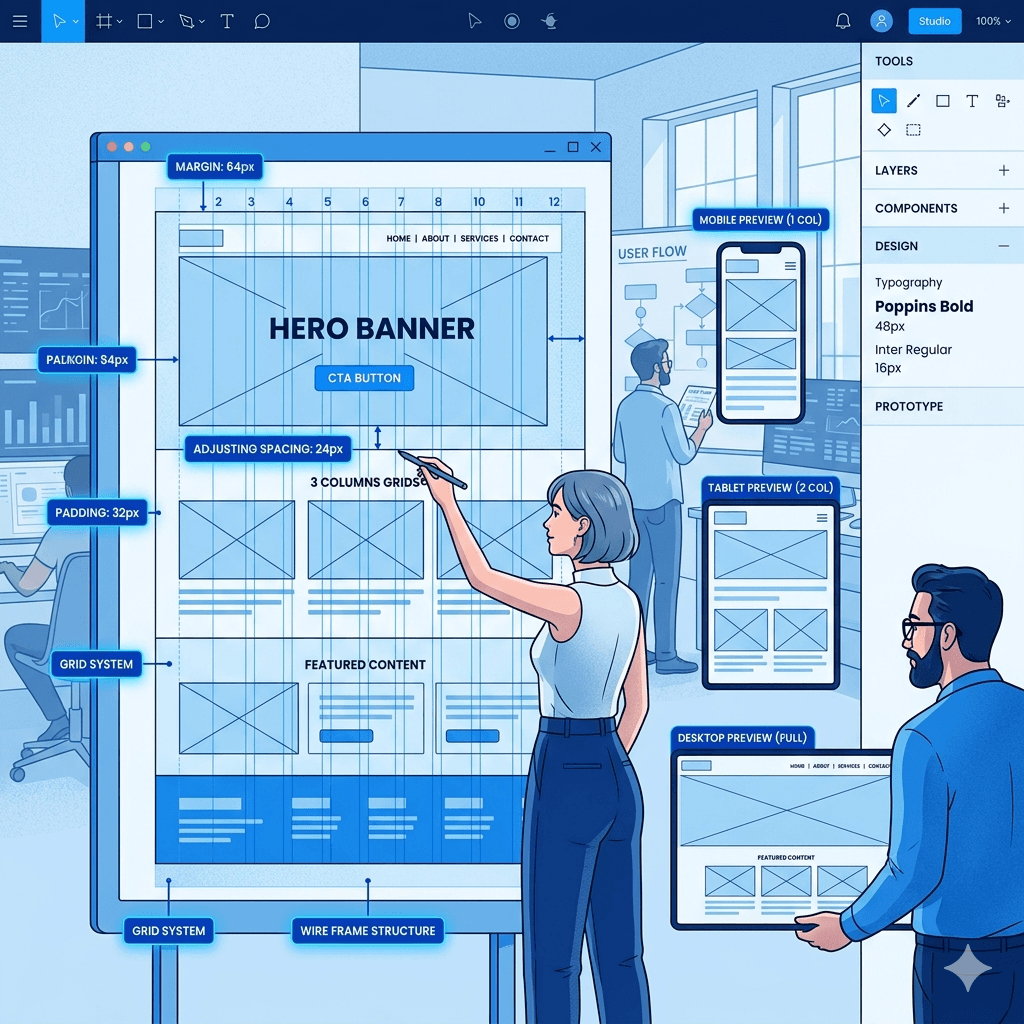
    A highly structured UI design workspace showing a modern website layout being built with grids

    Before we look at the top sites, it helps to understand what separates a great website from a mediocre one. These are the core principles that the best professional websites in Uganda consistently get right.

    Clean and Modern Design: A website that looks cluttered or outdated immediately signals that a business might not be keeping up with the times. Modern web design in Uganda favors clean layouts, plenty of white space, and a clear visual hierarchy. Less is often more. You can learn more about the principles behind effective Web Design and how it applies to local businesses.

    Mobile Responsiveness: Most Ugandans browse the internet on their phones. A website that looks great on desktop but breaks on mobile loses the majority of its potential visitors. Responsive websites in Uganda adapt automatically to any screen size, giving every user a seamless experience.

    Clear Navigation and User Experience: Think of your website like a well-organized shop. Visitors should always know where they are, where to go next, and how to contact you. Good UX design examples on Ugandan websites make it effortless to find information without frustration.

    Strong Branding and Visual Identity: Your website should look like it belongs to your brand. Consistent use of colors, fonts, and imagery creates recognition and professionalism. Corporate branding websites in Uganda that nail this tend to leave lasting impressions on visitors.

    These features of a good business website form the foundation of everything we see in the top sites listed later in this article.

    3. Key Features of High-Performing Ugandan Websites

    Beyond good looks, high-performing Ugandan business websites share a set of technical and strategic features that keep them competitive.

    Fast Loading Speed: Speed matters. Research shows that users abandon websites that take more than three seconds to load. For Ugandan audiences often on mobile data connections, a slow site is a silent killer for business. Optimizing images, using reliable hosting, and minimizing unnecessary code all contribute to speed.

    Local Relevance in Content and Imagery: The best website design companies in Uganda understand the importance of local context. Using imagery that reflects Ugandan people, landscapes, and culture creates an instant connection with local audiences. Generic stock photos from overseas can feel distant and impersonal.

    Integration of Contact Forms and WhatsApp: WhatsApp is deeply embedded in how Ugandans communicate. Adding a WhatsApp chat button to a business website makes it incredibly easy for customers to reach you. Combined with a clean contact form, these tools reduce friction and increase conversions.

    SEO and Search Visibility: A beautiful site that nobody finds is like a signpost in a forest. SEO for business websites in Uganda ensures your site appears when potential customers search for your products or services. Good on-page SEO, fast loading, and quality content all contribute to better rankings. Explore professional SEO Services to see how this works in practice.

    4. Top 10 Most Impressive Business Websites in Uganda
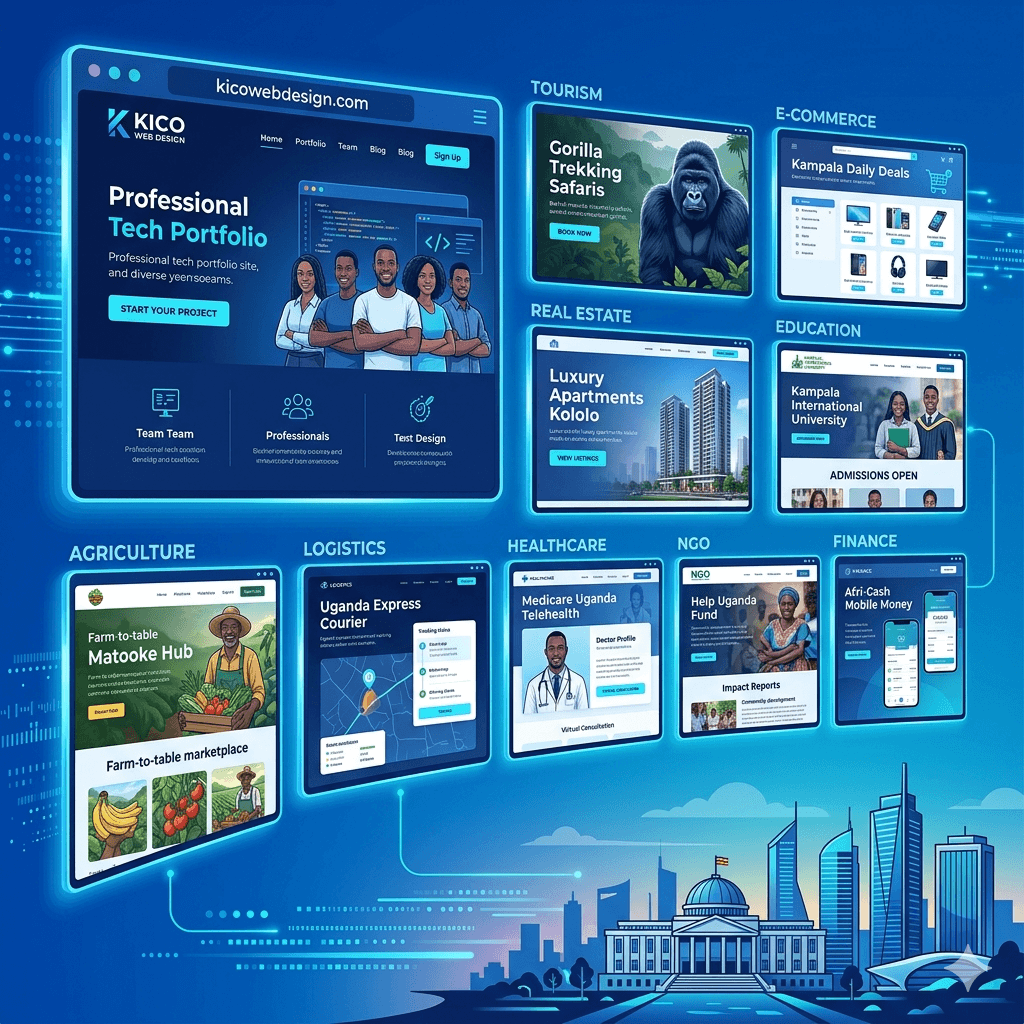
    A digital gallery wall showcasing 10 premium website previews in a sleek grid layout

    Selecting the top 10 best business websites in Uganda wasn’t easy. There are genuinely many impressive sites out there. The selection criteria focused on design quality, mobile usability, brand consistency, loading performance, and overall user experience. These are the Ugandan company websites that consistently stand out from the crowd.

    For real examples of what high-quality local web projects look like, you can browse the Portfolio of completed projects to see Ugandan website design examples in action.

    1. Stanbic Bank Uganda (www.stanbicbank.co.ug)

    Stanbic Bank’s website is one of the most polished corporate websites in Uganda. The design is clean, professional, and instantly communicates stability and trust   exactly what you want from a financial institution. The homepage loads fast, and users can quickly find what they need, whether it’s personal banking, business accounts, or loan products. Navigation menus are logically structured, and the mobile experience is smooth. The consistent use of blue and white reinforces the brand identity across every page.

    2. MTN Uganda (www.mtn.co.ug)

    MTN Uganda’s site is a masterclass in handling a wide range of products and services without overwhelming the user. The bold yellow branding is instantly recognizable, and the layout guides users intuitively toward the information they need   be it mobile money, data bundles, or enterprise services. The site performs well on mobile, which is critical given MTN’s mobile-first customer base. It’s a strong example of how large Ugandan businesses can manage complex digital ecosystems with clarity.

    3. Airtel Uganda (www.airtel.co.ug)

    Airtel Uganda’s website balances visual energy with clear user journeys. The site does a great job of showcasing promotions and products on the homepage without making it feel cluttered. Red is used boldly and effectively throughout, ensuring brand consistency. The site’s structure makes it easy to compare data bundles, find customer service options, and learn about new offerings. It’s a solid example of responsive websites in Uganda done right.

    4. Uganda Airlines (www.ugandaairlines.co.ug)

    Uganda Airlines has invested in a genuinely impressive digital presence. The website feels modern and aspirational, befitting a national carrier. The flight booking interface is user-friendly, and the site’s use of high-quality photography celebrating Ugandan culture and landmarks adds a sense of pride and local identity. The visual storytelling is strong, and the overall experience communicates that Uganda Airlines is serious about its brand on the global stage.

    5. Jumia Uganda (www.jumia.co.ug)

    Jumia Uganda demonstrates what a high-performing e-commerce website looks like in the local market. The site loads quickly despite the large volume of products, and the search and filtering functionality makes finding products effortless. The checkout process is streamlined, and the mobile experience is optimized   essential for a market where most shoppers use phones. Jumia is the benchmark for business website usability best practices in the e-commerce space in Uganda.

    6. Dfcu Bank (www.dfcugroup.com)

    Dfcu Bank’s website strikes a balance between modern aesthetics and professional banking communication. The site uses clean typography, quality imagery, and a logical content structure that makes it easy for both retail and business clients to find what they need. The homepage communicates the bank’s values clearly and quickly. It’s a fine example of how financial institutions in Uganda can use web design to build confidence and trust among their clientele.

    7. Nation Media Group Uganda (www.monitor.co.ug)

    The Daily Monitor website, operated by Nation Media Group, is one of the best media websites in Uganda. It manages the challenge of publishing large volumes of fresh content while keeping the site organized and readable. The design prioritizes readability with good use of fonts and spacing. Navigation by category, trending stories, and featured content make it easy for users to dive into the news they care about. It also performs reasonably well on mobile, a critical metric for a news platform.

    8. Absa Bank Uganda (www.absabank.ug)

    Absa Bank Uganda’s website benefits from the international brand’s global standards while maintaining local relevance. The site is visually clean with a strong color identity   red used confidently without overwhelming the design. Clear calls-to-action guide users toward opening accounts, applying for loans, or accessing digital banking. The UX is well thought out, with a website feature checklist that most business owners could learn from: clear value propositions, easy navigation, and fast performance.

    9. Nile Breweries (www.nilebreweries.com)

    Nile Breweries operates one of the more visually distinctive corporate websites in Uganda. The site uses bold photography, strong brand colors, and a dynamic layout that brings the brand’s energy to life online. The storytelling approach   focusing on brand heritage, sustainability, and community   sets it apart from the typical product-focused corporate site. It’s excellent Uganda web design inspiration for businesses that want their website to communicate more than just what they sell.

    10. Uganda Investment Authority (www.ugandainvest.go.ug)

    The Uganda Investment Authority website represents one of the strongest examples of a government institution using its digital presence effectively. The site is well-organized, informative, and clearly aimed at attracting both local and foreign investors. Resources, reports, and investment guides are well-presented and accessible. The professional, data-rich design reflects the seriousness and ambition of Uganda’s investment promotion efforts. It’s a reminder that even institutional websites can lead with strong design and UX principles.

    5. Design Lessons from These Websites

    A visual breakdown of best design practices such as spacing, typography, color harmony

    Looking across all ten of these top Ugandan company websites, clear patterns emerge. These are not coincidences, they are deliberate design decisions that drive results.

    Common Design Patterns Across Top Sites: Every single one of these sites is mobile-responsive. They all load within acceptable time limits. They use consistent color palettes tied to their brand identity. And they all have clear, prominent calls-to-action   buttons or links that tell users exactly what to do next.

    What Businesses Can Replicate Easily:

    • Use two to three brand colors consistently across every page.

    • Place your most important action (contact, buy, book) prominently above the fold.

    • Use quality photography that reflects your actual customers and environment.

    • Keep navigation menus to five to seven items maximum to avoid overwhelming visitors.

    Mistakes to Avoid: The most common mistakes on Ugandan business websites include using too many fonts (stick to two), neglecting mobile optimization, ignoring page speed, and burying contact information deep in the site. A website without a clear call-to-action is like a shop with no checkout counter. Visitors simply leave without doing anything.

    6. How to Build a High-Quality Business Website

    Understanding how to design a business website in Uganda doesn’t have to feel overwhelming. Breaking it into clear steps makes the entire process manageable.

    Step 1: Define Goals and Target Audience

    Before a single design decision is made, get clarity on what your website needs to achieve. Is it generating leads? Selling products? Building brand awareness? Who are your ideal customers and what do they need when they land on your site? Answering these questions shapes every subsequent decision.

    Step 2: Choose a Platform or Developer

    For small business websites in Uganda with tight budgets, platforms like WordPress offer great flexibility and affordability. For more complex projects, working with a professional local web developer ensures you get a site tailored precisely to your needs. The right choice depends on your budget, technical comfort, and how much customization you require.

    Step 3: Focus on UX and Mobile Design

    Given that most of your visitors will be on mobile, design for mobile first. Prioritize clean layouts, large tap targets, and fast-loading pages. The user journey from landing page to contact or purchase should be intuitive and friction-free.

    Step 4: Optimize for SEO and Speed

    Building SEO into your website from the start is far easier than retrofitting it later. Use descriptive page titles, write quality content, optimize images, and ensure your site loads quickly. For a deeper dive into this, the SEO Guide for small businesses covers every important step in clear, practical detail.

    Step 5: Test and Improve Continuously

    Launching your site is not the finish line, it’s the starting gun. Use tools like Google Analytics to see how visitors behave, which pages perform well, and where people drop off. Regular updates, fresh content, and periodic design refreshes keep your site relevant and competitive.

    7. Cost of Building a Business Website in Uganda
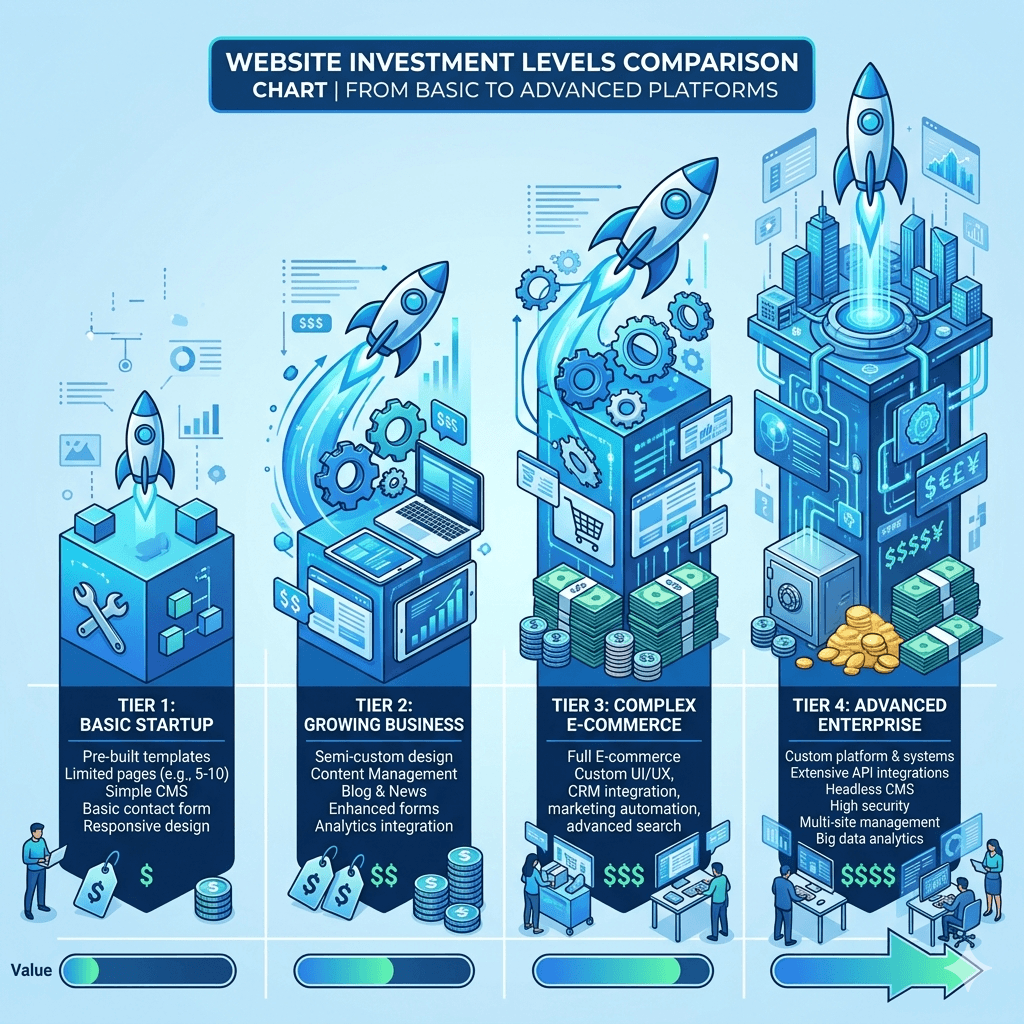
    A visual comparison chart showing different website investment levels

    One of the most common questions entrepreneurs ask is: how much does affordable website design in Uganda actually cost? The answer depends on several factors.

    Factors Affecting Pricing: The complexity of the design, the number of pages, whether e-commerce functionality is needed, and the level of ongoing support all affect the final cost. A simple brochure website for a small business costs significantly less than a full e-commerce platform or a custom corporate site.

    Basic vs Advanced Website Costs: In Uganda, a basic professional website typically ranges from UGX 1,500,000 to UGX 4,000,000. A more advanced site with custom design, SEO setup, and multiple integrations can range from UGX 5,000,000 upwards, depending on the scope and agency.

    The Value of Investing in Quality: Cutting corners on your website often costs more in the long run. A poorly built site requires constant fixes, loads slowly, and fails to convert visitors. Investing in quality design from the start delivers better returns through increased trust, more leads, and better search visibility.

    8. Future Trends in Ugandan Web Design

    Modern web design trends in Uganda are evolving quickly. Staying aware of what’s coming helps businesses plan smarter investments in their digital presence.

    Rise of Mobile-First Design: Mobile-first is no longer a trend, it’s the baseline standard. As smartphone penetration continues to grow in Uganda, websites that aren’t optimized for mobile will fall further behind. Expect even more emphasis on lightweight, fast-loading designs built for low-bandwidth environments.

    Increased Use of AI and Automation: AI-powered chatbots, automated customer service tools, and smart content personalization are beginning to appear on forward-thinking Ugandan business websites. These tools reduce workload while improving the customer experience, a powerful combination for growing businesses.

    Growing Importance of UX and Personalization: Users increasingly expect websites to feel tailored to them. Personalized content, location-aware features, and adaptive user journeys will become more common. Combined with a strong Digital Marketing strategy, UX-focused websites will be at the center of business growth in Uganda’s digital economy.

    9. Conclusion

    Uganda’s digital business landscape is maturing fast, and the websites leading the way share clear, actionable qualities. They’re clean, fast, mobile-friendly, and built with the user’s journey in mind. Whether it’s a national bank, a telecom giant, or an e-commerce platform, the best Ugandan company websites all invest seriously in their online presence.

    The good news is that you don’t need a massive budget to build something impressive. You need clarity of purpose, attention to design fundamentals, and a commitment to continuous improvement. Start by defining what you want your website to achieve. Then build it well, optimize it for search, and keep improving it over time.

    Your website is often the first handshake between your business and a potential customer. Make it count. The examples in this article prove that impressive, effective business websites in Uganda are absolutely achievable   and the businesses that invest in them are reaping real rewards.

    Frequently Asked Questions

    What makes a business website successful in Uganda?

    A successful business website in Uganda combines fast loading speed, mobile responsiveness, clear navigation, strong branding, and locally relevant content. It should also have a clear call-to-action and be optimized for search engines so potential customers can find it.

    How much does it cost to build a website locally?

    Website costs in Uganda vary depending on complexity. A basic professional website typically starts from around UGX 1,500,000. More advanced websites with custom design, e-commerce functionality, or integrations can cost UGX 5,000,000 or more.

    Do small businesses really need a website?

    Absolutely. Even a simple, well-built small business website in Uganda helps you reach more customers, build credibility, and compete with larger brands. Many customers check online before making purchasing decisions, and not having a website means missing out on those opportunities.

    How long does it take to build a website?

    A basic website typically takes two to four weeks to complete. A more complex website with custom design, multiple integrations, or e-commerce functionality can take six to twelve weeks. The timeline depends on how quickly content and feedback are provided.

    What platform is best for beginners?

    WordPress is widely considered the most beginner-friendly platform for building business websites in Uganda. It’s flexible, widely supported, and has thousands of themes and plugins. Wix and Squarespace are also options for very simple sites, though they offer less flexibility as your needs grow.

    How can I improve my website’s SEO?

    Start with the basics: use clear page titles and descriptions, write quality content that answers what your customers search for, ensure your site loads fast, and build quality backlinks from other websites. Consistent publishing of helpful content and technical optimization both contribute significantly to better rankings.

    What are common mistakes Ugandan businesses make online?

    The most common mistakes include neglecting mobile optimization, using low-quality or irrelevant stock photos, failing to update content regularly, hiding contact information, and ignoring site speed. Many businesses also forget to set up Google Analytics, which means they have no data to make informed improvements.

    Is mobile optimization important for local websites?

    It’s absolutely critical. The majority of internet users in Uganda browse on mobile devices. A website that doesn’t display or function properly on a smartphone will lose most of its visitors immediately. Mobile optimization is not optional, it’s one of the most important investments you can make.

    Can I update my website myself after it is built?

    Yes, especially if it’s built on a platform like WordPress. With basic training, most business owners can update text, images, and blog posts themselves. For more complex changes like new page layouts or functionality additions, it’s best to consult your developer.

    How do I attract customers through my website?

    Attracting customers requires a combination of SEO to rank in search results, quality content that answers their questions, and clear calls-to-action that guide them toward contacting you or making a purchase. Integrating tools like WhatsApp chat buttons and contact forms makes it easy for visitors to take the next step. Consistently sharing your website on social media and through digital advertising also drives traffic over time.

  • Common Mistakes to Avoid in Professional Web Development Projects in Uganda

    Common Mistakes to Avoid in Professional Web Development Projects in Uganda

    Building a website for your business should be exciting, not frustrating. Yet many Ugandan entrepreneurs find themselves stuck with websites that don’t deliver results slow pages, confusing layouts, or designs that look great but don’t bring in customers. The truth is, most of these problems come from avoidable mistakes made during development. Whether you’re launching your first business website or planning a redesign, knowing what can go wrong helps you get it right. In this guide, we’ll walk through the most common web development mistakes happening in Uganda right now and show you practical ways to avoid them, so your website becomes the business asset it should be.

    What Professional Web Development Means in a Ugandan Business Context

    Professional web development isn’t just about having a pretty website. In Uganda’s competitive business environment, it means creating a digital presence that actually works for your customers and drives your business forward. A professional website loads quickly even on slower internet connections, works smoothly on mobile phones (where most of your customers will find you), and guides visitors to take action whether that’s calling you, making a purchase, or requesting a quote.

    Unfortunately, many local businesses confuse professional development with expensive templates or flashy animations. Real professional web development focuses on solving business problems: helping customers find you online, building trust through clear messaging, and making it easy for people to do business with you. It means choosing the right technology for your needs, not just what’s trendy, and planning for growth as your business expands. When you understand this difference, you’re already ahead of most businesses making their first website.

    Why Many Web Projects Fail or Underperform Locally

    Walk through any business district in Kampala, Entebbe, or Jinja, and you’ll find countless companies with websites that barely get visited. These web development errors often start before a single line of code is written. Many Ugandan business owners rush into website projects without clear goals, or they hand everything to a developer without staying involved in the process.

    Another major reason for failure is the disconnect between international web development trends and local realities. A website built following Western best practices might look impressive but fail completely if it doesn’t account for Uganda’s mobile-first internet users or slower connection speeds in some areas. Add to this the tendency to see websites as one-time projects rather than ongoing business tools, and you have a recipe for underperformance.

    Cost pressures also play a role. When businesses focus only on getting the cheapest option, they often end up with rushed work, copied content, or poor technical foundations. Then there’s the communication gap business owners who don’t fully explain their needs, and developers who don’t ask the right questions. The result? Websites that technically work but don’t serve the business or its customers well. Understanding these root causes helps you avoid falling into the same traps.

    Common Planning Mistakes Before Development Starts

    A Ugandan entrepreneur surrounded by scattered sticky notes and spreadsheets

    The biggest website mistakes to avoid happen before your developer writes a single line of code. Getting the planning stage wrong sets your entire project on a shaky foundation, and fixing these issues later costs more time and money than doing it right from the start.

    Skipping Clear Business Goals

    Many Ugandan business owners start web projects with vague aims like “I need an online presence” or “Everyone has a website, so I should too.” But without specific goals, how do you know if your website succeeds? Your goals might include generating 20 qualified leads per month, reducing customer support calls by enabling online bookings, or increasing product awareness in a specific region. When you define these objectives clearly, every design and development decision can be measured against them. Without goals, you’ll approve features that look nice but don’t serve your business, and you won’t know what to prioritize in your budget.

    Not Defining the Target Customer

    Your website should speak directly to the people who’ll use it, but too many businesses build websites that try to appeal to everyone and end up connecting with no one. Are you targeting corporate clients in Kampala who browse during office hours, or retail customers across Uganda who primarily use smartphones in the evening? Understanding your customer’s habits, challenges, and preferences shapes everything from your site’s language to its layout. When you skip this step, you might build a desktop-heavy site for an audience that’s 90% mobile, or use technical language when your customers need simple explanations.

    Ignoring Budget and Timeline Realities

    Unrealistic expectations about cost and time create frustration for everyone involved. Some business owners expect a fully custom, feature-rich website for a budget that barely covers a basic template setup. Others assume their site can launch in two weeks when proper development, content creation, and testing need at least two months. These web development pitfalls lead to rushed work, cut corners, or projects that stall halfway through when the money runs out. Being honest about your budget from the start and discussing what’s achievable within it prevents these problems. Hiring a developer with a clear understanding of local market rates helps set proper expectations.

    Failing to Plan for Content Early

    Your website needs words, images, and information, but many businesses treat content as an afterthought. They approve the design, build the site structure, and only then realize they need to write pages of compelling copy, take professional photos, and organize their service descriptions. This delay pushes back launches and often results in rushed, low-quality content just to fill space. Start gathering your content early: write about your products or services, collect customer testimonials, and take quality photos. If you’re not confident writing yourself, budget for a content writer from the beginning. Good content isn’t just filling in blanks it’s how you convince visitors to become customers.

    Design and User Experience Mistakes to Avoid

    Your website’s design determines whether visitors stay to learn about your business or click away within seconds. In Uganda, where many potential customers browse on mobile data or slower connections, these design choices matter even more. Let’s explore the most damaging design and user experience mistakes local businesses make.

    Designing for Appearance Instead of Usability

    We’ve all seen those websites that look like digital art galleries beautiful graphics, elaborate animations, and impressive visual effects. But when you actually try to find a phone number or understand what the business does, you’re lost. This common web design mistake happens when businesses prioritize looking modern over being useful. Your website should certainly look professional and reflect your brand, but every design choice should serve your customer’s needs first. Can visitors find your contact information in under five seconds? Does your homepage clearly explain what you do and for whom? These practical questions matter more than having the trendiest color scheme. Remember, impressive design that confuses people is just expensive decoration.

    Poor Mobile Responsiveness

    Over 80% of internet users in Uganda access websites through their phones, yet countless business websites still look broken or unusable on mobile screens. Text becomes microscopic, buttons overlap, images get cut off, and navigation menus disappear. These mobile responsiveness mistakes in web design cost you customers directly people simply leave and find a competitor with a mobile-friendly site. Your website must adapt seamlessly to any screen size, with text that’s readable without zooming, buttons large enough to tap easily, and content that reorganizes itself logically on smaller screens. Testing your site on actual mobile phones, not just desktop browsers in “mobile view,” reveals the real user experience. Currentweb design trends emphasize mobile-first thinking, and for good reason.

    Slow Page Load Speeds

    Nothing frustrates Ugandan internet users more than websites that take forever to load, especially when they’re using mobile data. Slow website loading problems typically come from oversized images, too many scripts running in the background, or poorly optimized code. Every second your page takes to load, you lose potential customers. Research shows that if your site takes more than three seconds to appear, over half of mobile visitors will give up and leave. Optimizing images before uploading them, choosing efficient code practices, and selecting proper hosting all contribute to faster speeds. Don’t assume everyone has the same internet connection you do test your site’s speed on a typical mobile connection to see what your customers actually experience.

    Confusing Navigation and Layout

    Your website’s navigation should be so intuitive that visitors never have to think about where to find something. Yet many sites feature unclear menu labels, hidden navigation items, or illogical page organization. When someone lands on your homepage, can they immediately understand how to explore your products, read about your company, or get in touch? Poor website navigation issues often stem from organizing information the way you think about your business rather than how customers think about their needs. You might have a menu item labeled “Solutions” that makes perfect sense internally, but “Our Services” would be clearer to visitors. Keep your navigation simple, use familiar labels, and place important actions (like “Contact Us” or “Buy Now”) where people expect them. Additional website design tips can help you create layouts that work for Uganda’s market.

    Technical Development Mistakes That Hurt Performance

    A Ugandan business office with a server rack showing security warnings,

    Behind every website’s visible design lies the technical infrastructure that determines how well it actually works. These technical web development errors might not be obvious at first, but they’ll come back to haunt you through security breaches, constant crashes, or mounting maintenance costs.

    Using the Wrong Platform or Technology

    Not every business needs a custom-coded website from scratch, and not every business should use the same template platform everyone else uses. The mistake happens when there’s a mismatch between your business needs and the technology chosen to meet them. For instance, building a simple informational website on complex enterprise software wastes money and creates unnecessary complications. Conversely, trying to run a sophisticated online shop on a basic blogging platform leads to endless frustration. WordPress works well for many Ugandan businesses, but it’s not always the right choice especially if you need specific functionality or plan to scale significantly. Discuss with your developer what you actually need now and might need in two years, then choose technology that fits both. Understanding various online platforms available helps inform this decision.

    Poor Hosting Choices

    Your web hosting is like the land your business building sits on cheap, unreliable hosting means your site goes down frequently, loads slowly, and creates security vulnerabilities. Many Ugandan businesses choose hosting purely based on price, going for the cheapest option without considering performance or reliability. Then they wonder why their site crashes during busy periods or loads painfully slowly for customers. Quality hosting doesn’t have to break your budget, but it requires some investment. Look for providers with servers in or near Uganda or at least in nearby regions, as this improves loading speeds for local visitors. Check their uptime guarantees, support responsiveness, and whether they offer automatic backups. Your hosting affects everything from site speed to security, so cutting corners here undermines your entire web investment.

    Lack of Security Measures

    Cybersecurity might seem like a concern only for large corporations, but small Ugandan businesses face real threats too. Websites without proper security measures get hacked, infected with malware, or used to distribute spam. These breaches damage your reputation and can result in sensitive customer information being stolen. Basic security starts with keeping your website platform and plugins updated, using strong passwords, and installing an SSL certificate (that little padlock in the browser bar). Many businesses skip these fundamentals, assuming they’re too small to be targeted. Hackers use automated tools that attack vulnerable sites regardless of size your small business website is just as exposed as larger ones if not properly secured. Budget for security from the beginning; it’s far cheaper than recovering from a breach.

    No Backup or Maintenance Strategy

    Imagine investing thousands of shillings and weeks of work into your website, only to have it crash or get hacked with no way to restore it. This nightmare happens to businesses without backup strategies more often than you’d think. Regular automated backups mean you can restore your site quickly if something goes wrong. Beyond backups, websites need ongoing maintenance: updating software, fixing broken links, optimizing performance, and adding new content. Treating your website as a one-time project that needs no attention after launch is one of the most damaging web development mistakes. Plan from the start who will handle maintenance, how often it happens, and what it will cost. Some developers offer maintenance packages; others train you to handle basic updates yourself. Either way, have a clear plan before you launch.

    SEO and Visibility Mistakes During Development

    A Ugandan business owner looking at search results on a laptop

    Even the best-designed website is useless if your potential customers can’t find it online. Search engine optimization (SEO) should be built into your website from the ground up, not added as an afterthought. Yet many Ugandan businesses launch websites that are essentially invisible to search engines, then wonder why nobody finds them.

    Ignoring On-Page SEO Basics

    On-page SEO refers to the elements on your actual website pages that help search engines understand what you offer. Many developers build beautiful sites without implementing basic SEO fundamentals: descriptive page titles, proper heading structures, image alt text, or meta descriptions. These aren’t just technical details they’re how Google and other search engines figure out whether to show your site when someone searches for your products or services. For example, if you run a printing business in Kampala but your homepage title just says “Home” with no mention of printing or location, search engines have no reason to display your site to people searching for “printing services Kampala.” These website SEO mistakes Uganda businesses make are easily preventable when SEO is considered during development rather than after launch.

    Not Optimizing for Local Search

    If your business serves customers in specific Ugandan locations, local SEO is crucial. Yet many websites fail to include location information properly, don’t claim their Google Business Profile, or neglect to list their business in local directories. When someone in Jinja searches for “web design services near me,” will your business appear if you’re based there? Probably not, if you haven’t optimized for local search. This means including your city or region in key places on your site, creating location-specific content, and ensuring your business name, address, and phone number are consistent everywhere online. Local SEO best practices also involve getting reviews from Ugandan customers and building connections with other local websites. These local SEO web design best practices help you compete effectively in your actual service area rather than getting lost in global search results.

    Missing Analytics and Tracking Setup

    How will you know if your website works if you’re not measuring anything? Too many Ugandan businesses launch websites without installing Google Analytics or any tracking system. This means they have no idea how many people visit, which pages they view, how they found the site, or whether they complete important actions like filling out contact forms. Without this data, you’re flying blind you can’t improve what you don’t measure. Setting up analytics before launch takes minutes and costs nothing, but it provides invaluable insights into your website’s performance. You can see whether your marketing efforts drive traffic, which content interests visitors most, and where people leave your site. This information guides smart improvements rather than guesswork. Make analytics setup a non-negotiable part of your development process.

    Content and Messaging Mistakes Businesses Commonly Make

    Two versions of a website side by side one with generic, repetitive text and one with engaging, local-content messaging, showing the impact of poor content choices

    Your website’s content the actual words, images, and messages determines whether visitors become customers. Yet content often receives the least attention during web development, leading to websites that technically function but fail to persuade or inform effectively.

    Using Generic or Copied Content

    The fastest way to undermine your website’s credibility is filling it with generic stock phrases or, worse, content copied from competitors. “We are a leading provider of quality services” says nothing about your actual business. When every company claims to be “the best” or “most trusted,” these words become meaningless. Some businesses even copy entire paragraphs from competitor websites, either out of laziness or uncertainty about what to write. This creates legal risks, hurts your search rankings (search engines penalize duplicate content), and makes you indistinguishable from everyone else. Your website content should reflect your unique value: what you specifically do better, how you’ve helped real customers, and why someone should choose you over alternatives. This website content mistakes to avoid guidance applies especially when you’re tempted to take shortcuts with writing.

    Not Speaking to Local Customer Needs

    Many Ugandan business websites use language and examples that don’t resonate locally. They might reference international case studies, use currency references that don’t apply here, or miss cultural nuances that Ugandan customers expect. For instance, emphasizing certain business values that matter deeply in Uganda like personal relationships, community involvement, or local understanding connects more effectively than generic corporate speak. Small business website errors often include failing to address the specific concerns Ugandan customers have about doing business online, such as payment security, delivery reliability, or customer support accessibility. When your content acknowledges and addresses these local realities, it builds trust. Speak directly to the challenges your Ugandan customers face and demonstrate that you understand their world.

    Weak Calls to Action

    After a visitor reads about your business, what should they do next? Many websites leave this unclear, with weak or hidden calls to action. Your call to action (CTA) is the specific step you want visitors to take “Call us today,” “Get a free quote,” “Download our guide,” or “Shop now.” Beginner web development pitfalls include making these CTAs too subtle, using vague language like “Learn more,” or placing them where visitors won’t notice them. Every important page should have a clear, compelling CTA that stands out visually and uses direct language. Don’t make visitors hunt for how to contact you or buy from you. If they need to scroll through multiple pages and search for your phone number, most won’t bother they’ll just leave and find a competitor who makes it easier.

    How to Avoid These Mistakes in Future Projects

    Now that you understand the common web development mistakes, let’s focus on practical steps to ensure your next website project succeeds. These strategies help whether you’re building your first site or redesigning an existing one.

    Choosing the Right Web Development Partner

    Your choice of developer or development agency largely determines whether you’ll encounter the mistakes we’ve discussed. Don’t just go with the cheapest option or your cousin who “knows computers.” Look for developers with relevant local experience, a portfolio of websites that actually work well (test them on your phone), and clear communication skills. A good developer asks questions about your business goals, challenges your assumptions when necessary, and explains technical decisions in language you understand. They should show you examples of how they’ve handled security, SEO, and mobile optimization for previous clients. Check references and talk to their past customers about not just the initial build but the ongoing relationship. Professional web development tips include getting detailed proposals, establishing clear contracts, and ensuring you’ll own your website and all its elements once completed. Hiring a developer becomes much easier when you know what to look for.

    Creating a Simple Website Project Checklist

    A checklist keeps your project organized and ensures nothing important gets forgotten. Start with business fundamentals: documented goals, target customer profiles, and budget parameters. Then move to content requirements: which pages you need, what each page should communicate, and who’s responsible for creating text and images. Include technical specifications: required functionality, SEO requirements, security measures, and hosting decisions. Don’t forget practical details: who approves what at each stage, how you’ll communicate with your developer, what happens if timelines shift, and who handles maintenance after launch. This checklist becomes your project roadmap, helping you avoid web design mistakes by catching potential issues before they become expensive problems. Review it with your developer before work begins and check off items as you complete them.

    Testing Before and After Launch

    Never launch a website without thorough testing, yet many businesses do exactly this, only discovering broken features or poor usability after customers have already encountered problems. Test everything: click every link, submit every form, try every feature on both desktop and mobile devices. Ask friends or employees unfamiliar with the project to use the site and watch where they get confused or stuck. Check loading speeds on actual mobile connections, not just fast office WiFi. After launch, testing doesn’t stop regularly check your site for broken links, outdated content, or new compatibility issues as browsers and devices update. Set a schedule: perhaps a quick check monthly and a more thorough review quarterly. This ongoing attention catches small issues before they become significant problems.

    Planning for Ongoing Improvements

    The best websites evolve continuously based on how real customers use them and what your business needs. From the beginning, plan how you’ll improve your site over time. Will you add new products or services that need new pages? Can you easily update pricing or contact information? How will you incorporate customer feedback? Budget for these ongoing improvements even if it’s just a few hours of developer time each quarter to make updates based on what you’ve learned. Use your analytics data to identify which pages perform well and which need work. Pay attention to customer questions or complaints that might signal confusing website content. This mindset of continuous improvement, rather than “done and forgotten,” is what separates businesses whose websites actually drive growth from those whose websites gather digital dust.

    Frequently Asked Questions

    How much should a professional website cost in Uganda?

    Professional website costs in Uganda vary significantly based on complexity and requirements. A basic informational website for a small business typically ranges from 1.5 to 3 million shillings, including design, development, and initial setup. More complex sites with custom features, e-commerce functionality, or extensive content management needs might cost 4 to 10 million shillings or more. These ranges include proper mobile optimization, basic SEO setup, and security measures cutting corners to get cheaper prices often means sacrificing these essentials. Remember that the cheapest option usually creates problems that cost more to fix later, while the most expensive doesn’t guarantee quality. Focus on value: what you’re getting for the price, the developer’s track record, and whether the solution fits your specific business needs. Get detailed quotes from several providers and compare what’s actually included before making your decision.

    How long does it take to build a business website?

    A professional business website typically takes six to twelve weeks from initial planning to launch, though this varies based on project complexity and content readiness. Simple sites with straightforward requirements might be completed in four to six weeks, while larger projects with custom features need several months. The timeline includes discovery and planning, design approvals, development, content creation, testing, and revisions. Delays usually happen when businesses aren’t ready with content, take long to approve designs, or keep requesting major changes mid-project. You can speed things up by preparing your content before development starts, being available for timely feedback, and having clear decision-making processes. Rushing the timeline typically leads to exactly the kind of mistakes we’ve discussed throughout this article, so realistic scheduling serves your long-term interests better than artificial urgency.

    Is a website still important if my business uses social media?

    Yes, your website remains crucial even with an active social media presence, because you control your website completely while social platforms can change their rules, algorithms, or even shut down your account without warning. Social media excels at engagement and discovery, but websites provide credibility, detailed information, and long-term stability. When potential customers search for your business or industry, your website ranks in search results while social posts typically don’t. Your website also lets you present information exactly as you want, create detailed product pages, and guide visitors through specific customer journeys things difficult to achieve on social platforms. The most effective strategy combines both: social media to build awareness and engage audiences, and a website as your permanent home base where people learn more and take action. For a deeper exploration of this balance, read more about website vs social media for Ugandan businesses.

    What features are essential for a small business website?

    Every small business website needs certain core features regardless of industry. Start with clear contact information on every page phone number, email, and physical location if relevant. Include a compelling homepage that immediately explains what you do and for whom. Essential features for Ugandan SMEs typically include mobile-friendly design, fast loading speeds, and secure HTTPS connection. You’ll want an about page that builds trust by showing your team, story, or credentials. Service or product pages should detail what you offer with clear pricing or a path to request quotes. Customer testimonials or case studies provide social proof. A contact form or easy way for visitors to reach you helps capture leads. Beyond these basics, only add features that directly serve your business goals avoid feature bloat just because something seems impressive. Simple execution of essential features beats complex implementation of unnecessary ones.

    How do I know if my website needs a redesign?

    Several signs indicate your website needs updating or complete redesign. If it doesn’t work properly on mobile phones or loads very slowly, that’s an immediate red flag affecting your ability to reach customers. High bounce rates (people leaving immediately) or low engagement in your analytics suggest your content or design isn’t connecting with visitors. Outdated visual design that makes your business look behind the times hurts credibility. If you struggle to update content yourself or adding new features requires developer intervention for simple changes, your platform might be limiting you. Security vulnerabilities or outdated technology that no longer receives support create serious risks. Finally, if your business has evolved but your website still reflects what you did five years ago, a refresh ensures your online presence matches your current reality. Not every issue requires a complete redesign sometimes targeted improvements address specific problems more cost-effectively.

    Can I update my website myself after it’s built?

    Yes, if your website is built on a content management system like WordPress, you can typically update text, images, and other content yourself without needing a developer for every small change. Your developer should provide training on these basic updates during handover. However, there’s a difference between content updates (changing text, uploading photos, adding blog posts) and structural changes (modifying design, adding new features, altering functionality). Content updates you can usually handle yourself after some initial learning. Deeper changes typically require developer expertise to avoid breaking things or introducing security vulnerabilities. The key is choosing a platform that matches your technical comfort level and ensuring your developer sets it up in a user-friendly way. Many businesses find a hybrid approach works best: they handle routine content updates themselves and hire their developer for periodic larger improvements or technical maintenance.

    What should I ask a web developer before hiring them?

    Start by asking about their experience with businesses similar to yours and request portfolio examples you can actually view and test on mobile. Ask how they approach mobile optimization, security, and SEO their answers reveal whether they build these essentials in from the start or treat them as optional extras. Discuss their development process: how they gather requirements, handle approvals, and manage revisions. Clarify what exactly is included in their quote and what costs extra. Find out about post-launch support: do they offer maintenance packages, how quickly do they respond to urgent issues, and what happens if something breaks shortly after launch? Ask about ownership will you own your website files, design elements, and content, or are you locked into their platform? Questions about timeline expectations, communication methods, and how they’ve handled challenging projects reveal their professionalism and compatibility with your working style. A developer who can’t answer these questions clearly or gets defensive isn’t the right partner for your business.

    Building a successful business website in Uganda doesn’t require technical expertise, but it does require awareness of common pitfalls and a commitment to doing things properly from the start. The mistakes we’ve covered from poor planning and weak design to technical shortcuts and invisible SEO all stem from treating websites as simple projects rather than important business investments. Your website represents your business to thousands of potential customers, often providing their first impression of your professionalism and capability.

    By avoiding these common web development mistakes, you set your business up for online success. Choose your development partner carefully, plan thoroughly before work begins, insist on mobile-friendly design and proper security, and commit to ongoing improvement based on real user data. Your website should work as hard for your business as you do, bringing in leads, building credibility, and making it easy for customers to choose you.

    The Ugandan business landscape increasingly demands strong digital presence, and your website sits at the center of that presence. Get it right, and you have a 24/7 marketing tool that grows your business. Get it wrong by repeating these common mistakes, and you’ve wasted money on digital decoration that serves no real purpose. Make the smart choice invest the time and resources to build a website that truly works for your business and your customers.