Tag: Web Design Uganda

  • How Kico Web Design Builds Websites Differently from Other Uganda Agencies 

    How Kico Web Design Builds Websites Differently from Other Uganda Agencies 

    If you have ever searched for web design in Uganda, you already know the landscape can feel overwhelming. There are dozens of agencies, freelancers, and one-person shops all promising beautiful websites at competitive prices. But here is the truth: not all websites are built the same, and not all agencies approach the work with the same level of care.

    A great business website is not just about good looks. It needs to load fast, work perfectly on mobile phones, show up on Google, and actually turn visitors into customers. In today’s competitive Ugandan market, a website that only looks nice but fails to perform is not much better than having no website at all.

    This is where Kico Web Design stands apart. While many agencies in Uganda focus on delivering a finished design and moving on, Kico takes a different path. Every project starts with strategy, runs through careful planning, and ends with a website built to grow your business. In this article, we will break down exactly how that difference plays out in real projects and why it matters for your business.

    1. What Makes a Website Trustworthy in Uganda

    Trust is everything in business. Before a potential customer picks up the phone or fills in a contact form, they make a quick judgment about your business based on your website. If it looks outdated, loads slowly, or breaks on their phone, they are gone in seconds.

    So what actually makes a website trustworthy for a Ugandan audience? Let us start with the basics.

    Clean and Professional Visual Design

    A cluttered website sends the wrong message. When someone lands on your page and sees too many colors, mismatched fonts, and low-quality images, their brain registers it as unprofessional. Clean design, on the other hand, says: this business is organized, serious, and worth my time.

    Mobile-First Responsiveness

    The majority of internet users in Uganda browse on smartphones. If your website does not adapt to smaller screens, you are instantly losing a massive chunk of your potential customers. Good UI/UX design ensures your site feels natural and easy to use on any device, whether someone is visiting from a Kampala office desktop or a phone in Gulu.

    Fast Loading Speeds for Local Internet Conditions

    Uganda’s internet infrastructure, while improving, still has moments of slow connectivity. A website that takes more than three seconds to load will lose visitors before they even see your homepage. Performance optimization is not optional here. It is a baseline requirement for any professional website design in Uganda.

    Clear Contact Information and Credibility Signals

    Trust signals matter deeply. Things like a visible phone number, a physical address, clear social media links, customer reviews, and a professional email address all tell visitors that you are a real business they can reach. A website missing these details raises instant red flags.

    2. How Kico Web Design Approaches Website Strategy

    A strategic planning session showing UX designers mapping user journeys on a large digital board

    Most web design agencies in Uganda jump straight into design. You share your logo and brand colors, they build something that looks decent, hand it over, and the job is done. Kico Web Design works differently from the very first conversation.

    User-Focused Planning Before Design Begins

    Before a single pixel is placed, Kico starts by asking questions about your business. Who are your customers? What actions do you want people to take on your site? What problems are you solving? This discovery phase ensures the website is built around real user needs, not just personal preferences.

    Aligning Websites with Business Goals

    Every business has different goals. A restaurant wants reservations and foot traffic. A consultancy wants enquiry calls and email leads. An e-commerce shop wants product purchases. Kico builds websites that are specifically designed to support your unique goals, whether that means sales, leads, brand awareness, or all three. This is professional website design Uganda businesses can actually use as a business tool.

    Research into Ugandan Customer Behavior and Expectations

    Understanding how Ugandan users interact with websites is a key part of Kico’s process. Local customers tend to prefer WhatsApp for quick inquiries over email. They respond well to social proof like testimonials. They need reassurance that your business is real and accessible. Kico builds these local behavioral insights directly into the website structure and content.

    Emphasis on Conversion-Driven Structure

    Conversion-focused website design means every element on the page has a purpose. Headlines guide attention. Buttons lead visitors to the next step. Contact forms are short and easy. Content answers the questions customers are already asking. This approach turns your website from a digital brochure into an active sales tool.

    3. Differences Between Kico Web Design and Other Agencies
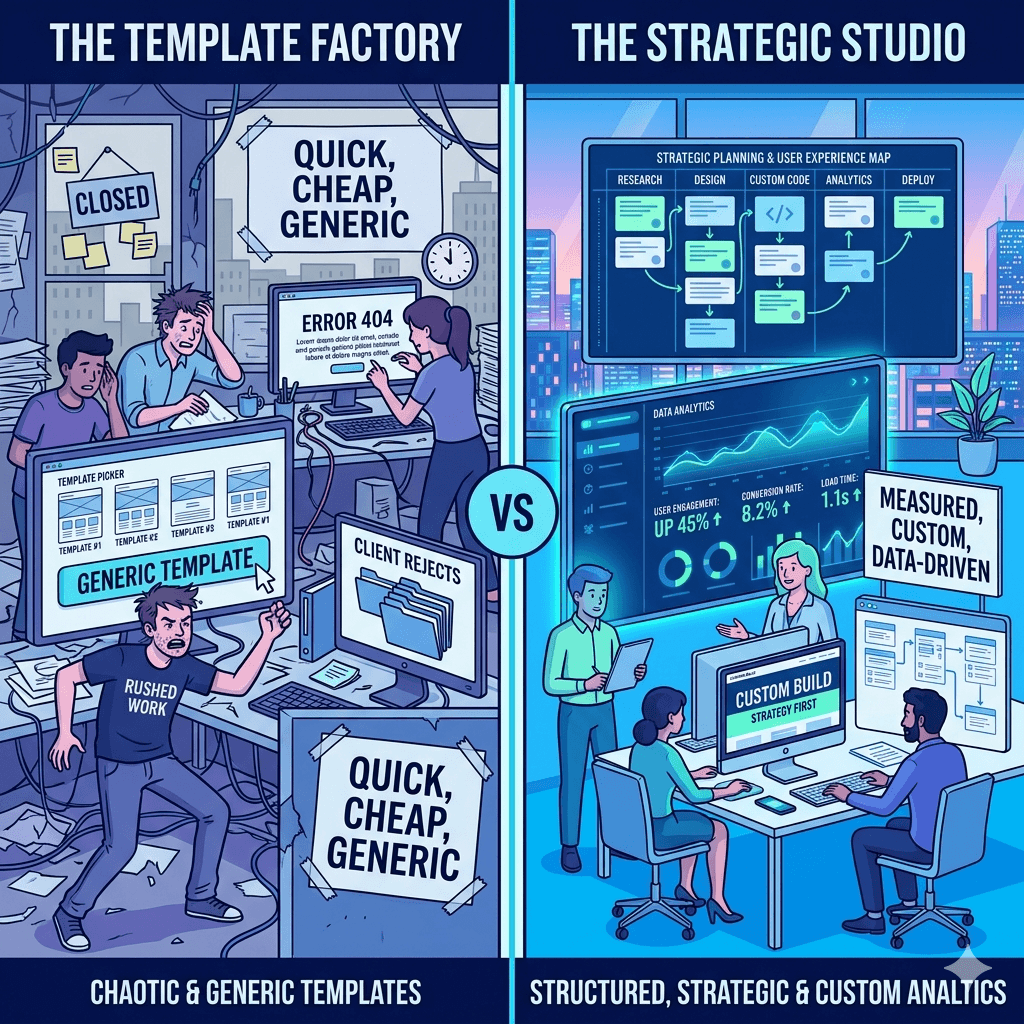
    A comparison split screen showing two web agencies one chaotic with generic templates

    Let us get specific. When you compare Kico Web Design to many other website design companies in Uganda, several key differences stand out clearly.

    Strategy-First vs Design-Only Approach

    A design-only agency hands you something that looks good. A strategy-first agency like Kico hands you something that works. The difference shows up in your website analytics, your enquiry volume, and your search engine rankings. Pretty without purpose is just decoration.

    Custom Solutions vs Template-Heavy Builds

    Many agencies in Uganda rely heavily on pre-built templates. These are fast to set up but come with serious limitations. They are rarely optimized for performance, they look generic, and they are hard to customize as your business grows. Kico builds custom website design Uganda businesses actually own and control. For a closer look at why this matters, explore the comparison of website platforms and how each stacks up against real business needs.

    Focus on Local Market Behavior vs Generic Global Designs

    A website designed for a European or American audience will not automatically work in Uganda. Customer expectations, internet speeds, device types, payment preferences, and communication habits are all different here. Kico builds websites with the Ugandan market in mind from day one. This local expertise is one of the things that makes Kico one of the best web design companies in Uganda for locally-focused businesses.

    Stronger Emphasis on Performance and SEO Readiness

    SEO web design Uganda businesses need goes beyond just adding keywords. Kico integrates SEO best practices into the website architecture itself. This includes proper heading structures, fast-loading code, mobile responsiveness, metadata optimization, and clean URL structures. All of this helps your website show up when potential customers are searching online.

    Ongoing Support and Optimization vs One-Time Delivery

    Many agencies disappear after they hand over your website. Kico offers ongoing support and optimization to ensure your site continues to perform well as your business evolves. This long-term relationship approach makes a real difference for small businesses that do not have in-house technical teams.

    4. Key Features Included in Kico Web Design Projects

    When you work with Kico Web Design Uganda, you are not just getting a website. You are getting a carefully assembled set of features designed to make your online presence strong from day one.

    Mobile Optimization and Responsive Layouts

    Every website Kico builds is fully responsive. That means it adjusts automatically to look great on smartphones, tablets, and desktop screens. Given that most Ugandan internet users are on mobile, this is non-negotiable for any professional website design Uganda business owners should expect.

    SEO-Friendly Structure and Metadata Setup

    Kico sets up your website with proper on-page SEO from the start. This includes optimized page titles, meta descriptions, alt text on images, proper heading hierarchy, and schema markup where applicable. Getting this right from the beginning saves businesses significant time and money later.

    Secure Hosting and Performance Optimization

    A slow or insecure website is a liability. Kico recommends and sets up reliable hosting solutions, installs SSL certificates for security, and optimizes images and code for speed. If you want to understand more about the technical side of this, there is a detailed guide on website speed that explains exactly what good performance looks like for Uganda’s unique internet conditions.

    Conversion-Focused Landing Pages

    Whether you need a product page, a service overview, or a lead capture page, Kico designs pages with conversion as the primary goal. Every section is intentional, every call to action is tested, and every form is optimized for completion.

    Integration with Social Media and WhatsApp Contact Tools

    Ugandan customers love WhatsApp. Kico integrates WhatsApp chat buttons, social media feeds, and sharing tools directly into your website. This makes it seamless for customers to reach you the way they prefer, which means more conversions and fewer missed opportunities.

    5. Benefits for Ugandan Businesses Working with a Strategy-Driven Agency

    Ugandan business owner celebrating increased online sales as a website dashboard shows rising traffic, leads, and conversions represented by upward glowing graphs and icons

    Choosing a strategy-first web development Uganda partner does not just give you a better website. It gives you a business advantage.

    Increased Customer Trust and Engagement

    When your website looks professional, loads fast, and answers customer questions clearly, people stay longer and trust you more. That trust is the first step toward a sale.

    Higher Conversion Rates from Website Traffic

    A conversion-focused website design turns more of your visitors into actual leads or customers. Even a small improvement in conversion rate can have a massive impact on your revenue over time.

    Better Visibility on Search Engines

    A well-built website that follows SEO best practices will rank higher on Google. More visibility means more organic traffic without spending money on ads. To build on this, a solid SEO strategy alongside good web design creates a powerful combination for long-term growth.

    Improved Brand Credibility in Competitive Markets

    In competitive industries like finance, hospitality, real estate, and professional services, a strong online presence signals that your business is serious. It sets you apart from competitors still relying on social media alone.

    Long-Term Scalability of Digital Presence

    A well-architected website grows with your business. Adding new pages, products, blog posts, or services is easy when the foundation is built correctly. This is the kind of long-term thinking that defines affordable web design Uganda businesses can actually rely on for years.

    6. Common Mistakes Ugandan Businesses Make with Websites

    A chaotic website dashboard showing slow loading symbols, broken layouts, and confusing navigation elements

    Understanding what not to do is just as important as knowing what to do. Here are some of the most common website mistakes we see from businesses across Uganda.

    Using Outdated or Poorly Optimized Templates

    Free or cheap templates might seem like a good deal upfront, but they often come loaded with bloated code, poor security, and zero customization. They look generic and rarely convert well. Custom website design Uganda businesses invest in pays for itself quickly in better results.

    Ignoring Mobile Users

    A website that only looks good on a desktop is leaving money on the table. With smartphone usage dominating internet access in Uganda, mobile-friendly website design Uganda businesses need is an absolute must.

    Lack of Clear Calls-to-Action

    Many websites are built with no clear direction for the visitor. What should they do next? If your website does not tell people to call, book, buy, or enquire, most of them will simply leave without doing anything.

    Slow Hosting and Poor Performance

    Budget hosting might save money upfront, but a slow-loading website frustrates users and hurts your Google rankings. Fast loading website Uganda standards require solid hosting infrastructure and proper technical optimization.

    Not Optimizing for Local Search Intent

    Many businesses build websites without thinking about how local customers actually search. Phrases like “web design services Kampala” or “best restaurant in Nakasero” reflect how people search in Uganda. Ignoring local SEO means missing highly relevant, ready-to-buy traffic.

    7. How to Choose the Right Web Design Partner in Uganda

    Not all web design agencies in Uganda are created equal. Here is what to look for when making your decision.

    Evaluating Portfolio and Past Work Quality

    Always ask to see examples of websites the agency has built. Look for clean design, fast loading, mobile responsiveness, and clear calls to action. If their own website is slow or looks dated, that tells you something.

    Checking SEO and Performance Understanding

    A good website design company in Uganda should be able to talk about SEO, page speed, and mobile performance without needing to look anything up. If they only talk about colors and layouts, be cautious.

    Assessing Communication and Support Services

    Will they be available after the website launches? Do they offer ongoing maintenance? Clear, responsive communication before the project starts is a good indicator of how things will go after.

    Understanding Pricing vs Value Offered

    The cheapest option is rarely the best one. Focus on value, not just price. A slightly higher investment in a strategy-driven agency can deliver returns that far outweigh the cost difference.

    Looking for Local Market Experience

    An agency that understands Ugandan consumers, local internet infrastructure, and regional business culture will always do better work than one using a generic global playbook. For a comprehensive guide on making this decision, read this detailed piece on choosing agency that walks you through the full evaluation process.

    8. Future of Website Design for Ugandan Businesses

    A futuristic cityscape of Kampala with glowing digital websites floating above buildings, representing the rise of online business ecosystems and digital transformation

    The digital landscape in Uganda is evolving fast, and website design is changing with it. Here is what to expect in the coming years.

    Rise of AI-Assisted Web Development

    Artificial intelligence tools are making it easier and faster to build certain parts of websites. However, strategy, creativity, and local market understanding remain deeply human skills. Agencies that combine AI efficiency with human expertise will have a clear edge.

    Increased Focus on Mobile-First and Speed Optimization

    As mobile internet usage continues to grow in Uganda, mobile-first design will shift from being a best practice to an absolute baseline. Responsive website design Uganda businesses invest in now will be even more critical tomorrow.

    Growth of E-Commerce and Online Service Platforms

    More Ugandan businesses are moving sales and services online. Ecommerce website development Uganda is growing quickly across retail, food delivery, hospitality, and professional services. Businesses that build strong e-commerce foundations now will have a major head start.

    Stronger Competition Requiring Better UX and Branding

    As more businesses get online, standing out will require more than just having a website. Superior user experience, strong branding, and genuine value for visitors will separate the winners from the crowd. This is exactly why the strategy-first approach that defines Kico Web Design is only going to become more valuable over time.

    9. Frequently Asked Questions

    What makes a good business website in Uganda?

    A good business website in Uganda is fast, mobile-friendly, easy to navigate, and clear about what your business offers and how to contact you. It should also be optimized for search engines so customers can find you on Google.

    How long does it take to build a professional website?

    A basic professional website typically takes two to four weeks. More complex websites with multiple pages, e-commerce functionality, or custom features can take six to ten weeks depending on the scope and how quickly content is provided.

    Why is mobile optimization important for Ugandan users?

    The majority of internet users in Uganda access websites through smartphones. If your website does not work well on mobile devices, you will lose most of your potential customers before they even read what you offer.

    Do small businesses really need SEO for their website?

    Yes. SEO helps your website show up when people search for the products or services you offer. Without it, your website relies entirely on word-of-mouth and social media to bring in visitors. With SEO, you get a steady stream of free, targeted traffic from people already looking for what you sell.

    How much does professional website design cost in Uganda?

    Costs vary depending on the complexity of the project. A basic professional website for a small business in Uganda typically ranges from a few hundred thousand to a few million Ugandan shillings. The key is to focus on the value delivered, not just the upfront price.

    What is the difference between custom and template websites?

    Template websites use pre-built designs that are quick to set up but limited in flexibility and originality. Custom websites are built specifically for your business, your audience, and your goals. They perform better, look more professional, and give you full ownership of your digital presence.

    How can a website help increase customer trust?

    A professional website with clear contact information, customer testimonials, a secure connection (https), and high-quality images sends a strong signal that your business is legitimate and serious. It removes doubt and makes people more comfortable reaching out.

    Can I update my website after it is built?

    Yes. Most professional websites are built on content management systems that allow you to update text, images, and pages without technical knowledge. Your agency should also provide training and ongoing support if needed.

    What platforms are best for business websites?

    WordPress is the most widely used platform for professional business websites in Uganda because of its flexibility, SEO capabilities, and large support community. Other options like Shopify are great for e-commerce. The best choice depends on your business type and goals.

    How do I know if my website is performing well?

    You can measure website performance using tools like Google Analytics and Google Search Console. Key indicators include the number of monthly visitors, how long people stay on your site, how many enquiries or sales you generate, and where your pages rank on Google.

    Final Thoughts

    The difference between a website that looks good and one that actually works for your business comes down to strategy, local knowledge, and technical execution. Kico Web Design Uganda brings all three together in every project.

    Whether you are starting from scratch, looking for a website redesign services Uganda agency you can trust, or simply trying to make your existing website perform better, working with a team that understands your market and your goals makes all the difference.

    Your website is often the first impression your business makes. Make it count.

  • Kampala vs Entebbe vs Jinja: Where Are Uganda’s Best Web Designers? 

    Kampala vs Entebbe vs Jinja: Where Are Uganda’s Best Web Designers? 

    1. Introduction

    If you’ve ever tried to find a reliable web designer in Uganda, you know how overwhelming the search can get. There are dozens of options spread across different cities, each with its own strengths, pricing, and working style. Whether you’re launching a new business or giving your existing website a much-needed upgrade, the city where your designer is based can make a real difference.

    Three cities dominate Uganda’s web design conversation: Kampala, Entebbe, and Jinja. Kampala is the commercial heartbeat of the country. Entebbe is a quieter hub with a growing tech presence. Jinja is emerging as a creative and entrepreneurial hotspot. But which one has the best web designers for your specific needs?

    This article breaks it all down   the strengths, weaknesses, costs, quality levels, and ideal use cases for each city. By the end, you’ll know exactly where to look and what to ask for.

    2. What Makes a Great Web Designer?

    Before we compare cities, let’s get clear on what separates a great web designer from an average one. It’s more than just knowing how to build a website. A truly skilled designer brings together several core qualities.

    First, technical skill matters. A strong web designer should be comfortable working with platforms like WordPress, Shopify, or custom-coded solutions. They should understand HTML, CSS, and at least basic JavaScript.

    Second, design sense is critical. Good designers understand layout, color psychology, typography, and user experience (UX). They build websites that don’t just look nice, they guide visitors toward action.

    Third, SEO awareness is non-negotiable in today’s digital landscape. The best web designers in Kampala and across Uganda know that a beautiful website with no search visibility is essentially a billboard in a forest.

    Fourth, communication skills matter enormously. A designer who listens well and keeps you updated is worth far more than a technically brilliant one who goes silent for weeks.

    Finally, reliability and after-launch support set professionals apart from hobbyists. Great designers deliver on time, stay within budget, and offer ongoing maintenance.

    3. Why Location Matters in Choosing a Web Designer

    A detailed global connectivity map showing three Ugandan cities—Kampala, Entebbe

    You might wonder: in the age of Zoom and WhatsApp, does location really matter? Honestly, yes   more than many people expect.

    When your web designer is based nearby, in-person meetings become possible. That matters for businesses with complex requirements, specific brand guidelines, or frequent revision cycles. Face-to-face conversations reduce miscommunication and speed up approval processes.

    Location also influences pricing. Designers operating from Kampala’s high-cost commercial zones may charge more than those based in Entebbe or Jinja, even for similar skill levels. Understanding this pricing geography helps you get better value.

    There’s also the question of local market knowledge. A web designer who lives and works in your city understands local customer behavior, local competitors, and the unique digital landscape of your market. That context translates into smarter design decisions.

    And finally, support and accountability improve with proximity. If something breaks on your website at a critical time, a local designer is easier to reach and has more incentive to respond quickly than a remote freelancer with no local reputation at stake.

    4. Overview of Web Design in Uganda

    Uganda’s web design industry has matured considerably over the past decade. What was once dominated by a handful of agencies in Kampala has expanded into a dynamic ecosystem of freelancers, boutique studios, and full-service digital agencies spread across multiple cities.

    Website design services in Uganda now cover everything from basic brochure sites to complex e-commerce platforms, custom web applications, and SEO-optimized content sites. The demand has been driven by a growing entrepreneurial culture and the rapid adoption of smartphones and mobile internet.

    According to digital market observers, more Ugandan businesses are investing in professional online presence as competition increases, especially in sectors like retail, hospitality, education, and professional services. This demand has attracted a new generation of skilled web developers in Uganda who are trained, creative, and internationally aware.

    The three cities covered in this article   Kampala, Entebbe, and Jinja   represent distinct segments of this growing market. Understanding each city’s unique digital culture helps you make a smarter hiring decision.

    5. Web Designers in Kampala: Strengths and Weaknesses

    A highly detailed modern tech agency environment in Kampala showing a busy open-plan office

    Kampala is Uganda’s largest city and its undisputed commercial capital. It’s no surprise that it hosts the highest concentration of web designers in Uganda. From large agencies with dedicated teams to talented freelancers working from co-working spaces, the options are vast.

    If you want to see what skilled Kampala designers are capable of producing, you can browse through some excellent website examples from top Uganda businesses.

    5.1 Strengths of Kampala-Based Designers

    • Diverse talent pool: Kampala has the largest number of best web designers in Kampala available for hire, from entry-level freelancers to senior developers with years of experience.

    • Agency-level expertise: Several web design agencies in Kampala Uganda offer end-to-end services including strategy, design, development, SEO, and digital marketing under one roof.

    • Competitive market: Because competition is high, Kampala designers tend to be up-to-date with trends, tools, and client expectations.

    • Wide industry exposure: Working in Uganda’s business capital means these designers have served clients across industries, giving them broad problem-solving experience.

    • Infrastructure and connectivity: Better internet infrastructure in Kampala enables faster file transfers, video calls, and quicker project turnaround times.

    5.2 Weaknesses of Kampala-Based Designers

    • Higher prices: The cost of living and doing business in Kampala pushes design rates up. Some website designers in Kampala charge premium rates regardless of the project size.

    • Inconsistent quality: The large number of providers means quality varies wildly. Not every designer who markets themselves as a professional has the portfolio to back it up.

    • Overextended agencies: Larger agencies often juggle many clients at once, which can mean slower communication and less personalized attention for smaller projects.

    • Traffic and logistics: Arranging in-person meetings in Kampala can be frustrating due to traffic congestion, especially in central business areas.

    6. Web Designers in Entebbe: Strengths and Weaknesses

    Entebbe sits about 40 kilometers from Kampala, along the shores of Lake Victoria. Known primarily for its airport and relaxed atmosphere, Entebbe is quietly building a reputation as a growing base for freelance web designers and small digital studios.

    Many entrepreneurs and businesses in Entebbe serve the tourism, hospitality, and export sectors   industries that often require sophisticated, visually compelling websites. This demand has shaped a local design community with a specific flair for high-end digital experiences.

    6.1 Strengths of Entebbe-Based Designers

    • Niche expertise: Entebbe web designers often specialize in hospitality, tourism, and lifestyle brands, giving them strong visual sensibilities for those sectors.

    • More competitive pricing: Affordable web design in Uganda is more accessible in Entebbe, where overhead costs are lower than in Kampala.

    • Closer client relationships: With a smaller client base, Entebbe designers typically offer more personalized service and greater responsiveness.

    • Quieter work environment: Less urban pressure often means more creative focus and timely project delivery.

    6.2 Weaknesses of Entebbe-Based Designers

    • Smaller talent pool: The overall number of web designers in Entebbe is significantly smaller, which limits your choices, especially for specialized technical projects.

    • Limited agency options: Most providers in Entebbe are freelancers or very small teams. Comprehensive agency-level services are harder to find locally.

    • Possible capacity issues: Smaller operations may struggle with tight deadlines or multiple concurrent projects.

    • Less exposure to competitive industries: Designers based exclusively in Entebbe may have less experience with fast-paced sectors like fintech, e-commerce, or corporate services.

    7. Web Designers in Jinja: Strengths and Weaknesses

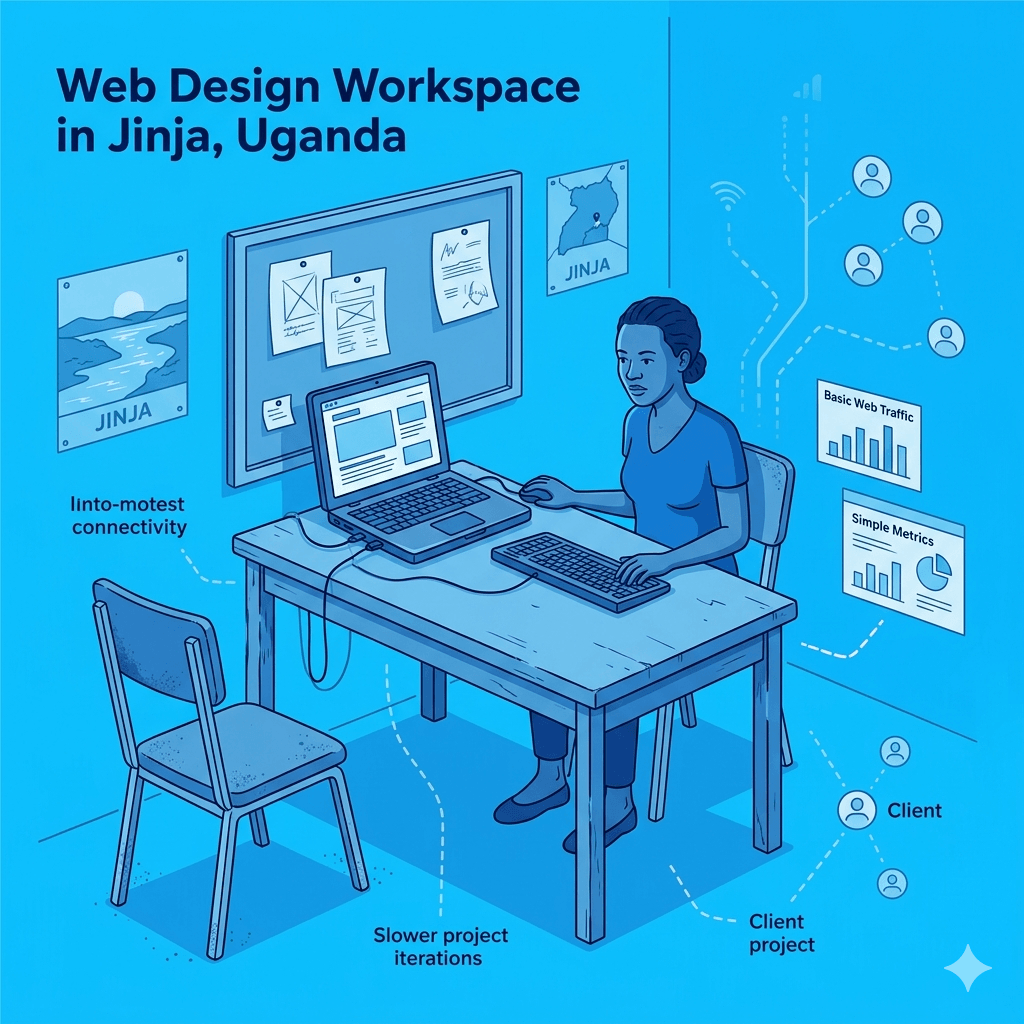
    A modest web design workspace in Jinja showing a lone designer working in a simplified setup with limited digital tools

    Jinja is Uganda’s third-largest city and an increasingly vibrant hub for tourism, small business, and youth entrepreneurship. It has attracted a wave of young, digitally savvy creatives, many of whom have built skills through online training platforms and international remote work experience.

    Website designers in Jinja Uganda bring a fresh, modern energy to the field. They’re often self-taught digital natives who stay current with global design trends while keeping their rates accessible for local businesses.

    7.1 Strengths of Jinja-Based Designers

    • Creative and innovative: Jinja’s emerging creative culture means designers there tend to bring fresh perspectives and bold design choices.

    • Affordable rates: Web design costs in Jinja are generally the most affordable of the three cities, making them ideal for startups and small businesses.

    • International exposure: Many Jinja-based designers have worked with international clients through platforms like Upwork or Fiverr, raising their quality standards.

    • Quick adoption of new tools: Younger designers in Jinja are often early adopters of emerging design and development tools, which can benefit clients looking for modern solutions.

    7.2 Weaknesses of Jinja-Based Designers

    • Varying experience levels: The Jinja design scene includes many talented newcomers but also inexperienced beginners. Due diligence in portfolio review is essential.

    • Fewer established agencies: Full-service digital agencies are rare in Jinja. Most providers are independent freelancers or very small teams.

    • Internet reliability: Connectivity in some parts of Jinja can be inconsistent, occasionally affecting turnaround times and communication.

    • Limited industry specialization: Jinja website developers may have less exposure to complex corporate, legal, or financial industry requirements.

    8. Cost Comparison: Kampala vs Entebbe vs Jinja

    Cost is usually the first question people ask. And fair enough   budget matters. But understanding what drives pricing in each city helps you avoid the trap of choosing the cheapest option at the expense of quality. For a detailed breakdown of what you should expect to pay, check out our guide on website cost in Uganda.

    8.1 Average Pricing in Each City

    Kampala: A basic business website from a professional designer typically ranges from UGX 1,500,000 to UGX 4,000,000. Full-service agency projects can go significantly higher, especially for e-commerce or custom web applications.

    Entebbe: Expect to pay between UGX 1,000,000 and UGX 3,000,000 for a similar scope. Affordable web design in Entebbe is possible without compromising on visual quality, especially for hospitality or service businesses.

    Jinja: Rates in Jinja tend to start lower, with many freelancers offering complete websites from UGX 700,000 to UGX 2,500,000. This makes it the most budget-friendly option overall.

    8.2 Factors That Affect Pricing

    Regardless of city, several factors push website design prices in Uganda up or down:

    • Number of pages: A 5-page site costs far less than a 20-page site with custom functionality.

    • E-commerce requirements: Adding a shopping cart, payment gateway, and product management system significantly increases cost.

    • Custom vs template design: Custom-designed websites are more expensive but offer unique branding. Template-based designs are faster and cheaper.

    • SEO setup: Proper on-page SEO optimization adds to the cost but pays for itself in organic traffic over time.

    • Revisions and project scope: Well-defined scopes with limited revisions keep costs predictable.

    • Ongoing maintenance: Monthly retainers for hosting, updates, and security monitoring add to your long-term investment.

    9. Quality and Expertise Comparison

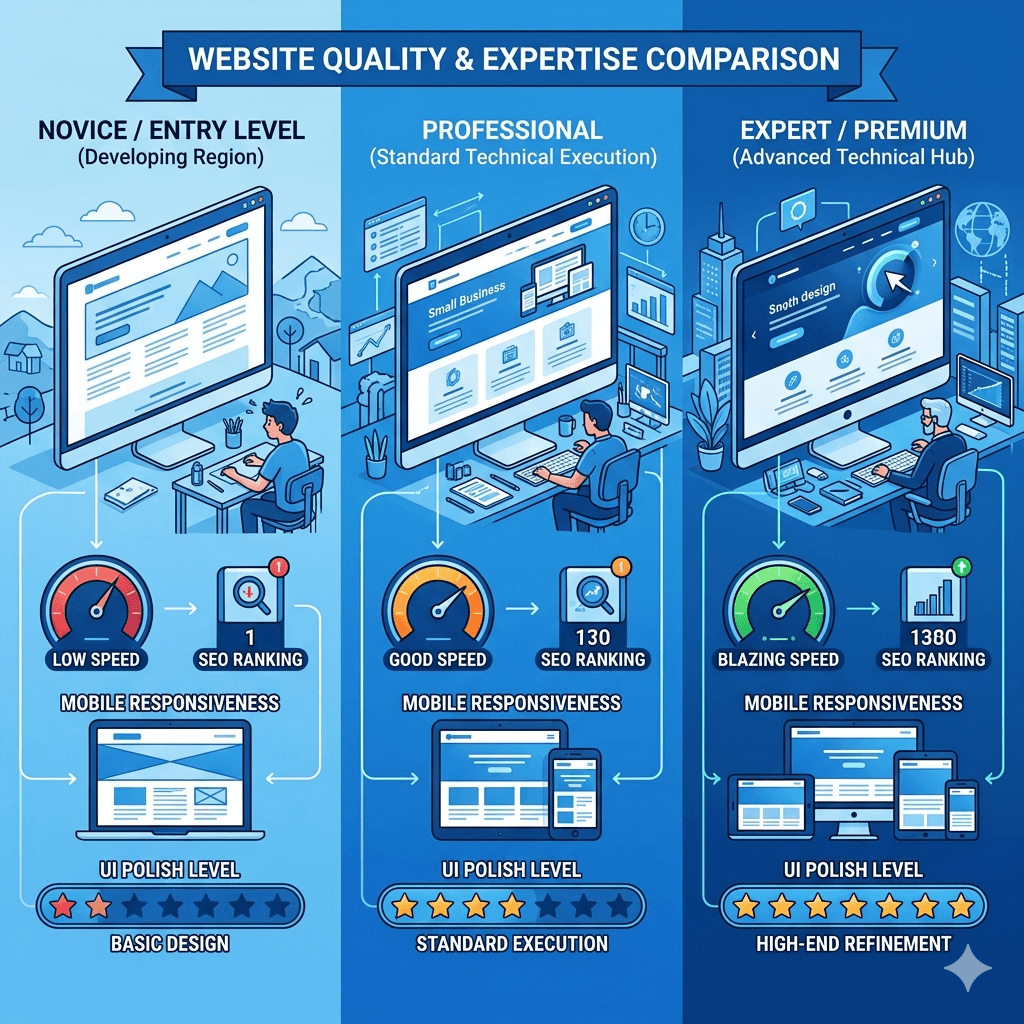
    A multi-panel comparison showing three websites of varying quality levels

    Price is one thing. Quality is another. Fortunately, the two don’t always go hand in hand in Uganda’s web design market. Skilled designers exist at every price point if you know how to look.

    9.1 Experience Levels

    Kampala has the highest concentration of experienced professionals, particularly those who have worked with large corporations, NGOs, and international clients. Entebbe designers often have specialized experience in specific niches. Jinja’s pool skews younger, with more fresh talent that brings energy and modern skills but less proven track records for complex projects.

    9.2 Technical Skills and Tools

    Across all three cities, the best web designers in Uganda are proficient in WordPress, with strong expertise in Elementor, Divi, or custom theme development. Responsive web design   ensuring websites display correctly on mobile devices   is now a baseline expectation. UX/UI design capabilities are strongest among Kampala-based agencies, though talented individuals in all three cities can deliver excellent results.

    E-commerce website design in Uganda is most sophisticated in Kampala, where designers have more experience integrating MTN Mobile Money, Airtel Money, and other local payment systems into WooCommerce or Shopify stores.

    9.3 SEO and Performance Capabilities

    One area where many designers across all cities fall short is SEO. Building a beautiful website that no one can find is a common and costly mistake. When comparing designers, ask specifically about their approach to on-page SEO, page speed optimization, and structured data.

    For businesses that want serious online visibility, understanding local SEO is critical. It’s what helps your website appear when potential customers in your city search for your services.

    10. Communication and Support Differences

    Communication can make or break a web design project. Even the most technically skilled designer becomes a liability if they don’t respond to messages, miss deadlines, or disappear after launch.

    Kampala-based agencies typically have more structured communication systems, project management tools, dedicated account managers, and formal progress reports. This makes them better suited for larger, more complex projects where structured oversight matters.

    Entebbe designers tend to offer a more personal touch. Because they work with fewer clients, you often communicate directly with the person actually building your site. This leads to faster decisions and fewer misunderstandings.

    Jinja freelancers vary widely in communication quality. Some are highly responsive and proactive. Others need more follow-up. The key is to assess communication during the proposal stage. If a designer takes three days to respond to your initial inquiry, that’s a preview of how they’ll behave mid-project.

    Regardless of city, always establish clear expectations upfront: preferred communication channel, response time standards, progress update frequency, and how revisions will be handled.

    11. Which City Is Best for Your Business Needs?

    There’s no single “best” city for web design in Uganda. The right choice depends entirely on your budget, project complexity, industry, and working style. Here’s a practical breakdown:

    11.1 Best for Startups and Small Budgets

    If you’re launching a new business and working with a tight budget, Jinja or Entebbe give you the most value for money. You can find professional, capable designers at accessible price points, especially for straightforward business websites or portfolios. Freelance web designers in Kampala can also be affordable, but you need to search more carefully to find the right balance of cost and quality.

    11.2 Best for Established Businesses

    If you’re running an established business and need a high-performance, fully optimized website with SEO integration, e-commerce capability, or complex functionality, Kampala is your best bet. Web design agencies in Kampala Uganda have the team size, tools, and track record to handle ambitious projects. The higher cost typically reflects the higher level of service and accountability.

    11.3 Best for Creative and Niche Projects

    Entebbe shines for visually driven projects in tourism, hospitality, lifestyle, or the arts. Its designers have a natural affinity for beautiful, emotionally resonant design. Jinja is increasingly strong for creative and purpose-driven projects. If your brand has a bold, youthful identity, a Jinja-based designer might surprise you with their work.

    12. How to Choose the Right Web Designer

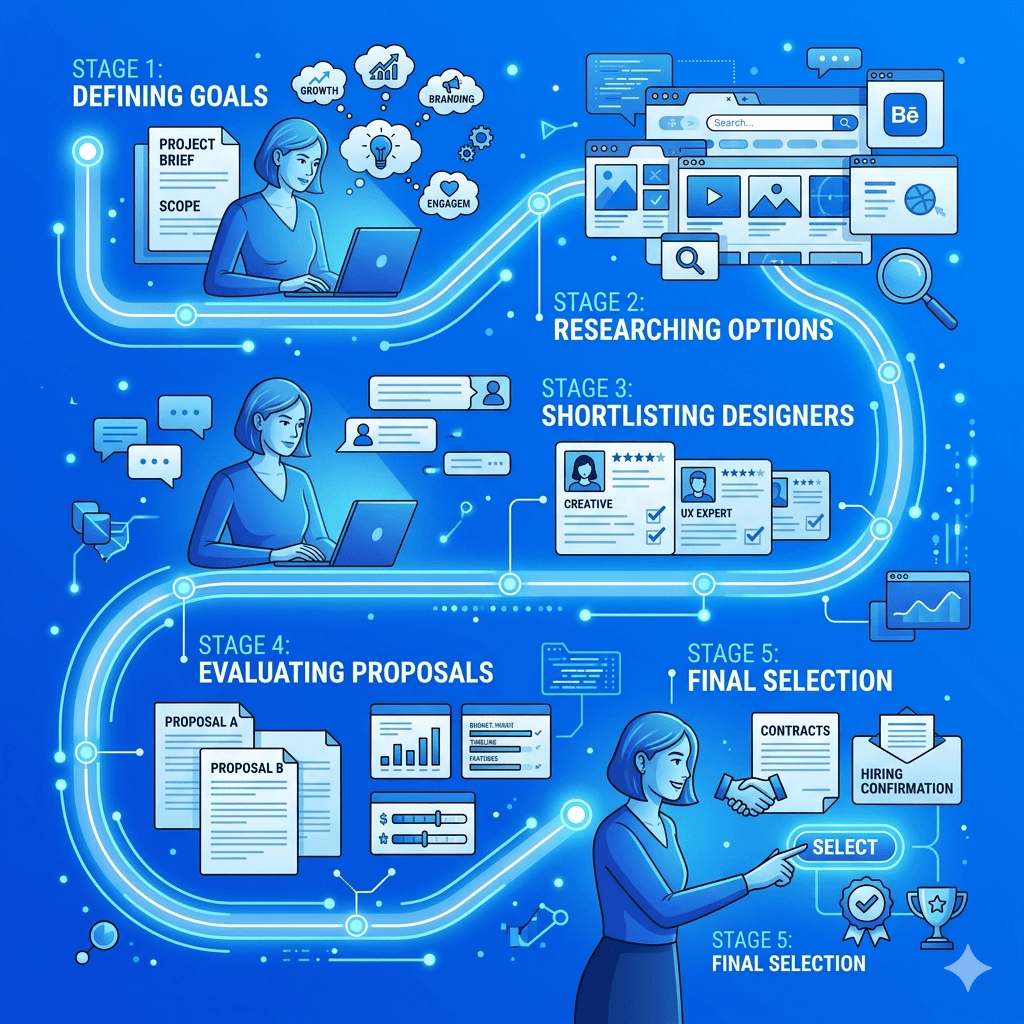
    A step-by-step visual workflow showing a business owner moving through stages of decision-making

    Choosing a web designer is one of the most important business decisions you’ll make this year. Get it wrong, and you’re looking at wasted money, a website that underperforms, and months of frustration. Here’s a clear framework to help you choose designer confidently.

    12.1 Define Your Goals and Budget

    Before reaching out to anyone, get clear on what you actually need. Are you looking for a simple informational site, a lead-generating business website, or a full e-commerce store? Define your goals in plain terms: more phone calls, more product sales, more bookings. Set a realistic budget range and know which features are must-haves versus nice-to-haves.

    12.2 Review Portfolios and Past Work

    Every professional web designer in Uganda should have a portfolio. Review it critically. Look for variety, attention to detail, mobile responsiveness, and visual consistency. Ask whether the sites in their portfolio actually rank on Google   not just look good. A beautiful site with no SEO value is like a sports car with no engine.

    12.3 Check Reviews and Testimonials

    Ask for client references and actually contact them. Online reviews on Google Business, social media, or LinkedIn provide independent validation of a designer’s reliability and quality. Be cautious of designers who only show you hand-picked testimonials with no external verification.

    12.4 Ask About SEO and Performance

    Ask specifically: “How do you build websites for search engine visibility?” and “What steps do you take to ensure fast page load times?” A designer who gives vague answers or dismisses SEO as “something we can do later” is likely to deliver a website that struggles to attract organic traffic.

    12.5 Evaluate Communication and Support

    Pay attention to how they communicate during the proposal stage. Are they prompt, clear, and professional? Do they ask good questions to understand your business? Also clarify post-launch support: what happens if something breaks? Is ongoing maintenance included or billed separately?

    13. Common Mistakes to Avoid When Hiring

    Even experienced business owners make predictable mistakes when hiring web designers. Knowing these pitfalls in advance can save you time, money, and serious headaches.

    13.1 Choosing Based on Price Alone

    Affordable web design in Uganda is available, but the cheapest quote is rarely the best deal. A very low price often signals limited experience, template shortcuts, or corners cut on functionality and SEO. The real cost of a cheap website shows up later   in poor performance, security vulnerabilities, or the need to rebuild from scratch within a year. Before comparing prices alone, understand the free vs paid trade-offs in full.

    13.2 Ignoring SEO and Mobile Optimization

    A website that isn’t mobile-friendly in 2025 is not a professional website, it’s a liability. Similarly, launching without basic SEO is like opening a shop with no signage. Always confirm that your designer builds mobile-first, responsive websites and handles on-page SEO as part of the standard package, not as an add-on.

    13.3 Not Defining Project Scope Clearly

    Vague project briefs lead to endless revisions, scope creep, delayed launches, and disputed invoices. Before signing anything, make sure the contract specifies the number of pages, required features, revision rounds, delivery timeline, and what happens if either party needs to make changes. Clear scope documentation protects both you and your designer.

    14. Tips for Getting the Best Results

    Hiring the right designer is only half the battle. How you work with them determines whether the finished product meets your expectations.

    14.1 Prepare Clear Requirements

    Come to the first meeting with a document that outlines your business goals, target audience, preferred design styles (with examples of websites you like), required pages, and any technical integrations needed. The clearer your brief, the better the output. Designers work best when they have strong direction, not vague mandates.

    14.2 Collaborate Effectively

    Give feedback promptly and specifically. Instead of saying “I don’t like it,” say “The font feels too formal for our brand” or “The hero image doesn’t reflect our target audience.” Concrete, actionable feedback speeds up the revision process and leads to a better final result. Treat your designer as a creative partner, not just an order taker.

    14.3 Plan for Ongoing Maintenance

    Your website isn’t a one-time purchase, it’s a living digital asset. Budget for ongoing maintenance including hosting, security updates, content updates, and periodic redesigns. Establish a maintenance agreement with your designer before launch. A neglected website loses rankings, loads slowly, and becomes vulnerable to hacking. Treat website maintenance the same way you’d treat maintaining your office or equipment.

    15. Conclusion: Making the Right Choice

    Uganda’s web design market is full of talent   and the best web designers in Uganda aren’t all in one place. Kampala leads in scale, diversity, and agency-level capability. Entebbe offers niche expertise and personalized service. Jinja brings creativity and affordability for businesses ready to take a chance on emerging talent.

    The right choice isn’t about geography alone. It’s about matching your project’s needs, budget, and working style to the right designer   wherever they’re located. Use the framework in this article to evaluate your options systematically rather than defaulting to whoever responds first or charges least.

    A professional, SEO-optimized, mobile-friendly website is one of the highest-return investments any business in Uganda can make today. Take your time, do your research, and choose a designer who genuinely understands your vision   and has the skills to bring it to life.

    16. Frequently Asked Questions

    16.1 Which city has the most affordable web designers in Uganda?

    Jinja generally offers the most affordable web design rates, followed by Entebbe. Kampala has a wider range   from budget-friendly freelancers to premium agencies. The key is that affordability varies by individual designer, not just city. Always compare quotes from multiple providers before deciding.

    16.2 Are Kampala web designers better than those in Entebbe or Jinja?

    Not necessarily. While Kampala has more experienced designers and established agencies, talented professionals exist in all three cities. Entebbe designers often excel in hospitality and lifestyle design. Jinja-based designers frequently bring fresh, modern perspectives. The best approach is to evaluate individual portfolios rather than making location-based assumptions.

    16.3 How much does a professional website cost in Uganda?

    A basic professional website in Uganda typically costs between UGX 700,000 and UGX 4,000,000, depending on location, complexity, and the provider’s experience level. E-commerce sites, custom designs, and SEO-optimized builds push costs higher. Always ask for a detailed quote and compare what’s included in each package.

    16.4 Can I hire a web designer remotely instead of locally?

    Yes, and many businesses do. Remote hiring widens your talent pool significantly. However, local designers offer advantages in market knowledge, accountability, and the ability to meet in person. For straightforward projects, remote works well. For complex or brand-sensitive builds, local proximity can be an advantage.

    16.5 What should I look for in a web designer’s portfolio?

    Look for diversity across industries, mobile responsiveness, fast loading speeds, clean visual design, and evidence that the sites are actually live and functioning. Ask whether any portfolio sites rank well in search results. Also look for relevance. A designer who has built sites similar to your industry is more likely to understand your needs quickly.

    16.6 How long does it take to build a website?

    A basic business website typically takes 2 to 4 weeks from start to finish. More complex projects   e-commerce stores, custom web applications, or sites requiring heavy content creation   can take 6 to 12 weeks or longer. Timeline depends heavily on how quickly you provide feedback, content, and approvals.

    16.7 Do web designers in Uganda offer SEO services?

    Many do, but the depth of SEO knowledge varies widely. Some designers offer basic on-page SEO as part of their standard package. Others work alongside dedicated SEO specialists. When evaluating a designer, ask specifically what SEO deliverables are included and how they measure website performance post-launch.

    16.8 Is it better to hire a freelancer or an agency?

    It depends on your project scope and working preferences. Freelancers are often more affordable and offer direct, personal communication. Agencies bring team-based expertise, structured processes, and greater capacity for large or ongoing projects. For most small to medium businesses, a skilled freelancer or boutique studio strikes the best balance of cost and quality. For complex, multi-department digital projects, an agency’s structure and accountability are worth the premium.

  • What is UI/UX Design and Why Does It Matter for Your Uganda Business?

    What is UI/UX Design and Why Does It Matter for Your Uganda Business?

    Introduction

    If you have ever landed on a website and immediately felt confused, frustrated, or lost, that is a UI/UX problem. On the flip side, if you have used an app that felt smooth, intuitive, and even enjoyable, that is great UI/UX design at work.

    UI/UX design is the art and science of creating digital products that look good and work even better. It covers everything from how a button is placed on a screen to how easy it is for someone to complete a task on your website or mobile app. In Uganda’s rapidly growing digital economy, UI/UX design meaning goes far beyond aesthetics. It is about building trust, keeping users engaged, and turning visitors into loyal customers.

    Whether you are an aspiring designer, a freelance creative, or a business owner looking to improve your online presence, understanding UI UX design Uganda trends and practices is one of the smartest investments you can make right now.

    1. What is UI/UX Design?

    Let’s break it down simply.

    UI stands for User Interface. It refers to the visual elements you see and interact with on a screen: buttons, icons, colors, typography, images, and the overall layout. Think of it as the look of a digital product.

    UX stands for User Experience. It refers to the overall feeling a user gets while navigating a product. Is it easy to use? Does it solve their problem quickly? Is the journey from start to finish smooth? UX design explained simply is: how does using this product make you feel?

    Together, UI and UX design create digital experiences that are visually appealing and functionally excellent. A good analogy is a restaurant: UI is the interior design and how the menu looks, while UX is the whole dining experience   from how quickly you were seated to how enjoyable the meal was.

    In practice, this applies to websites, mobile apps, and any other digital platform. If you are building or improving a product through App Development, understanding UI/UX design basics will help you build something people actually want to use.

    2. Why UI/UX Matters for Businesses in Uganda

    A Ugandan small business owner analyzing website analytics on a dashboard showing rising traffic

    Uganda’s digital market is growing fast. More Ugandans are going online every day, using smartphones to shop, bank, learn, and connect. With this growth comes competition   and your digital presence can either win customers or send them straight to your competitor.

    Here is why the importance of UI/UX design cannot be ignored by any Ugandan business:

    First impressions matter. Studies show that users form an opinion about a website within 0.05 seconds. If your site looks outdated or cluttered, visitors leave before you even get a chance to make your pitch.

    Customer trust is built visually. A well-designed interface signals professionalism and credibility. For users in Uganda who may be cautious about online transactions, a trustworthy design can make all the difference.

    Good UX reduces bounce rates. If your website is confusing or slow, people leave. A clear, well-structured experience keeps users on your site longer, increasing the chance they will take action.

    UI/UX design also plays a big role in search engine visibility. Search engines like Google reward sites with good user experience. This ties directly into your SEO Servicesstrategy. Better UX often means better rankings.

    For businesses investing in professional Web Design, strong UI/UX principles are embedded into every design decision to ensure your site converts visitors into paying customers.

    3. Key Principles of Good UI/UX Design

    Understanding the core principles of UI/UX design basics gives you a solid foundation whether you are designing from scratch or evaluating your existing product.

    Usability and Simplicity

    A good design should be easy to use without needing a manual. If users have to think too hard about how to navigate your site or app, something is wrong. Keep it clean, simple, and intuitive. Think about mobile app UI/UX design principles. The best apps in the world are ones that feel effortless.

    Consistency in Design

    Colors, fonts, button styles, and layout patterns should remain consistent across all pages and screens. Inconsistency creates confusion and makes your brand look unprofessional. Think of it like a uniform   when your design elements match, users feel more at ease.

    Visual Hierarchy

    Not everything on a page should scream for attention. Visual hierarchy guides users’ eyes to what matters most to your headline, call-to-action, or key information. Using size, contrast, and spacing strategically helps users absorb content quickly.

    Accessibility for All Users

    Good design should be usable by everyone, including people with disabilities. This means ensuring sufficient color contrast, readable font sizes, and screen-reader compatibility. Accessible design is not just ethical, it also expands your potential audience.

    Mobile Responsiveness

    In Uganda, the majority of internet users access content on mobile phones. If your website does not look and function well on a smartphone, you are losing a huge chunk of potential customers. Mobile-first design is no longer optional; it is essential.

    4. UI vs UX: What’s the Difference?

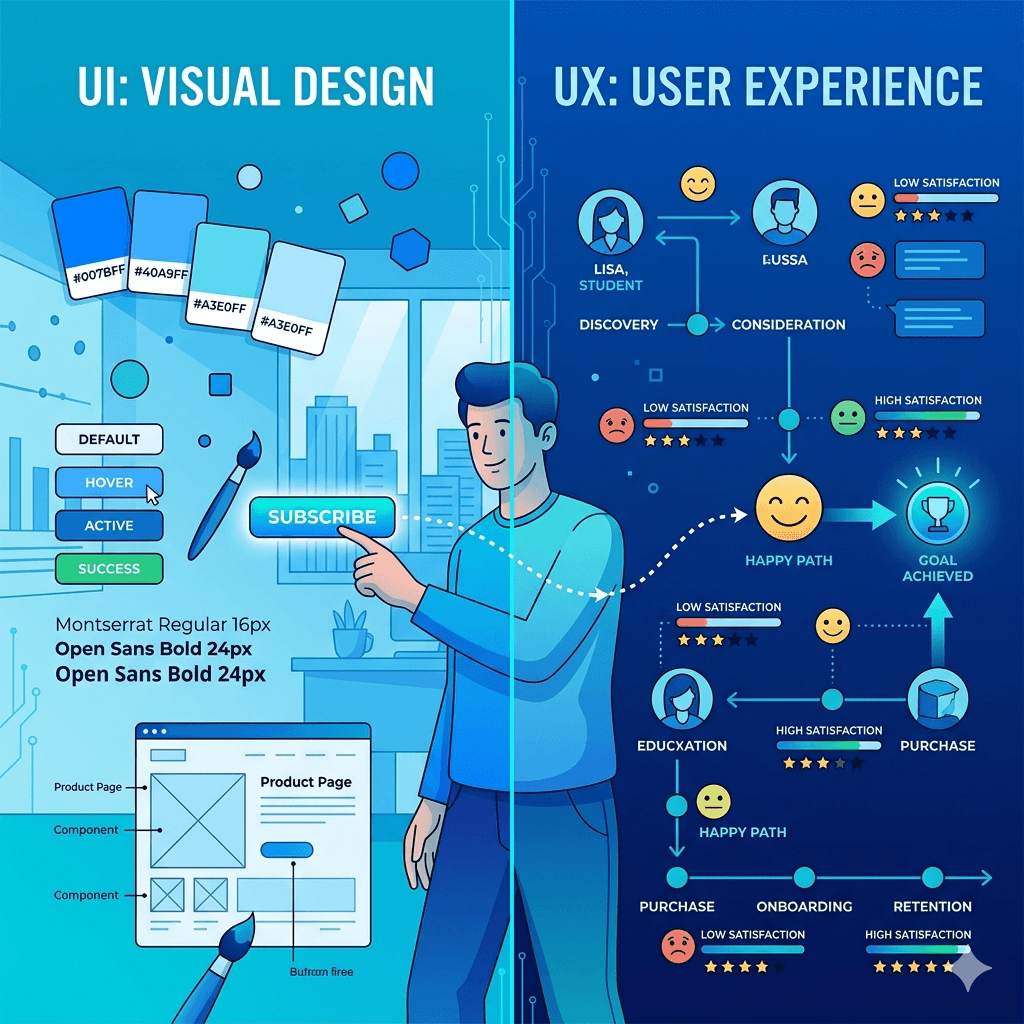
    A comparison illustration split into two halves UI side shows visual elements like colors, buttons

    People often use UI and UX interchangeably, but they are actually different   though deeply connected.

    The difference between UI and UX design is this: UI design is about how a product looks. UX design is about how a product works and feels to use.

    Here is a simple example. Imagine a food delivery app in Kampala. The UI designer decides the colors, icons, font, and button placement. The UX designer maps out the entire journey   how a user discovers the app, searches for food, adds items to their cart, pays, and tracks their order. A beautiful app with a confusing checkout process is a UI win but a UX failure.

    Both work together to create a complete, satisfying user experience. You cannot have truly great design without both pieces working in harmony.

    5. UI/UX Design Process Explained

    The UI/UX design process step by step is a structured approach that ensures the end product actually works for real users. Here is how it typically unfolds:

    User Research and Understanding Target Audience

    Every good design starts with understanding who you are designing for. This involves interviews, surveys, and observation to learn what users need, what frustrates them, and what they hope to accomplish. For a business in Uganda, this might mean understanding that your audience predominantly uses low-end Android phones and prefers content in Luganda or Swahili.

    Creating User Personas

    A user persona is a fictional but realistic profile of your target user. It includes details like age, occupation, goals, and pain points. Personas keep your design decisions grounded in real-world needs rather than assumptions.

    Wireframing and Prototyping

    A wireframe is like a blueprint, a simple, black-and-white sketch of how a screen should be laid out. Prototypes take it a step further by creating a clickable, interactive version of the design that users can test before the real product is built.

    Visual Design and Interface Creation

    This is where UI design takes center stage. Colors, typography, imagery, and interactive elements are applied to the wireframe to create a polished, branded interface. This stage is where tools like Figma for UI/UX design beginners become especially valuable.

    Testing and Feedback Collection

    Before launching, real users test the product. Their feedback reveals what works and what needs fixing. This is called usability testing, and it is one of the most important steps in the whole process.

    Iteration and Improvement

    Design is never truly finished. After launch, data and user feedback guide continuous improvements. The best digital products keep evolving based on what users actually do. You can see real examples of this process applied in client work through the Portfolio, which showcases how UI/UX processes translate into real digital outcomes.

    6. Tools Used in UI/UX Design

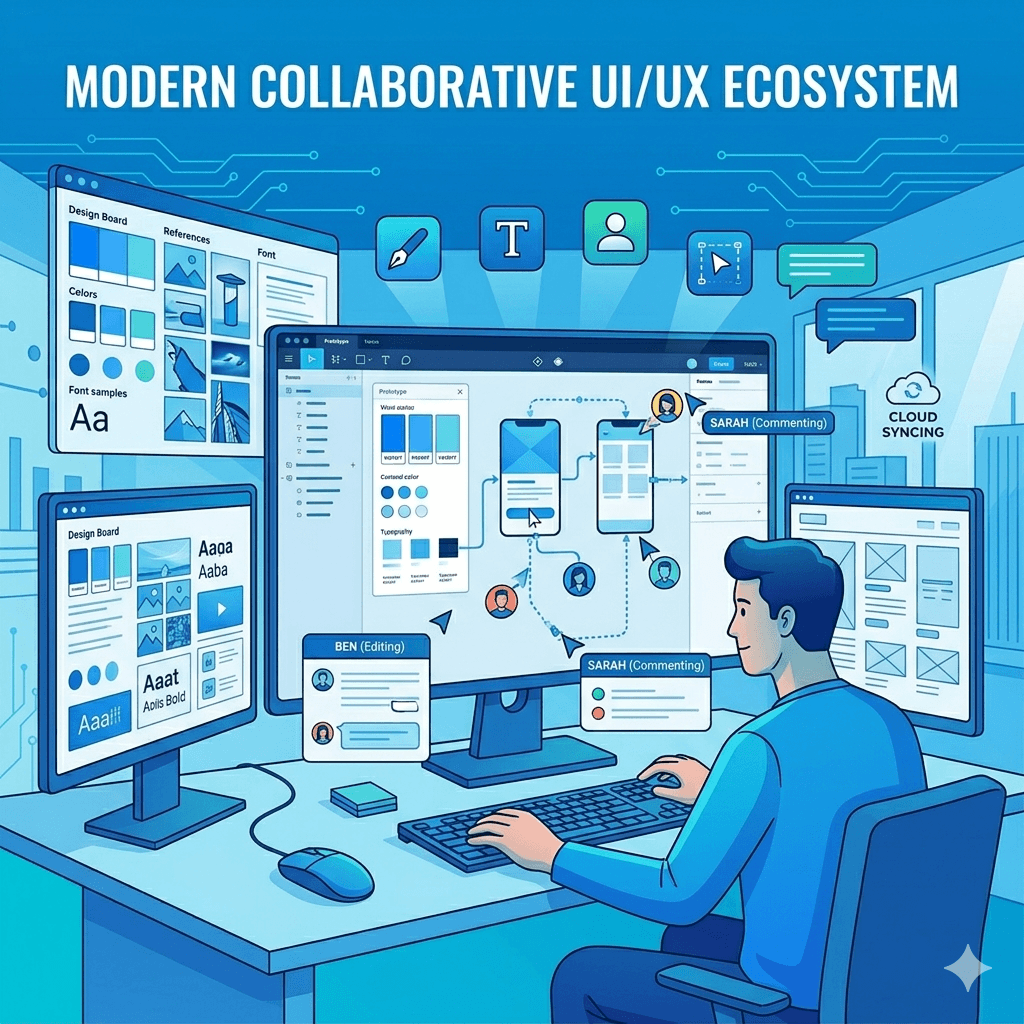
    A digital workspace showcasing UIUX tools like design boards, wireframes, and prototypes being created on software interfaces

    You do not need expensive software to get started. The best tools for UI/UX design are accessible, some even free, and widely used by professionals around the world.

    Figma for Design and Collaboration

    Figma is the most popular UI/UX tool right now, and it is browser-based, which means you can use it on any computer without a powerful machine. It allows real-time collaboration, making it perfect for teams. For anyone looking to learn Figma for UI/UX design beginners, there is a free tier that gives you access to everything you need to get started.

    Adobe XD for Prototyping

    Adobe XD is a powerful tool for creating interactive prototypes and design systems. It integrates well with other Adobe products and is favored by designers already in the Adobe ecosystem.

    Sketch for Interface Design (Mac Users)

    Sketch is a professional-grade design tool available exclusively for macOS. It is widely used in agencies and tech companies for creating detailed UI designs and design systems.

    InVision for Testing and Prototyping

    InVision is popular for creating click-through prototypes and gathering feedback from stakeholders. It makes it easy to share designs with clients and collect annotated comments, streamlining the review and iteration process.

    7. Benefits of Good UI/UX Design for Business Growth

    Investing in UI/UX design for business is not just about aesthetics. The return on investment is real and measurable. Here is how strong UI/UX design directly contributes to business growth:

    Higher Conversion Rates: When it is easy for visitors to find what they need and complete a purchase or inquiry, more of them actually do it. Good design removes friction and reduces drop-offs. Understanding how UI/UX affects website conversion rates is key for any business that generates revenue online.

    Reduced Bounce Rates: If users land on your page and quickly leave because it is confusing or slow, your bounce rate goes up. A high bounce rate signals poor user experience to search engines, which can hurt your rankings.

    Stronger Brand Credibility: A professional, well-designed digital product tells users that you take your business seriously. It builds the kind of trust that turns casual visitors into repeat customers.

    Better SEO Performance: Search engines factor in user engagement signals like time on page and click-through rates. A site with excellent UX naturally performs better in search results, which complements your overall SEO Guide strategy.

    Lower Customer Support Costs: When users can navigate your product without getting stuck, they contact your support team less often. This saves time and money in the long run.

    8. Common UI/UX Design Mistakes to Avoid

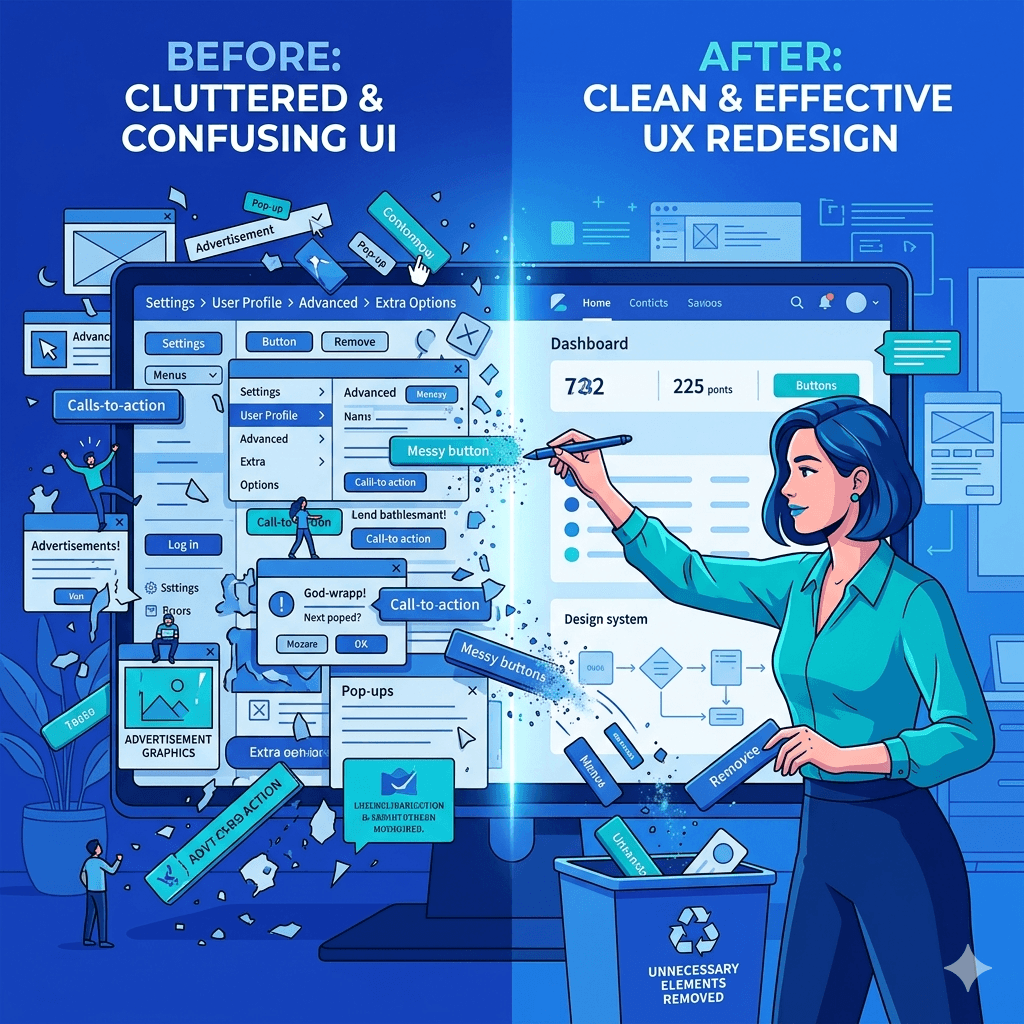
    A cluttered digital interface filled with overlapping buttons

    Knowing the most common UI/UX design mistakes to avoid can save you a lot of time and money. Here are the pitfalls to watch out for:

    • Overcrowded Interfaces: Trying to put everything on one screen leads to visual noise. Users get overwhelmed and do not know where to look. White space is your friend, use it generously.

    • Poor Navigation Structure: If users cannot find what they are looking for in three clicks or fewer, your navigation needs work. Menu items should be clearly labeled and logically grouped.

    • Ignoring Mobile Users: With so many Ugandans browsing on smartphones, a design that only works on desktop is a design that is failing most of your audience. Always test on mobile.

    • Lack of User Testing: Designing based on assumptions rather than real feedback is one of the most costly mistakes in the process. Always test with actual users before launching, even informally.

    • Inconsistent Branding and Visuals: Mixed fonts, random color choices, and inconsistent button styles make your brand look unprofessional. Establish a design system early and stick to it.

    9. How to Start Learning UI/UX Design in Uganda

    The good news is that you do not need to be in a big city or attend an expensive university to learn UI UX design Uganda style. Here is a practical roadmap to get started:

    Learn Design Fundamentals

    Before jumping into tools, understand the basics: color theory, typography, layout grids, and contrast. These are the building blocks of all visual design. Free resources like YouTube channels and design blogs are a great starting point.

    Practice with Beginner-Friendly Tools Like Figma

    Figma is the go-to starting point for most beginner UI UX design course Uganda learners. It is free to start, runs in your browser, and has thousands of tutorials specifically for beginners. Start by recreating existing apps and websites before moving on to original designs.

    Take Online Courses and Tutorials

    Platforms like Coursera, Google UX Design Certificate, and YouTube offer structured learning paths. Many are free or affordable. Look for courses that cover both theory and hands-on practice with real design tools.

    Build Small Projects and Case Studies

    Nothing speaks louder than a solid portfolio. Redesign local apps or websites you use daily. Create fictional projects that solve real problems. Document your design process and thinking, because clients and employers care as much about how you think as what you produce.

    Join Local or Online Design Communities

    Connect with other designers in Uganda through Facebook groups, WhatsApp communities, and events like design meetups in Kampala. Online communities like Dribbble, Behance, and Reddit’s r/UXDesign are also fantastic for feedback and inspiration. Learning alongside others accelerates your growth significantly.

    Conclusion

    UI/UX design is not just a trend, it is a core part of building successful digital products in today’s world. For anyone in Uganda, whether you are an aspiring designer, a freelancer, or a business owner, understanding user experience design Uganda practices gives you a powerful edge.

    Good design builds trust, keeps users engaged, improves your search engine visibility, and ultimately drives more sales. The barriers to learning have never been lower, the tools are free, the courses are online, and the demand for skilled UI/UX designers in Uganda is growing every day.

    Start small, stay consistent, and focus on solving real problems for real people. Whether you are redesigning a local business website or building the next great Ugandan app, the principles in this guide will point you in the right direction.

    Frequently Asked Questions

    What is UI/UX design in simple terms?

    UI/UX design meaning in simple terms: UI design is how a digital product looks (colors, buttons, layout), and UX design is how it feels and works to use. Together, they ensure digital products are both attractive and easy to navigate.

    Why is UI/UX important for websites and apps?

    Why UI UX design is important for websites comes down to user retention and business performance. A well-designed site or app keeps users engaged, reduces frustration, and increases the likelihood that visitors complete a desired action like making a purchase or filling in a form.

    Do I need coding skills to learn UI/UX design?

    No, coding is not required to learn or practice UI/UX design. Most design tools like Figma, Adobe XD, and InVision are completely visual and code-free. However, having a basic understanding of how websites and apps are built can make you a more effective collaborator with developers.

    What tools are best for beginners in UI/UX?

    The best tools for UI/UX design for beginners are Figma (free, browser-based, and widely used), Adobe XD (great for prototyping), and InVision (excellent for testing and feedback). Figma is generally the recommended starting point due to its ease of use and strong community support.

    How long does it take to learn UI/UX design?

    With consistent effort, you can learn the basics of UI/UX design in 3 to 6 months. Building a solid portfolio and landing your first freelance or entry-level role typically takes between 6 months and a year. The timeline depends on how much time you invest daily and the quality of resources you use.

    Can UI/UX design help my business grow?

    Absolutely. UI/UX design for small businesses has a direct and measurable impact on growth. From reducing bounce rates and improving conversion rates to building brand trust and boosting SEO performance, good design touches every aspect of your digital business performance.

    What is the difference between UI design and UX design?

    UI design focuses on visual and interactive elements   that you see on screen. UX design focuses on the overall user journey and how the experience flows from beginning to end. UI is a subset of the broader UX process, and both are necessary for a truly effective digital product.

    Is UI/UX design a good career in Uganda?

    Yes, knowing how to become a UI/UX designer in Uganda is increasingly valuable as more businesses invest in digital transformation. Local startups, NGOs, international companies, and government agencies all need skilled designers. You can work as a freelancer, join a design agency, or work in-house with a tech company. The demand is growing, and the skills are transferable globally.

  • Essential Tips for Professional Website Development in Uganda: From Planning to Launch

    Essential Tips for Professional Website Development in Uganda: From Planning to Launch

    Building a website for your business in Uganda is no longer optional it’s essential. Whether you run a retail shop in Kampala, offer professional services in Jinja, or sell products across East Africa, your website is often the first impression potential customers have of your business.

    But here’s the challenge: creating a website that actually works one that attracts visitors, builds trust, and converts browsers into customers requires more than just putting up a few pages online. It requires planning, strategy, and professional execution.

    This guide walks you through everything you need to know about professional website development in Uganda, from the initial planning stages to launch day and beyond. You’ll learn what makes a website truly professional, how to choose the right development partner, what features your site absolutely must have, and how to ensure your investment delivers real business results.

    Whether you’re building your first business website or replacing an outdated one that isn’t performing, these practical tips will help you make informed decisions and avoid costly mistakes.

    What Professional Website Development Means for Ugandan Businesses

    When people talk about “getting a website,” they often mean very different things. Some think of a simple one-page site with basic contact information. Others envision complex e-commerce platforms with hundreds of products. Understanding what professional website development in Uganda actually means helps you set appropriate expectations and make better decisions.

    A professional website is more than a digital business card. It’s a strategic tool designed to achieve specific business goals whether that’s generating leads, making sales, building credibility, or educating customers. Professional website development involves careful planning, thoughtful design, clean coding, search engine optimization, and ongoing maintenance.

    Think of it like the difference between a roadside stall and a properly constructed shop. Both can sell products, but the professionally built shop offers security, proper lighting, organized displays, and a comfortable environment that makes customers want to spend time there. Your website works the same way the professional approach creates an experience that builds trust and encourages action.

    Professional website design in Uganda also means creating a site that works reliably across different devices and internet speeds, ranks well in search engines, and represents your brand accurately. It’s built with your specific audience in mind, using language and visuals that resonate with Ugandan customers while following international web standards.

    The investment in professional development pays dividends over time because your website becomes a 24/7 salesperson, working to attract and convert customers even while you sleep.

    Benefits of Investing in a Professional Website

    The question isn’t whether you need a website it’s whether you want to compete effectively in today’s market. Business website development Uganda provides tangible benefits that directly impact your bottom line.

    Increased credibility and brand trust sits at the top of the list. When potential customers search for your business and find a professional website, you instantly appear more legitimate and established than competitors with no online presence or poorly designed sites. Your website signals that you’re serious about your business and capable of delivering quality.

    A professional website also levels the playing field. A small consultancy in Entebbe can look just as professional online as a large firm in Kampala. Your website doesn’t reveal the size of your office or the age of your furniture it showcases your expertise, your services, and your value to customers.

    Better visibility in local search results transforms how customers find you. When someone in Kampala searches “accounting services near me” or “best wedding photographer in Uganda,” proper SEO friendly website design Uganda ensures your business appears in those results. Without a well-optimized website, you’re invisible to these potential customers actively looking for what you offer.

    Higher customer engagement and conversions happen when your website is designed with user experience in mind. Clear calls to action, easy navigation, fast loading speeds, and mobile-friendly design all work together to turn casual visitors into inquiring customers. A professional website guides people smoothly from initial interest to taking action whether that’s filling out a contact form, making a phone call, or completing a purchase.

    Your website also works tirelessly to educate customers about your services, answer common questions, showcase your work, and differentiate you from competitors. This educational role reduces the time you spend explaining basics and allows sales conversations to focus on closing deals.

    Finally, a professional website provides measurable results. Unlike traditional advertising where you guess at effectiveness, your website shows you exactly how many people visit, which pages they view, where they come from, and what actions they take. This data helps you continuously improve your marketing efforts.

    How to Plan a Website Before Development

    A business owner mapping a website journey with checklists and milestones

    Rushing into website development without proper planning is like building a house without architectural plans. You might end up with something, but it probably won’t serve your needs well. Smart website planning and development starts long before any design or coding begins.

    Planning forces you to think critically about what you actually need, who you’re trying to reach, and what success looks like. This clarity prevents expensive mid-project changes and ensures your final website aligns with your business strategy.

    Defining Business Goals and Target Audience

    Start by identifying exactly what you want your website to achieve. Do you need it to generate leads through contact forms? Sell products directly? Establish your expertise in a particular field? Different goals require different website approaches.

    Write down three to five specific, measurable goals. Instead of “get more customers,” try “generate at least 20 qualified leads per month” or “achieve 15% of total sales through online orders.” These concrete targets guide every decision during development.

    Next, define your target audience with precision. Who are your ideal customers? What problems do they have that you solve? What questions do they ask? Understanding your audience shapes everything from design aesthetics to content tone to site features.

    Create a simple profile of your typical customer: their age range, location, what they do, their tech comfort level, and how they currently find businesses like yours. This profile becomes your reference point whenever you’re unsure about a design or content decision.

    Choosing the Right Type of Website

    Not all websites serve the same purpose, and choosing the right type for your business prevents wasted resources. A service-based business needs something different than a retail shop, and a content publisher needs different features than a consultant.

    Basic informational websites work well for service providers who primarily want to establish credibility and generate contact inquiries. E-commerce sites suit businesses selling physical products. Booking or appointment sites serve salons, clinics, and consultants. Content or blog-focused sites help thought leaders and educators.

    Consider your business model and customer journey. How do customers typically interact with businesses like yours? What information do they need before making a decision? What actions should they be able to take on your site? Your answers determine which website type fits best.

    Setting a Realistic Budget and Timeline

    Cost of website development in Uganda varies widely based on complexity, features, and the expertise of your development partner. Understanding what different price points deliver helps you budget appropriately without overpaying or cutting corners that hurt results.

    Basic professional websites might range from moderate investments to more substantial amounts for complex custom solutions. Set your budget based on how critical your website is to your business success not just what seems cheap or expensive in isolation.

    Timeline expectations should be realistic too. A simple five-page website might take three to six weeks from start to launch. More complex sites with custom features, extensive content, or e-commerce functionality can take two to four months. Rushing the process usually compromises quality, so plan accordingly.

    Choosing the Right Website Design Partner in Uganda

    Your choice of development partner might be the most important decision in your entire website project. The right partner brings expertise, reliability, and strategic thinking that transforms your vision into reality. The wrong one wastes your time and money while delivering mediocre results.

    When you hire web developer expertise in Uganda, you’re not just buying technical skills you’re choosing a strategic partner who understands both web development and local business realities.

    What to Look for in a Professional Web Designer

    Technical competence is non-negotiable, but it’s not the only thing that matters. Look for professional website developers Uganda who demonstrate both technical ability and business understanding.

    Start by reviewing their portfolio. Do their previous projects look professional and modern? More importantly, do they look different from each other, showing the designer can adapt to different brands rather than using the same template for everyone? Can you see examples of work for businesses similar to yours?

    Communication skills matter tremendously. Does the designer ask thoughtful questions about your business and goals, or do they immediately jump to talking about colors and layouts? The best designers want to understand your business strategy before discussing aesthetics.

    Look for someone who explains technical concepts clearly without drowning you in jargon. They should be able to tell you why they’re recommending certain features or approaches in terms of business benefits, not just technical specifications.

    Reliability shows up in small ways: Do they respond to inquiries promptly? Do they show up on time for meetings? Do they deliver what they promise when they promise it? These habits during the sales process usually continue during the project.

    Questions to Ask Before Hiring a Web Developer

    The right questions reveal whether a developer truly fits your needs. Ask about their development process: How do they approach a new project? What happens at each stage? How do they handle revisions and feedback?

    Inquire about timeline expectations: How long will the project take? What factors could delay it? What do they need from you to keep the project on schedule? Understanding the timeline helps you plan accordingly and identifies developers with realistic expectations.

    Discuss ownership and access: Will you own all the files and code after launch? Will you have access to make basic updates yourself? What happens if you later want to work with a different developer? You should own your website completely.

    Ask about their approach to mobile friendly website design Uganda and SEO. How do they ensure sites work well on phones? What SEO basics are included in their standard development? Developers who prioritize these elements from the start save you headaches later.

    Finally, ask for references from past clients, particularly businesses similar to yours. Speaking with previous customers reveals how the developer handles challenges, communicates during stressful moments, and supports clients after launch.

    Common Mistakes to Avoid When Selecting a Designer

    The biggest mistake is choosing based solely on price. The cheapest option often delivers the cheapest results sites that look unprofessional, don’t function properly, or require expensive fixes later. Focus on value rather than just cost.

    Understanding common mistakes in selection helps you avoid regrets. Don’t skip the contract or rush through it without reading carefully. Everything should be in writing: deliverables, timeline, payment terms, and what happens if things go wrong.

    Avoid developers who promise unrealistic results or timelines. If someone claims they’ll have you ranking first on Google in two weeks or can deliver a complex custom site in five days, they’re either lying or cutting critical corners.

    Essential Features Every Business Website Should Have

    A fast-loading website represented by speed lines, clean navigation paths, and clear call-to-action buttons.

    A professional website needs certain core features to function effectively. Missing any of these elements handicaps your site’s performance and frustrates visitors. Website features for business success aren’t just nice-to-haves they’re essential foundations.

    Mobile-Friendly and Responsive Design

    Most Ugandans access the internet primarily through smartphones. If your website doesn’t work beautifully on mobile devices, you’re essentially turning away the majority of potential customers. Mobile friendly website design Uganda isn’t optional it’s the baseline standard.

    Responsive design means your website automatically adjusts to look and function well on any screen size from large desktop monitors to small phone screens. Text should be readable without zooming, buttons should be easy to tap, and navigation should work smoothly on touchscreens.

    Test any potential website on multiple devices before launch. View it on your phone, tablet, and computer. Better yet, test on devices with different operating systems and screen sizes. The experience should be consistently good everywhere.

    Clear Navigation and User-Friendly Layout

    Visitors should never wonder where to find information on your website. Clear, logical navigation guides them effortlessly from page to page. Your main menu should include obvious labels that match what people are looking for: Services, About, Contact, Products whatever makes sense for your business.

    Keep your menu simple with five to seven main items maximum. If you have many pages, organize them into logical categories rather than listing everything in one overwhelming menu. Include a search function if you have lots of content.

    Your homepage should immediately communicate what you do and for whom. Visitors should understand your business within seconds of landing on your site. Use clear headlines, not clever wordplay that leaves people confused.

    Fast Loading Speed and Performance

    Ugandans don’t have patience for slow websites, especially when many are browsing on mobile data connections. If your site takes more than a few seconds to load, people leave and visit your competitors instead.

    Professional developers optimize images, clean up code, and use proper hosting to ensure fast loading speeds. They test performance on typical Ugandan internet connections, not just fast office WiFi.

    Speed affects more than just user experience it’s also a ranking factor for search engines. Faster sites rank better than slower ones, all else being equal.

    Contact Forms, Maps, and Call-to-Action Elements

    Make it ridiculously easy for interested visitors to contact you. Include a contact form on your contact page (obviously), but also consider forms throughout the site where relevant. A “Request a Quote” button on your services page converts interest into action right when people are most engaged.

    Embed a Google Map showing your physical location if you serve local customers or have an office people might visit. Include your phone number prominently preferably as a clickable link that initiates calls on mobile devices.

    Every page should guide visitors toward a clear next step. Whether that’s “Schedule a Consultation,” “Get a Free Quote,” “Shop Now,” or “Learn More,” tell people what you want them to do and make doing it simple.

    Understanding Website Content and Branding

    A business message flowing clearly from the website to customers through symbols of clarity, consistency, and professionalism.

    Even the most beautifully designed website fails if the content doesn’t connect with visitors. Your words, images, and overall presentation must work together to communicate who you are, what you offer, and why people should choose you.

    Clear messaging aligned with business goals forms the foundation of effective website content. Every page should serve a purpose in moving visitors toward your desired action. Your homepage messaging should hook attention and communicate your core value proposition immediately. Service pages should explain what you offer and how it helps customers. Your about page should build trust and credibility.

    Write for your specific audience using language they understand and relate to. Avoid industry jargon that confuses people unless you’re targeting other professionals in your field. Focus on benefits how you help customers rather than just listing features or credentials.

    Professional visuals and consistent brand identity make your website memorable and trustworthy. This means using high-quality photos (not blurry smartphone snapshots), consistent colors that match your brand, and a cohesive style throughout the site.

    Your branding should feel professional yet approachable. Ugandan customers appreciate businesses that look established and competent while still feeling accessible and human. Avoid overly flashy designs that scream “we’re trying too hard” or bare-bones layouts that whisper “we don’t care about our image.”

    Consistency matters enormously. Use the same color scheme, fonts, and style across all pages. Your website should feel like a unified whole, not a collection of random pages thrown together. This consistency extends to your social media and offline materials too everything should reinforce the same brand identity.

    Don’t underestimate the power of original, authentic content. Stock photos of generic business people in suits don’t build trust like real photos of your actual team, office, or work. If budget allows, invest in professional photography that captures your real business.

    Basics of SEO for Websites in Uganda

    Building a beautiful website that nobody can find is like opening a shop in a hidden alley with no signage. Search Engine Optimization ensures potential customers can discover your website when searching for what you offer. Understanding SEO basics for beginners transforms your website from a digital brochure into a customer-generating machine.

    Importance of Local SEO for Ugandan Businesses

    For businesses serving Ugandan customers, local SEO should be your primary focus. Local SEO helps you appear in search results when people in your area look for services or products you provide.

    This means optimizing your website for searches that include location terms: “dentist in Kampala,” “hardware shop Entebbe,” “accounting services Uganda.” But it also means appearing for searches without location terms when the searcher is physically located nearby Google knows where people are and shows them relevant local results.

    Creating and optimizing your Google Business Profile is crucial for local visibility. This free listing displays your business in Google Maps and local search results, showing your location, hours, contact information, and customer reviews. Make sure your business name, address, and phone number match exactly across your website, Google profile, and any other directories.

    Include your location naturally throughout your website content. Mention the specific areas you serve, neighborhoods you’re located in, or regions where you deliver. This geographic relevance signals to search engines that you’re a local business serving local customers.

    Encourage satisfied customers to leave Google reviews. These reviews boost your local search rankings while building trust with potential customers researching their options. Respond to reviews both positive and negative to show you value customer feedback.

    On-Page SEO Essentials

    On-page SEO refers to optimizations you make directly on your website pages. Start with page titles each page should have a unique, descriptive title that includes relevant keywords. Your homepage title might be “Professional Accounting Services in Kampala | [Your Business Name]” while a service page might be “Tax Preparation Services | [Your Business Name].”

    Write meta descriptions for each page the short summaries that appear under your page title in search results. These don’t directly affect rankings but influence whether people click your result. Make them compelling and include a call to action.

    Use headings properly to structure your content. Your main page heading (H1) should describe what the page is about. Subheadings (H2, H3) break content into scannable sections while helping search engines understand your content organization.

    Include your target keywords naturally in your content, but never force them awkwardly or repeat them excessively. Write for humans first, then ensure you’ve covered relevant topics and terms. Modern search engines are sophisticated enough to understand content context without needing exact keyword repetition.

    Optimize images by using descriptive file names and alt text. Instead of “IMG_1234.jpg,” name it “kampala-office-building-exterior.jpg” and add alt text describing what the image shows. This helps with image search visibility and accessibility.

    Common SEO Mistakes Beginners Should Avoid

    The biggest SEO mistake is expecting instant results. SEO is a long-term strategy that builds momentum over time. New websites typically take several months to start ranking well for competitive terms.

    Don’t buy “SEO packages” promising first-page rankings in days or weeks these usually involve manipulative tactics that can get your site penalized. Focus on legitimate, sustainable SEO practices that build lasting visibility.

    Avoid duplicate content by ensuring each page offers unique value. Don’t copy text from other websites or repeat the same content across multiple pages of your own site. Search engines penalize duplicate content.

    Website Development Process: From Design to Launch

    A step-by-step visual timeline showing wireframes, development, testing, and final launch.

    Understanding website development process stages helps you know what to expect and when. Professional development follows a systematic approach that ensures quality results while minimizing surprises.

    Design and Approval Phase

    Development begins with design mockups showing how your website will look. Designers typically create mockups of key pages homepage, a service page, contact page for your review and approval before building anything.

    This is your opportunity to request changes to layout, colors, imagery, or content placement. Providing clear, specific feedback helps designers understand your vision. Instead of “I don’t like this,” try “Can we make the headline larger and use our brand blue color instead?”

    Most developers allow a specific number of revision rounds. Use them wisely by gathering all your feedback before submitting rather than trickling in small changes across many rounds. Involve key stakeholders in reviews to avoid last-minute disagreements.

    Once you approve the design, development moves forward. Major design changes after this approval typically cost extra and delay your timeline, so invest time in getting the design right before approval.

    Development and Testing Phase

    After design approval, developers build your actual website using code. They create all the pages, implement functionality, add your content, and configure everything to work together smoothly.

    During development, developers typically set up a staging site a private version of your website where you can preview progress and test features before the public launch. Use this staging environment to review everything thoroughly.

    Testing is critical and should cover multiple aspects. Does every link work? Do all forms submit correctly? Does the site look right on different browsers and devices? Do all images display properly? Is the site secure with an SSL certificate?

    Don’t just click through pages quickly actually use the site like a customer would. Try filling out forms, viewing it on your phone, testing it on a slow connection. The more thorough your testing, the fewer problems you’ll discover after launch.

    Website Launch and Post-Launch Checks

    Launch day is exciting but also crucial for catching any final issues. Your developer will point your domain name to the new website, making it live for the world to see.

    Immediately after launch, verify that everything still works as expected. Sometimes issues appear in the live environment that weren’t present on the staging site. Check all forms, links, and functionality again.

    Monitor your website analytics in the days following launch to ensure tracking is working correctly. Verify that your Google Analytics or other tracking tools are collecting data properly.

    Set up Google Search Console and submit your sitemap to help Google discover and index your new pages. This accelerates the process of your site appearing in search results.

    Create redirects from your old website if you’re replacing an existing site. This prevents broken links and preserves any search engine rankings you’d built up.

    Website Maintenance and Long-Term Growth

    Launching your website isn’t the end of the journey it’s the beginning. Website maintenance services Uganda ensure your site remains secure, functional, and effective over time.

    Regular updates and security protect your website from hackers and technical problems. Website platforms, themes, and plugins release updates that fix security vulnerabilities and improve functionality. Installing these updates promptly keeps your site safe.

    Regular backups provide insurance against disasters. If something goes wrong whether from a hack, a bad update, or accidental deletion backups let you restore your site to a working state. Automated daily backups are ideal.

    Security monitoring helps catch problems early. Professional maintenance services watch for suspicious activity, malware, and security threats, addressing issues before they become serious problems.

    Content updates and performance monitoring keep your website fresh and effective. Add new blog posts, update service descriptions, refresh photos, and adjust messaging based on what you learn about your audience. Static websites that never change appear abandoned and miss opportunities to improve search rankings.

    Monitor your website analytics monthly to understand what’s working and what isn’t. Which pages get the most traffic? Where do visitors come from? Which pages lead to contact form submissions? This data guides your ongoing optimization efforts.

    Performance monitoring ensures your site maintains fast loading speeds and functions correctly. As you add content and features over time, periodically check that performance hasn’t degraded.

    Consider your website a living business asset that requires ongoing investment, just like maintaining a physical storefront. The businesses that treat websites as “set it and forget it” projects usually see declining results over time.

    Cost of Professional Website Development in Uganda

    A transparent pricing breakdown displayed visually with feature tiers and cost factors.

    Understanding the website cost landscape in Uganda helps you budget appropriately and recognize good value when you find it. Affordable website design in Uganda doesn’t mean cheap it means appropriate investment for the results you need.

    Factors That Influence Website Pricing

    Several factors affect how much you’ll pay for professional website development. Website complexity sits at the top of the list. A simple five-page informational site costs significantly less than a custom e-commerce platform with hundreds of products, payment integration, and inventory management.

    Custom design versus template-based development makes a substantial price difference. Fully custom designs created specifically for your brand cost more than customizing an existing template, but they offer unique branding and exact fit to your needs.

    The number of pages and amount of content affects pricing. More pages mean more design work, more development time, and more content creation. A three-page site obviously costs less than a thirty-page site.

    Special features and functionality add to costs. Contact forms are standard and inexpensive. Booking systems, member login areas, payment processing, custom calculators, or database integrations require additional development time and expertise.

    Ongoing services like hosting, maintenance, and support can be included in the initial package or charged separately. Clarify what’s included in quoted prices and what requires additional investment.

    Content creation professional copywriting and photography often carries separate costs. Some developers include basic content setup in their pricing, while custom photography and comprehensive copywriting usually cost extra.

    What a Reasonable Budget Looks Like for SMEs

    Small business website design Uganda typically ranges from modest investments for basic professional sites to more substantial amounts for comprehensive solutions with advanced features. Understanding these ranges helps you set realistic expectations.

    Entry-level professional websites with standard features home page, about page, services pages, contact form, basic SEO setup suit businesses needing simple online presence. These deliver professionalism and functionality without excessive features you don’t need.

    Mid-range websites offer more customization, additional pages, enhanced design, better SEO optimization, and perhaps some special features like blog sections or basic e-commerce. Most established small businesses find this range provides good value.

    Higher-end investments deliver fully custom design, extensive features, sophisticated functionality, comprehensive content, and premium ongoing support. Businesses treating their website as a primary sales channel often find this investment worthwhile.

    Remember that the cheapest option often costs more in the long run when you factor in fixes, redesigns, or lost business from poor performance. Invest appropriately for your business size and how critical your website is to your success.

    Frequently Asked Questions

    How long does it take to build a professional website in Uganda?

    Timeline varies based on website complexity and your responsiveness during the process. A basic professional website typically takes three to six weeks from initial meeting to launch. This includes planning, design, development, content creation, revisions, and testing. More complex sites with custom features, extensive content, or e-commerce functionality might take eight to twelve weeks or longer. Your timeline also depends on how quickly you provide feedback, approve designs, and supply necessary content or materials. Working with website designers in Uganda who have efficient processes helps keep projects on schedule.

    How much does a business website cost in Uganda?

    Cost of website development in Uganda ranges widely depending on your needs. Basic professional websites start at more accessible price points, while comprehensive custom solutions with advanced features cost considerably more. Factors affecting price include number of pages, custom design versus templates, special features or functionality, content creation needs, and ongoing maintenance. Rather than looking for the cheapest option, focus on finding a developer who delivers appropriate value for your specific business needs and budget. Most reputable professional website developers Uganda offer transparent pricing and can work within defined budgets.

    Do I need technical skills to manage my website after launch?

    You don’t need coding skills or technical expertise to manage a well-built website. Professional developers typically set up content management systems that let you make basic updates adding blog posts, updating text, changing images through user-friendly interfaces similar to using a word processor. Most platforms are intuitive enough that you can learn the basics in an hour or two. For more complex changes or technical issues, your developer or maintenance provider handles those tasks. Choose a developer who offers training and ongoing support so you feel confident managing your site’s day-to-day content while having expert help when you need it.

    Is social media enough without a website?

    Social media and websites serve different but complementary purposes. Social media is excellent for awareness, engagement, and staying top-of-mind with your audience. However, relying solely on social media has significant limitations: you don’t own the platform, algorithms control who sees your content, and your account could be suspended without warning. A professional website design in Uganda project gives you a digital asset you fully control, where serious customers go to research before making purchase decisions. Most successful businesses use social media to drive traffic to their website, where conversions happen. Think of social media as the bait and your website as the fishing net both are necessary for best results.

    How can my website help me get more local customers?

    A properly optimized website attracts local customers through search engines when they’re actively looking for services you provide. When someone in your area searches for what you offer, good local website development services ensure your business appears in results. Your website then builds credibility through professional presentation, customer testimonials, detailed service information, and clear calls to action. Include your location throughout your site, optimize your Google Business Profile, encourage customer reviews, and create content addressing local customer needs. Many Ugandans research businesses online before contacting them your website is often the deciding factor in whether they choose you over competitors.

    What should I prepare before contacting a web designer?

    Preparation speeds up your project and improves results. Gather any existing branding materials like logos, brand colors, and style guides. Write down your business goals and what you want your website to achieve. Identify three to five competitor or inspiration websites showing styles you like. Prepare content including business descriptions, service details, team bios, and any photos you want to use. Define your budget range so designers can propose appropriate solutions. List specific features or functionality you need contact forms, appointment booking, e-commerce, etc. Having these elements ready helps web design services in Uganda understand your needs quickly and provide accurate proposals and timelines.

    Can my website rank on Google in Uganda?

    Yes, absolutely. With proper SEO friendly website design Uganda practices and ongoing optimization, your website can rank well for relevant searches. Success depends on several factors: how competitive your industry is, how well your site is optimized, the quality and relevance of your content, and your ongoing SEO efforts. Local searches typically have less competition than national or international terms, making it easier for Ugandan businesses to rank well for location-specific searches. Start by focusing on local SEO and less competitive long-tail keywords, then expand to broader terms as you build authority. Rankings take time typically several months but consistent effort with quality content and proper technical optimization delivers results. Working with developers who understand local search behavior and website development services Uganda standards gives you a strong foundation for search visibility.

    Building a professional website in Uganda is an investment in your business’s future. With proper planning, the right development partner, and ongoing optimization, your website becomes a powerful tool for attracting customers, building credibility, and growing your business. Whether you’re taking your first steps online or upgrading an existing site, these essential tips guide you toward a website that delivers real business results.