A practical guide for small business owners and entrepreneurs in Uganda
1. Introduction
Imagine walking into a shop with no signage, no prices displayed, and no one to greet you. You’d probably turn around and leave. Your website works the same way. For many Ugandan customers, your website is their first encounter with your business and first impressions matter more than ever online.
Uganda’s internet user base is growing fast. More people are searching for products and services online before they spend a single shilling. But browsing doesn’t automatically lead to buying. People need to trust your website before they pick up the phone, fill out a contact form, or send mobile money.
This guide walks you through how to design a website that builds trust with Ugandan customers from the basics of professional layout to local SEO, payment options, and beyond. Whether you’re building your first site or improving an existing one, you’ll find practical tips you can act on right away.
2. What Builds Trust in a Website?
Trust isn’t something you can bolt onto a website as an afterthought. It’s built into every design choice, every word you write, and every feature you offer. Understanding the website design basics helps you see how each element works together to shape how visitors feel about your business.
At its core, website trust comes from three things:
Credibility Does the site look legitimate and professional?
Reliability Does it work well, load fast, and feel secure?
Relevance Does it speak to the visitor’s needs in a way that feels familiar?
Think of your website like a business suit. A well-fitted, clean suit signals that you take your work seriously. A wrinkled, outdated one even if the person inside is talented raises doubts. The same applies online. Clean design, accurate information, and a smooth experience all tell visitors: “This business is for real.”
Trust signals can be visual (professional photos, clean layout), functional (fast load speed, secure connection), or social (customer reviews, visible partnerships). Together, they paint a picture of a business worth trusting.
3. Why Trust Matters for Ugandan Customers
Online fraud is a real concern across East Africa. Many Ugandan consumers have heard stories or experienced firsthand about fake websites, failed deliveries, or money lost to unverified sellers. This creates a higher barrier to trust online compared to buying from a familiar market vendor face-to-face.
As a result, Ugandan customers pay close attention to signals that prove legitimacy. They look for local addresses, working phone numbers, familiar payment options like MTN Mobile Money or Airtel Money, and reviews from people they can relate to. A site that looks foreign, vague, or poorly maintained sends them running.
On top of that, many internet users in Uganda access the web primarily on mobile devices with varying connection speeds. A site that crashes, loads slowly, or looks broken on a phone damages trust instantly.
Here’s the good news: building trust doesn’t require a massive budget. It requires attention to the right details and that’s exactly what this guide covers.
4. Key Elements of a Trustworthy Website
Before we dive into design specifics, let’s look at the foundational elements every trustworthy website needs. These are the building blocks the must-haves before anything else.
4.1 Clear Business Information
Make it easy for visitors to know who you are and how to reach you. Your business name, physical address (if applicable), phone number, and email should be easy to find ideally on every page via the header or footer. Vague websites with no contact details are an immediate red flag.
4.2 Professional Design and Layout
A clean, organized layout signals professionalism. Use consistent fonts, a clear color palette, and enough white space so the page doesn’t feel cluttered. Think of it like a well-organized shop: everything in its place, easy to navigate.
4.3 Secure Browsing (HTTPS)
An SSL certificate gives your website the “https://” prefix and the padlock icon in the browser. Visitors especially those about to make a payment notice this immediately. Without it, some browsers even display a “Not Secure” warning, which can scare visitors away instantly. Website security SSL importance becomes even more critical when you’re asking customers to share personal or payment details.
4.4 Fast Loading Speed
Nobody waits more than a few seconds for a slow website. In Uganda, where many users are on mobile data, a heavy page that takes forever to load is a dealbreaker. Optimize your images, use reliable hosting, and test your speed regularly.
4.5 Mobile-Friendly Design
With mobile internet usage dominating in Uganda, your site must look and work great on small screens. A responsive web design automatically adjusts to different screen sizes making your site readable and usable whether someone’s on a smartphone, tablet, or desktop.
5. How to Design a Website That Builds Trust
Now let’s get into the practical side. These web development tips give you a step-by-step approach to building a website that earns visitor confidence from the moment they land on your page.
5.1 Use Simple and Clean Design
Resist the urge to fill every corner of your page with content, colors, or animations. A clean website design communicates confidence. Use a simple color scheme (two or three colors), readable fonts at comfortable sizes, and plenty of breathing room between elements.
If you’re unsure where to start, look at websites of successful Ugandan businesses or admired brands in your industry. Notice what they have in common: simplicity, clarity, and focus.
5.2 Add Real Contact Details and Location
One of the biggest trust signals a Ugandan customer looks for is real contact information. Include a phone number that actually answers, a professional email address (not a free Gmail if possible), and your physical address or service area. A Google Maps embed on your contact page works wonders.
Contact page best practices also include adding a simple contact form and listing your business hours. The easier you make it to reach you, the more trustworthy you appear.
5.3 Display Customer Reviews and Testimonials
Social proof is powerful. When potential customers see others vouching for your business, it reduces their doubt. Add a testimonials section to your homepage or service pages. Include the customer’s name, photo if they consent, and a short quote about their experience.
You can collect these via WhatsApp, email, or Google My Business reviews. Even five strong testimonials can meaningfully improve how credible your site feels.
5.4 Use High-Quality Images and Branding
Blurry photos or generic stock images damage trust. Invest in good-quality photos of your team, your products, or your workspace. If you use stock photos, choose ones that feel authentic avoid overly posed, corporate-looking images that feel disconnected from the Ugandan context.
Website branding tips: use a consistent logo, color scheme, and visual style across your entire site. This signals that you’re an established, organized business.
5.5 Make Navigation Easy
A confusing website frustrates visitors and erodes trust. Your main navigation menu should be simple and clearly labeled. Visitors should be able to find what they’re looking for in three clicks or fewer. Use a logical structure: Home, About, Services, Contact and add more pages only when they add real value.
A well-structured website layout and navigation tells visitors you respect their time. And people trust businesses that respect them.
5.6 Show Certifications or Partnerships
Do you belong to an industry association? Have you received any official certifications? Do you partner with recognizable brands or organizations? Display these logos prominently especially near your call-to-action buttons and on your homepage. These affiliations act as external validation that you’re a legitimate player.
6. Best Practices for Localizing Your Website for Uganda
A website that feels “made for me” builds more trust than one that feels generic or foreign. Localization means adapting your site to fit the specific context, language, and expectations of your Ugandan audience.
6.1 Use Familiar Language and Tone
Write in plain, everyday English (or Luganda/Swahili if your audience prefers). Avoid overly technical language or corporate jargon. Speak to your visitors the way a knowledgeable friend would warm, direct, and helpful.
Also match the tone to your industry. A law firm should sound professional but approachable. A clothing boutique can sound casual and fun. The key is to sound human, not like a robot wrote the copy.
6.2 Highlight Local Payment Options (e.g., Mobile Money)
If there’s one thing that reassures a Ugandan customer, it’s seeing familiar payment methods on your site. Prominently display MTN Mobile Money, Airtel Money, or any other local options you accept. If you also accept cards or bank transfers, show those too.
The moment someone sees “Pay with MTN MoMo,” a mental barrier comes down. It signals: this business was built for people like me.
6.3 Showcase Local Testimonials
Testimonials from Ugandan customers carry extra weight with a Ugandan audience. A review from someone in Kampala, Gulu, or Mbarara will resonate more than a generic quote from an anonymous user. Use real names, real locations (with permission), and real stories whenever possible.
6.4 Include Relevant Cultural Visuals
Use images that reflect your local environment, community, and customers. This doesn’t mean forcing cultural themes where they don’t fit it means choosing visuals that your target audience can see themselves in. Local imagery creates an emotional connection that builds instant familiarity.
7. Common Mistakes That Reduce Trust
Knowing what not to do is just as important as knowing what to do. These common mistakes are widespread among small business websites in Uganda and they can quietly destroy trust without you even realizing it.
7.1 Missing Contact Information
A website with no phone number, no email, or no address looks like it’s hiding something. Even if it’s a perfectly legitimate business, the absence of contact details is an instant red flag. Always make it easy to reach you.
7.2 Poor Mobile Experience
If your site doesn’t display properly on a phone buttons too small to tap, text that overflows the screen, menus that don’t work mobile users (the majority of your audience) will leave within seconds. Mobile-friendly website design isn’t optional; it’s essential.
7.3 Slow Website Speed
A page that takes more than three seconds to load loses a significant portion of visitors. On slow mobile data connections common across Uganda, this becomes even more critical. Heavy images, too many plugins, or cheap hosting can all cause speed problems.
7.4 Too Many Ads or Pop-ups
Overwhelming visitors with pop-ups, banners, or ads the moment they arrive creates a poor first impression. It feels spammy and desperate. Use pop-ups sparingly only when they add real value, like a genuine discount or newsletter signup.
7.5 Outdated Design
A website that looks like it was built in 2008 signals that you haven’t invested in your online presence. Outdated fonts, old-style layouts, and broken image links all suggest neglect. Even a modest redesign using modern, clean design can dramatically improve how visitors perceive your business.
8. Tools to Help You Build a Trustworthy Website
You don’t need to be a tech expert or hire an expensive developer to build a professional website. These tools make the process accessible for anyone with a computer and an internet connection.
8.1 Website Builders (e.g., WordPress, Wix)
WordPress is the most popular website platform in the world and gives you complete control over design and functionality. It’s free to use (though hosting costs money). Wix is simpler and drag-and-drop friendly great for beginners. Both platforms offer mobile-responsive templates and professional layouts without needing to write a single line of code.
8.2 Speed and Performance Tools
Use Google PageSpeed Insights or GTmetrix to test how fast your website loads and get specific recommendations to improve it. Both are free. Acting on these fast loading website tips is one of the quickest wins you can make for user experience and SEO.
8.3 Security Plugins and SSL
On WordPress, plugins like Wordfence add security layers to protect your site. For SSL certificates (HTTPS), many hosting providers including Bluehost and SiteGround include a free SSL certificate in their packages. If yours doesn’t, Let’s Encrypt offers free SSL for any website.
8.4 Analytics and Feedback Tools
Google Analytics shows you who’s visiting your site, where they come from, and what they do once they arrive. Hotjar lets you watch recordings of real visitor sessions so you can spot navigation problems. These insights help you continuously improve your website user experience design over time.
9. SEO Tips to Increase Trust and Visibility
A trustworthy website that no one can find online is still a missed opportunity. These SEO tips are specifically relevant for small businesses in Uganda trying to rank in local search results and build online credibility.
9.1 Optimize for Local Search
Local SEO Uganda means making sure your website shows up when someone searches for “website design Kampala” or “accountant in Entebbe.” Start by creating a Google My Business profile and making sure your business name, address, and phone number are consistent across your website and all online directories.
Include location-specific keywords naturally in your page titles, headings, and content. Phrases like “small business website Uganda” or “service provider in Kampala” help Google understand exactly who you serve.
9.2 Use Clear and Helpful Content
Google rewards content that genuinely helps people. Write blog posts, service descriptions, and FAQ answers that address real questions your customers ask. Clear and helpful content builds both search visibility and user trust visitors see you as an authority, not just a business trying to make a sale.
9.3 Add Structured Business Information
Use schema markup (structured data) to help search engines understand your business details name, location, services, reviews. This can also trigger rich results in Google, like star ratings, that instantly increase your click-through rate and perceived credibility.
9.4 Get Quality Backlinks
Backlinks are links from other reputable websites to yours. They act like votes of confidence in the eyes of search engines. Earn them by getting listed in Ugandan business directories, writing guest posts for relevant blogs, partnering with other businesses, or getting featured in local media.
10. How to Maintain Trust Over Time
Building trust isn’t a one-time project it’s an ongoing commitment. Once you’ve launched a professional website, the real work begins: keeping it alive, relevant, and reliable. If you ever need professional support to keep things on track, knowing how to choose a designer who understands your long-term goals makes all the difference.
10.1 Keep Content Updated
An outdated “Latest News” section with posts from two years ago signals neglect. Regularly update your blog, refresh your service descriptions, and remove outdated offers or expired promotions. Fresh content signals to both visitors and Google that your business is active and relevant.
10.2 Respond to Customer Inquiries Quickly
If someone fills out your contact form and hears nothing for days, trust evaporates fast. Aim to respond within 24 hours. A fast response demonstrates professionalism and genuine interest in customer needs two qualities that go a long way in building loyalty.
10.3 Regularly Test Website Performance
Run speed tests monthly. Check that all links work. Test your contact forms. Visit your own site on a phone to make sure it still looks great. Small issues a broken link, a missing image, a form that stopped working can quietly erode trust without you knowing.
10.4 Monitor Reviews and Feedback
Keep an eye on your Google My Business reviews, social media mentions, and any feedback submitted through your site. Respond to both positive and negative reviews professionally. A business that engages with its customers even when there’s a complaint builds stronger long-term trust than one that ignores feedback.
11. Conclusion
Designing a website that builds trust with Ugandan customers isn’t about being flashy or technically perfect. It’s about being genuine, clear, and attentive to what your specific audience needs to feel comfortable doing business with you online.
The fundamentals are simple: look professional, be easy to reach, load quickly, work on mobile, and show real evidence that you deliver on your promises. Layer in local touches familiar payment options, local testimonials, relevant imagery and you have a website that doesn’t just look good, but actually converts visitors into customers.
Start with one improvement today. Fix that slow loading speed. Add a testimonials section. Get your SSL certificate. Every small step builds a stronger foundation of trust and trust, in the long run, is what grows a business.
12. Frequently Asked Questions
12.1 How Can I Make My Website Look Professional on a Small Budget?
Start with a free or low-cost website builder like WordPress.com or Wix. Choose a clean, minimal template don’t over-customize it. Invest in one or two good quality photos, or use free stock photo sites like Unsplash. Write clear, honest copy and make sure your contact details are easy to find. A simple, well-maintained site looks more professional than a complex, cluttered one.
12.2 What Makes Ugandan Customers Trust a Website?
Ugandan customers respond most to a working local phone number, a physical address or service area, mobile money payment options, testimonials from local customers, a professional design that loads quickly, and clear information about who you are and what you offer.
12.3 Do I Need an SSL Certificate for My Website?
Yes, absolutely. An SSL certificate (which gives your site the “https://” prefix) is essential for website security. Without it, browsers may flag your site as “Not Secure,” which will scare away potential customers. Many hosting providers offer free SSL through Let’s Encrypt there’s no excuse not to have it.
12.4 How Important Is Mobile Optimization in Uganda?
Extremely important. The majority of internet users in Uganda access the web on smartphones. If your site doesn’t work well on mobile, slow to load, hard to navigate, text too small to read you’re losing most of your potential customers before they even learn what you offer.
12.5 Which Payment Methods Should I Include on My Website?
For a Ugandan audience, always include MTN Mobile Money and Airtel Money as options. If you serve customers who prefer cards, add Visa/Mastercard support. The more familiar and convenient your payment options feel, the lower the barrier to completing a purchase.
12.6 How Can I Collect Customer Reviews for My Site?
Ask satisfied customers directly via WhatsApp, email, or in person. Make it easy by giving them a short template or specific questions to answer. You can also collect Google Reviews through your Google My Business profile and embed them on your website. Always ask for permission before publishing someone’s name and photo.
12.7 What Are the Best Website Builders for Beginners?
WordPress (self-hosted via wordpress.org) is the most powerful and widely supported option. Wix is the easiest drag-and-drop builder for absolute beginners. Squarespace offers beautiful templates with great built-in design. For Ugandan small businesses, WordPress is typically the best long-term investment because of its flexibility, affordability, and strong local developer community.
If you’re searching for the best website designers in Uganda, you don’t just need a beautiful website, you need a platform that builds trust, generates leads, and grows your business.
Uganda’s digital economy is expanding rapidly. From Kampala to Mbarara, more companies are investing in professional websites. But choosing the right web design agency can make the difference between a website that sits idle and one that actively drives revenue.
Below is a carefully structured, neutral list of some of the top website design companies in Uganda, ranked based on service quality, online presence, technical capability, and overall market positioning.
1. Kico Web Design
Location: Kampala, Uganda Best For: SEO-driven business websites, eCommerce platforms, scalable digital systems
Kico Web Design stands out for combining modern UI/UX design with strong SEO foundations. Their websites are structured not just for visual appeal but for visibility and conversions.
Why They Rank #1:
Custom-built websites (no generic templates)
Search engine optimized structure
Fast-loading, mobile-first designs
E-commerce and payment integrations
Ongoing technical support
They are especially strong for businesses that want long-term digital growth rather than just an online presence.
2. ArmGenius
Location: Uganda Best For: Creative web design and branding-focused websites
ArmGenius has built a reputation for visually engaging websites that reflect strong brand identity. They focus heavily on aesthetics and user experience.
Strengths:
Clean and modern website layouts
Strong branding integration
Mobile responsiveness
Business website solutions
They are suitable for businesses that prioritize design appeal alongside functionality.
3. Keni Web Design
Location: Kampala, Uganda Best For: Business websites, e-commerce solutions, and SEO-focused web development
Keni Web Design is a professional web design and development company helping businesses establish a strong online presence through modern, responsive, and search-engine-optimized websites.
What Makes Them Notable:
Professional website design and development
SEO-optimized websites
E-commerce website solutions
Mobile-friendly and responsive designs
Website maintenance and digital support
They are a strong choice for businesses, organizations, and startups seeking affordable, professional, and growth-oriented digital solutions.
4.Marv Web Design
Location: Kampala, Uganda Best For: Businesses that need fast, SEO-ready websites, web apps, and e-commerce stores that actually convert visitors into customers
Marv Web Design is a Kampala-based web development company that builds modern,high-performance websites, web apps, and online stores for Ugandan and East African businesses. Unlike agencies that hand over a design and disappear, Marv Web Design treats SEO, page speed, and Mobile Money/payment integration as part of the build itself, so clients launch with sites that are already optimized to rank on Google and handle real traffic.
Why They Rank :
Built real, live platforms for Ugandan brands, including a nonprofit programs platform for Share An Opportunity Uganda, a WiFi billing dashboard(HotBill) for ISPs, and an e-commerce storefront for Glowvia Perfumes
Every project is built around Core Web Vitals and clean technical SEO from day one, not added afterward
Offers full-service coverage: web development, app development, UI/UX design, and SEO & growth, all under one team
Supports Mobile Money and card payments for businesses selling online
100+ projects delivered with a 2-4 week average turnaround on standard
5. Trophy Developers
Location: Uganda Best For: Corporate and professional business websites
Trophy Developers is known for delivering structured, professional-grade websites tailored to organizations and SMEs.
What Makes Them Notable:
Corporate website development
CMS-based solutions
E-commerce functionality
Business-oriented web systems
They are a good fit for businesses seeking reliability and clean professional presentation.
6. Rifa Design
Location: Kampala Best For: Conversion-focused business websites
Rifa Design positions itself as a growth partner rather than just a web design company. Their websites are structured with lead generation in mind.
Key Features:
Conversion-driven layouts
Strategic messaging structure
Integrated review systems
Clear call-to-action design
They work well for service-based businesses targeting consistent lead flow.
7. Sadja WebSolutions
Location: Uganda Best For: Small business websites and digital branding
Sadja WebSolutions provides affordable and structured website solutions tailored to startups and small businesses looking to establish a professional online presence.
Highlights:
Business website design
Domain and hosting setup
Responsive mobile design
Branding and digital support services
They are ideal for entrepreneurs and SMEs that want a cost-effective yet professional digital solution.
8.Smart Choice UG
Location: Kampala, Uganda Best For: Website design, software development, hosting, automation, SEO, and AI-powered digital solutions
Smart Choice UG is a Kampala-based digital solutions , web development, hosting, SEO, software development, automation, cybersecurity, e-commerce solutions, and AI chatbot services. Their positioning makes them suitable for businesses that want more than a standard website and need a broader technology partner.
What Makes Them Notable:
Custom and responsive website design
SEO and AI SEO/GEO-focused optimization
Website and bot hosting services
Software development and business automation
AI chatbot development for lead generation and customer support
Cybersecurity and website maintenance support
They are a strong option for companies, NGOs, schools, service businesses, and e-commerce brands looking for a wider digital solution beyond basic web design.
How to Choose the Best Website Designer in Uganda
Before selecting a web design agency, evaluate the following:
1. Portfolio & Case Studies
Do they showcase real projects? Are the websites modern, responsive, and fast?
2. SEO Capability
A website without SEO is invisible. Ensure they understand:
Keyword optimization
Technical SEO
Speed optimization
Mobile usability
3. Support & Maintenance
Websites require updates, backups, and security management. Ask about ongoing support plans.
4. Transparent Pricing
Professional agencies provide clear breakdowns of what you’re paying for hosting, domain, design, maintenance, and SEO.
Website Design Costs in Uganda (Estimated)
Basic business website: UGX 800,000 – 2,500,000
E-commerce website: UGX 2,000,000 – 6,000,000
Custom enterprise systems: Depends on scope and integrations
Prices vary depending on features, payment systems, SEO depth, and technical requirements.
Final Thoughts
The best website designers in Uganda are those who understand both technology and business growth.
Building a website for your business in Uganda is no longer optional it’s essential. Whether you run a retail shop in Kampala, offer professional services in Jinja, or sell products across East Africa, your website is often the first impression potential customers have of your business.
But here’s the challenge: creating a website that actually works one that attracts visitors, builds trust, and converts browsers into customers requires more than just putting up a few pages online. It requires planning, strategy, and professional execution.
This guide walks you through everything you need to know about professional website development in Uganda, from the initial planning stages to launch day and beyond. You’ll learn what makes a website truly professional, how to choose the right development partner, what features your site absolutely must have, and how to ensure your investment delivers real business results.
Whether you’re building your first business website or replacing an outdated one that isn’t performing, these practical tips will help you make informed decisions and avoid costly mistakes.
What Professional Website Development Means for Ugandan Businesses
When people talk about “getting a website,” they often mean very different things. Some think of a simple one-page site with basic contact information. Others envision complex e-commerce platforms with hundreds of products. Understanding what professional website development in Uganda actually means helps you set appropriate expectations and make better decisions.
A professional website is more than a digital business card. It’s a strategic tool designed to achieve specific business goals whether that’s generating leads, making sales, building credibility, or educating customers. Professional website development involves careful planning, thoughtful design, clean coding, search engine optimization, and ongoing maintenance.
Think of it like the difference between a roadside stall and a properly constructed shop. Both can sell products, but the professionally built shop offers security, proper lighting, organized displays, and a comfortable environment that makes customers want to spend time there. Your website works the same way the professional approach creates an experience that builds trust and encourages action.
Professional website design in Uganda also means creating a site that works reliably across different devices and internet speeds, ranks well in search engines, and represents your brand accurately. It’s built with your specific audience in mind, using language and visuals that resonate with Ugandan customers while following international web standards.
The investment in professional development pays dividends over time because your website becomes a 24/7 salesperson, working to attract and convert customers even while you sleep.
Benefits of Investing in a Professional Website
The question isn’t whether you need a website it’s whether you want to compete effectively in today’s market. Business website development Uganda provides tangible benefits that directly impact your bottom line.
Increased credibility and brand trust sits at the top of the list. When potential customers search for your business and find a professional website, you instantly appear more legitimate and established than competitors with no online presence or poorly designed sites. Your website signals that you’re serious about your business and capable of delivering quality.
A professional website also levels the playing field. A small consultancy in Entebbe can look just as professional online as a large firm in Kampala. Your website doesn’t reveal the size of your office or the age of your furniture it showcases your expertise, your services, and your value to customers.
Better visibility in local search results transforms how customers find you. When someone in Kampala searches “accounting services near me” or “best wedding photographer in Uganda,” proper SEO friendly website design Uganda ensures your business appears in those results. Without a well-optimized website, you’re invisible to these potential customers actively looking for what you offer.
Higher customer engagement and conversions happen when your website is designed with user experience in mind. Clear calls to action, easy navigation, fast loading speeds, and mobile-friendly design all work together to turn casual visitors into inquiring customers. A professional website guides people smoothly from initial interest to taking action whether that’s filling out a contact form, making a phone call, or completing a purchase.
Your website also works tirelessly to educate customers about your services, answer common questions, showcase your work, and differentiate you from competitors. This educational role reduces the time you spend explaining basics and allows sales conversations to focus on closing deals.
Finally, a professional website provides measurable results. Unlike traditional advertising where you guess at effectiveness, your website shows you exactly how many people visit, which pages they view, where they come from, and what actions they take. This data helps you continuously improve your marketing efforts.
How to Plan a Website Before Development
Rushing into website development without proper planning is like building a house without architectural plans. You might end up with something, but it probably won’t serve your needs well. Smart website planning and development starts long before any design or coding begins.
Planning forces you to think critically about what you actually need, who you’re trying to reach, and what success looks like. This clarity prevents expensive mid-project changes and ensures your final website aligns with your business strategy.
Defining Business Goals and Target Audience
Start by identifying exactly what you want your website to achieve. Do you need it to generate leads through contact forms? Sell products directly? Establish your expertise in a particular field? Different goals require different website approaches.
Write down three to five specific, measurable goals. Instead of “get more customers,” try “generate at least 20 qualified leads per month” or “achieve 15% of total sales through online orders.” These concrete targets guide every decision during development.
Next, define your target audience with precision. Who are your ideal customers? What problems do they have that you solve? What questions do they ask? Understanding your audience shapes everything from design aesthetics to content tone to site features.
Create a simple profile of your typical customer: their age range, location, what they do, their tech comfort level, and how they currently find businesses like yours. This profile becomes your reference point whenever you’re unsure about a design or content decision.
Choosing the Right Type of Website
Not all websites serve the same purpose, and choosing the right type for your business prevents wasted resources. A service-based business needs something different than a retail shop, and a content publisher needs different features than a consultant.
Basic informational websites work well for service providers who primarily want to establish credibility and generate contact inquiries. E-commerce sites suit businesses selling physical products. Booking or appointment sites serve salons, clinics, and consultants. Content or blog-focused sites help thought leaders and educators.
Consider your business model and customer journey. How do customers typically interact with businesses like yours? What information do they need before making a decision? What actions should they be able to take on your site? Your answers determine which website type fits best.
Setting a Realistic Budget and Timeline
Cost of website development in Uganda varies widely based on complexity, features, and the expertise of your development partner. Understanding what different price points deliver helps you budget appropriately without overpaying or cutting corners that hurt results.
Basic professional websites might range from moderate investments to more substantial amounts for complex custom solutions. Set your budget based on how critical your website is to your business success not just what seems cheap or expensive in isolation.
Timeline expectations should be realistic too. A simple five-page website might take three to six weeks from start to launch. More complex sites with custom features, extensive content, or e-commerce functionality can take two to four months. Rushing the process usually compromises quality, so plan accordingly.
Choosing the Right Website Design Partner in Uganda
Your choice of development partner might be the most important decision in your entire website project. The right partner brings expertise, reliability, and strategic thinking that transforms your vision into reality. The wrong one wastes your time and money while delivering mediocre results.
When you hire web developer expertise in Uganda, you’re not just buying technical skills you’re choosing a strategic partner who understands both web development and local business realities.
What to Look for in a Professional Web Designer
Technical competence is non-negotiable, but it’s not the only thing that matters. Look for professional website developers Uganda who demonstrate both technical ability and business understanding.
Start by reviewing their portfolio. Do their previous projects look professional and modern? More importantly, do they look different from each other, showing the designer can adapt to different brands rather than using the same template for everyone? Can you see examples of work for businesses similar to yours?
Communication skills matter tremendously. Does the designer ask thoughtful questions about your business and goals, or do they immediately jump to talking about colors and layouts? The best designers want to understand your business strategy before discussing aesthetics.
Look for someone who explains technical concepts clearly without drowning you in jargon. They should be able to tell you why they’re recommending certain features or approaches in terms of business benefits, not just technical specifications.
Reliability shows up in small ways: Do they respond to inquiries promptly? Do they show up on time for meetings? Do they deliver what they promise when they promise it? These habits during the sales process usually continue during the project.
Questions to Ask Before Hiring a Web Developer
The right questions reveal whether a developer truly fits your needs. Ask about their development process: How do they approach a new project? What happens at each stage? How do they handle revisions and feedback?
Inquire about timeline expectations: How long will the project take? What factors could delay it? What do they need from you to keep the project on schedule? Understanding the timeline helps you plan accordingly and identifies developers with realistic expectations.
Discuss ownership and access: Will you own all the files and code after launch? Will you have access to make basic updates yourself? What happens if you later want to work with a different developer? You should own your website completely.
Ask about their approach to mobile friendly website design Uganda and SEO. How do they ensure sites work well on phones? What SEO basics are included in their standard development? Developers who prioritize these elements from the start save you headaches later.
Finally, ask for references from past clients, particularly businesses similar to yours. Speaking with previous customers reveals how the developer handles challenges, communicates during stressful moments, and supports clients after launch.
Common Mistakes to Avoid When Selecting a Designer
The biggest mistake is choosing based solely on price. The cheapest option often delivers the cheapest results sites that look unprofessional, don’t function properly, or require expensive fixes later. Focus on value rather than just cost.
Understanding common mistakes in selection helps you avoid regrets. Don’t skip the contract or rush through it without reading carefully. Everything should be in writing: deliverables, timeline, payment terms, and what happens if things go wrong.
Avoid developers who promise unrealistic results or timelines. If someone claims they’ll have you ranking first on Google in two weeks or can deliver a complex custom site in five days, they’re either lying or cutting critical corners.
Essential Features Every Business Website Should Have
A professional website needs certain core features to function effectively. Missing any of these elements handicaps your site’s performance and frustrates visitors. Website features for business success aren’t just nice-to-haves they’re essential foundations.
Mobile-Friendly and Responsive Design
Most Ugandans access the internet primarily through smartphones. If your website doesn’t work beautifully on mobile devices, you’re essentially turning away the majority of potential customers. Mobile friendly website design Uganda isn’t optional it’s the baseline standard.
Responsive design means your website automatically adjusts to look and function well on any screen size from large desktop monitors to small phone screens. Text should be readable without zooming, buttons should be easy to tap, and navigation should work smoothly on touchscreens.
Test any potential website on multiple devices before launch. View it on your phone, tablet, and computer. Better yet, test on devices with different operating systems and screen sizes. The experience should be consistently good everywhere.
Clear Navigation and User-Friendly Layout
Visitors should never wonder where to find information on your website. Clear, logical navigation guides them effortlessly from page to page. Your main menu should include obvious labels that match what people are looking for: Services, About, Contact, Products whatever makes sense for your business.
Keep your menu simple with five to seven main items maximum. If you have many pages, organize them into logical categories rather than listing everything in one overwhelming menu. Include a search function if you have lots of content.
Your homepage should immediately communicate what you do and for whom. Visitors should understand your business within seconds of landing on your site. Use clear headlines, not clever wordplay that leaves people confused.
Fast Loading Speed and Performance
Ugandans don’t have patience for slow websites, especially when many are browsing on mobile data connections. If your site takes more than a few seconds to load, people leave and visit your competitors instead.
Professional developers optimize images, clean up code, and use proper hosting to ensure fast loading speeds. They test performance on typical Ugandan internet connections, not just fast office WiFi.
Speed affects more than just user experience it’s also a ranking factor for search engines. Faster sites rank better than slower ones, all else being equal.
Contact Forms, Maps, and Call-to-Action Elements
Make it ridiculously easy for interested visitors to contact you. Include a contact form on your contact page (obviously), but also consider forms throughout the site where relevant. A “Request a Quote” button on your services page converts interest into action right when people are most engaged.
Embed a Google Map showing your physical location if you serve local customers or have an office people might visit. Include your phone number prominently preferably as a clickable link that initiates calls on mobile devices.
Every page should guide visitors toward a clear next step. Whether that’s “Schedule a Consultation,” “Get a Free Quote,” “Shop Now,” or “Learn More,” tell people what you want them to do and make doing it simple.
Understanding Website Content and Branding
Even the most beautifully designed website fails if the content doesn’t connect with visitors. Your words, images, and overall presentation must work together to communicate who you are, what you offer, and why people should choose you.
Clear messaging aligned with business goals forms the foundation of effective website content. Every page should serve a purpose in moving visitors toward your desired action. Your homepage messaging should hook attention and communicate your core value proposition immediately. Service pages should explain what you offer and how it helps customers. Your about page should build trust and credibility.
Write for your specific audience using language they understand and relate to. Avoid industry jargon that confuses people unless you’re targeting other professionals in your field. Focus on benefits how you help customers rather than just listing features or credentials.
Professional visuals and consistent brand identity make your website memorable and trustworthy. This means using high-quality photos (not blurry smartphone snapshots), consistent colors that match your brand, and a cohesive style throughout the site.
Your branding should feel professional yet approachable. Ugandan customers appreciate businesses that look established and competent while still feeling accessible and human. Avoid overly flashy designs that scream “we’re trying too hard” or bare-bones layouts that whisper “we don’t care about our image.”
Consistency matters enormously. Use the same color scheme, fonts, and style across all pages. Your website should feel like a unified whole, not a collection of random pages thrown together. This consistency extends to your social media and offline materials too everything should reinforce the same brand identity.
Don’t underestimate the power of original, authentic content. Stock photos of generic business people in suits don’t build trust like real photos of your actual team, office, or work. If budget allows, invest in professional photography that captures your real business.
Basics of SEO for Websites in Uganda
Building a beautiful website that nobody can find is like opening a shop in a hidden alley with no signage. Search Engine Optimization ensures potential customers can discover your website when searching for what you offer. Understanding SEO basics for beginners transforms your website from a digital brochure into a customer-generating machine.
Importance of Local SEO for Ugandan Businesses
For businesses serving Ugandan customers, local SEO should be your primary focus. Local SEO helps you appear in search results when people in your area look for services or products you provide.
This means optimizing your website for searches that include location terms: “dentist in Kampala,” “hardware shop Entebbe,” “accounting services Uganda.” But it also means appearing for searches without location terms when the searcher is physically located nearby Google knows where people are and shows them relevant local results.
Creating and optimizing your Google Business Profile is crucial for local visibility. This free listing displays your business in Google Maps and local search results, showing your location, hours, contact information, and customer reviews. Make sure your business name, address, and phone number match exactly across your website, Google profile, and any other directories.
Include your location naturally throughout your website content. Mention the specific areas you serve, neighborhoods you’re located in, or regions where you deliver. This geographic relevance signals to search engines that you’re a local business serving local customers.
Encourage satisfied customers to leave Google reviews. These reviews boost your local search rankings while building trust with potential customers researching their options. Respond to reviews both positive and negative to show you value customer feedback.
On-Page SEO Essentials
On-page SEO refers to optimizations you make directly on your website pages. Start with page titles each page should have a unique, descriptive title that includes relevant keywords. Your homepage title might be “Professional Accounting Services in Kampala | [Your Business Name]” while a service page might be “Tax Preparation Services | [Your Business Name].”
Write meta descriptions for each page the short summaries that appear under your page title in search results. These don’t directly affect rankings but influence whether people click your result. Make them compelling and include a call to action.
Use headings properly to structure your content. Your main page heading (H1) should describe what the page is about. Subheadings (H2, H3) break content into scannable sections while helping search engines understand your content organization.
Include your target keywords naturally in your content, but never force them awkwardly or repeat them excessively. Write for humans first, then ensure you’ve covered relevant topics and terms. Modern search engines are sophisticated enough to understand content context without needing exact keyword repetition.
Optimize images by using descriptive file names and alt text. Instead of “IMG_1234.jpg,” name it “kampala-office-building-exterior.jpg” and add alt text describing what the image shows. This helps with image search visibility and accessibility.
Common SEO Mistakes Beginners Should Avoid
The biggest SEO mistake is expecting instant results. SEO is a long-term strategy that builds momentum over time. New websites typically take several months to start ranking well for competitive terms.
Don’t buy “SEO packages” promising first-page rankings in days or weeks these usually involve manipulative tactics that can get your site penalized. Focus on legitimate, sustainable SEO practices that build lasting visibility.
Avoid duplicate content by ensuring each page offers unique value. Don’t copy text from other websites or repeat the same content across multiple pages of your own site. Search engines penalize duplicate content.
Website Development Process: From Design to Launch
Understanding website development process stages helps you know what to expect and when. Professional development follows a systematic approach that ensures quality results while minimizing surprises.
Design and Approval Phase
Development begins with design mockups showing how your website will look. Designers typically create mockups of key pages homepage, a service page, contact page for your review and approval before building anything.
This is your opportunity to request changes to layout, colors, imagery, or content placement. Providing clear, specific feedback helps designers understand your vision. Instead of “I don’t like this,” try “Can we make the headline larger and use our brand blue color instead?”
Most developers allow a specific number of revision rounds. Use them wisely by gathering all your feedback before submitting rather than trickling in small changes across many rounds. Involve key stakeholders in reviews to avoid last-minute disagreements.
Once you approve the design, development moves forward. Major design changes after this approval typically cost extra and delay your timeline, so invest time in getting the design right before approval.
Development and Testing Phase
After design approval, developers build your actual website using code. They create all the pages, implement functionality, add your content, and configure everything to work together smoothly.
During development, developers typically set up a staging site a private version of your website where you can preview progress and test features before the public launch. Use this staging environment to review everything thoroughly.
Testing is critical and should cover multiple aspects. Does every link work? Do all forms submit correctly? Does the site look right on different browsers and devices? Do all images display properly? Is the site secure with an SSL certificate?
Don’t just click through pages quickly actually use the site like a customer would. Try filling out forms, viewing it on your phone, testing it on a slow connection. The more thorough your testing, the fewer problems you’ll discover after launch.
Website Launch and Post-Launch Checks
Launch day is exciting but also crucial for catching any final issues. Your developer will point your domain name to the new website, making it live for the world to see.
Immediately after launch, verify that everything still works as expected. Sometimes issues appear in the live environment that weren’t present on the staging site. Check all forms, links, and functionality again.
Monitor your website analytics in the days following launch to ensure tracking is working correctly. Verify that your Google Analytics or other tracking tools are collecting data properly.
Set up Google Search Console and submit your sitemap to help Google discover and index your new pages. This accelerates the process of your site appearing in search results.
Create redirects from your old website if you’re replacing an existing site. This prevents broken links and preserves any search engine rankings you’d built up.
Website Maintenance and Long-Term Growth
Launching your website isn’t the end of the journey it’s the beginning. Website maintenance services Uganda ensure your site remains secure, functional, and effective over time.
Regular updates and security protect your website from hackers and technical problems. Website platforms, themes, and plugins release updates that fix security vulnerabilities and improve functionality. Installing these updates promptly keeps your site safe.
Regular backups provide insurance against disasters. If something goes wrong whether from a hack, a bad update, or accidental deletion backups let you restore your site to a working state. Automated daily backups are ideal.
Security monitoring helps catch problems early. Professional maintenance services watch for suspicious activity, malware, and security threats, addressing issues before they become serious problems.
Content updates and performance monitoring keep your website fresh and effective. Add new blog posts, update service descriptions, refresh photos, and adjust messaging based on what you learn about your audience. Static websites that never change appear abandoned and miss opportunities to improve search rankings.
Monitor your website analytics monthly to understand what’s working and what isn’t. Which pages get the most traffic? Where do visitors come from? Which pages lead to contact form submissions? This data guides your ongoing optimization efforts.
Performance monitoring ensures your site maintains fast loading speeds and functions correctly. As you add content and features over time, periodically check that performance hasn’t degraded.
Consider your website a living business asset that requires ongoing investment, just like maintaining a physical storefront. The businesses that treat websites as “set it and forget it” projects usually see declining results over time.
Cost of Professional Website Development in Uganda
Understanding the website cost landscape in Uganda helps you budget appropriately and recognize good value when you find it. Affordable website design in Uganda doesn’t mean cheap it means appropriate investment for the results you need.
Factors That Influence Website Pricing
Several factors affect how much you’ll pay for professional website development. Website complexity sits at the top of the list. A simple five-page informational site costs significantly less than a custom e-commerce platform with hundreds of products, payment integration, and inventory management.
Custom design versus template-based development makes a substantial price difference. Fully custom designs created specifically for your brand cost more than customizing an existing template, but they offer unique branding and exact fit to your needs.
The number of pages and amount of content affects pricing. More pages mean more design work, more development time, and more content creation. A three-page site obviously costs less than a thirty-page site.
Special features and functionality add to costs. Contact forms are standard and inexpensive. Booking systems, member login areas, payment processing, custom calculators, or database integrations require additional development time and expertise.
Ongoing services like hosting, maintenance, and support can be included in the initial package or charged separately. Clarify what’s included in quoted prices and what requires additional investment.
Content creation professional copywriting and photography often carries separate costs. Some developers include basic content setup in their pricing, while custom photography and comprehensive copywriting usually cost extra.
What a Reasonable Budget Looks Like for SMEs
Small business website design Uganda typically ranges from modest investments for basic professional sites to more substantial amounts for comprehensive solutions with advanced features. Understanding these ranges helps you set realistic expectations.
Entry-level professional websites with standard features home page, about page, services pages, contact form, basic SEO setup suit businesses needing simple online presence. These deliver professionalism and functionality without excessive features you don’t need.
Mid-range websites offer more customization, additional pages, enhanced design, better SEO optimization, and perhaps some special features like blog sections or basic e-commerce. Most established small businesses find this range provides good value.
Higher-end investments deliver fully custom design, extensive features, sophisticated functionality, comprehensive content, and premium ongoing support. Businesses treating their website as a primary sales channel often find this investment worthwhile.
Remember that the cheapest option often costs more in the long run when you factor in fixes, redesigns, or lost business from poor performance. Invest appropriately for your business size and how critical your website is to your success.
Frequently Asked Questions
How long does it take to build a professional website in Uganda?
Timeline varies based on website complexity and your responsiveness during the process. A basic professional website typically takes three to six weeks from initial meeting to launch. This includes planning, design, development, content creation, revisions, and testing. More complex sites with custom features, extensive content, or e-commerce functionality might take eight to twelve weeks or longer. Your timeline also depends on how quickly you provide feedback, approve designs, and supply necessary content or materials. Working with website designers in Uganda who have efficient processes helps keep projects on schedule.
How much does a business website cost in Uganda?
Cost of website development in Uganda ranges widely depending on your needs. Basic professional websites start at more accessible price points, while comprehensive custom solutions with advanced features cost considerably more. Factors affecting price include number of pages, custom design versus templates, special features or functionality, content creation needs, and ongoing maintenance. Rather than looking for the cheapest option, focus on finding a developer who delivers appropriate value for your specific business needs and budget. Most reputable professional website developers Uganda offer transparent pricing and can work within defined budgets.
Do I need technical skills to manage my website after launch?
You don’t need coding skills or technical expertise to manage a well-built website. Professional developers typically set up content management systems that let you make basic updates adding blog posts, updating text, changing images through user-friendly interfaces similar to using a word processor. Most platforms are intuitive enough that you can learn the basics in an hour or two. For more complex changes or technical issues, your developer or maintenance provider handles those tasks. Choose a developer who offers training and ongoing support so you feel confident managing your site’s day-to-day content while having expert help when you need it.
Is social media enough without a website?
Social media and websites serve different but complementary purposes. Social media is excellent for awareness, engagement, and staying top-of-mind with your audience. However, relying solely on social media has significant limitations: you don’t own the platform, algorithms control who sees your content, and your account could be suspended without warning. A professional website design in Uganda project gives you a digital asset you fully control, where serious customers go to research before making purchase decisions. Most successful businesses use social media to drive traffic to their website, where conversions happen. Think of social media as the bait and your website as the fishing net both are necessary for best results.
How can my website help me get more local customers?
A properly optimized website attracts local customers through search engines when they’re actively looking for services you provide. When someone in your area searches for what you offer, good local website development services ensure your business appears in results. Your website then builds credibility through professional presentation, customer testimonials, detailed service information, and clear calls to action. Include your location throughout your site, optimize your Google Business Profile, encourage customer reviews, and create content addressing local customer needs. Many Ugandans research businesses online before contacting them your website is often the deciding factor in whether they choose you over competitors.
What should I prepare before contacting a web designer?
Preparation speeds up your project and improves results. Gather any existing branding materials like logos, brand colors, and style guides. Write down your business goals and what you want your website to achieve. Identify three to five competitor or inspiration websites showing styles you like. Prepare content including business descriptions, service details, team bios, and any photos you want to use. Define your budget range so designers can propose appropriate solutions. List specific features or functionality you need contact forms, appointment booking, e-commerce, etc. Having these elements ready helps web design services in Uganda understand your needs quickly and provide accurate proposals and timelines.
Can my website rank on Google in Uganda?
Yes, absolutely. With proper SEO friendly website design Uganda practices and ongoing optimization, your website can rank well for relevant searches. Success depends on several factors: how competitive your industry is, how well your site is optimized, the quality and relevance of your content, and your ongoing SEO efforts. Local searches typically have less competition than national or international terms, making it easier for Ugandan businesses to rank well for location-specific searches. Start by focusing on local SEO and less competitive long-tail keywords, then expand to broader terms as you build authority. Rankings take time typically several months but consistent effort with quality content and proper technical optimization delivers results. Working with developers who understand local search behavior and website development services Uganda standards gives you a strong foundation for search visibility.
Building a professional website in Uganda is an investment in your business’s future. With proper planning, the right development partner, and ongoing optimization, your website becomes a powerful tool for attracting customers, building credibility, and growing your business. Whether you’re taking your first steps online or upgrading an existing site, these essential tips guide you toward a website that delivers real business results.
The digital revolution is reshaping how business happens across Africa, and Uganda is riding this wave with remarkable momentum. Walk through any trading center in Kampala, and you’ll notice something different from just five years ago shopkeepers now advertise their WhatsApp numbers alongside physical addresses, market vendors accept mobile money payments, and entrepreneurs are selling everything from handmade crafts to fresh produce through their smartphones.
This shift toward ecommerce business Uganda represents more than just a trend; it’s a fundamental transformation in how businesses connect with customers, manage operations, and grow their revenue. For SMEs and startups across Uganda and East Africa, embracing e-commerce isn’t simply about keeping up with technology it’s about unlocking opportunities that were previously out of reach.
Whether you’re running a boutique in Kampala, manufacturing products in Jinja, or providing services across the region, the ecommerce market Uganda offers pathways to expand your customer base, reduce costs, and compete effectively in today’s digital economy. The question isn’t whether to join the online shopping Uganda movement, but rather how to do it strategically and sustainably.
What is E-Commerce?
At its core, e-commerce means conducting business transactions over the internet. Think of it as moving your shop from a physical location to a digital space where customers can browse, select, and purchase products or services anytime, from anywhere.
E-commerce encompasses several key elements that work together:
Online selling involves displaying your products or services on websites, mobile apps, or digital marketplaces where customers can view details, compare options, and make purchasing decisions without visiting a physical store. This could be as simple as posting products on Facebook Marketplace or as sophisticated as running a fully branded online store.
Digital marketplaces serve as virtual shopping malls where multiple sellers offer their products to a shared customer base. Platforms like Jumia, SafeBoda, and emerging local marketplaces provide the infrastructure for sellers to reach customers without building their own websites from scratch.
Payment platforms enable the crucial final step collecting money from customers digitally. In Uganda, this includes mobile money services like MTN Mobile Money and Airtel Money, bank transfers, and increasingly, international payment gateways that accept credit cards and digital wallets.
What makes e-commerce particularly powerful is how these elements combine. A customer in Mbarara can discover your product through Instagram, purchase it via your website using mobile money, and have it delivered to their doorstep all without either of you leaving your locations. This convenience transforms what’s possible for businesses of all sizes.
Benefits of Embracing E-Commerce for Ugandan Businesses
The advantages of moving your business online extend far beyond simply having a digital presence. Let’s explore the tangible benefits that directly impact your bottom line and growth potential.
Expanding Market Reach
Traditional brick-and-mortar stores are limited by geography. Your customers are typically those who can physically visit your location, which might mean a single neighborhood or town. E-commerce shatters this limitation like breaking through a wall that’s been holding your business back.
With an online store, a fashion designer in Kampala can sell to customers in Gulu, Arua, or even across the border in Kenya and Tanzania. Your market expands from hundreds of potential customers to millions. During the COVID-19 pandemic, many Ugandan businesses discovered this firsthand when physical stores closed but online orders continued flowing in.
The ecommerce growth Uganda statistics tell a compelling story: businesses that embrace online selling typically see their customer base grow by 40-60% within the first year. This isn’t magic it’s the natural result of being accessible to anyone with internet access rather than just those within walking distance.
Cross-border ecommerce Uganda East Africa opportunities are particularly exciting. Regional integration initiatives are making it easier to sell across borders, and digital platforms help you tap into the growing middle class throughout the East African Community.
Reducing Operational Costs
Running a physical store comes with substantial overhead rent, utilities, security, staff for extended hours, and more. E-commerce doesn’t eliminate all costs, but it fundamentally changes the economics of running a business.
Consider this comparison: A physical retail store in a prime Kampala location might cost UGX 3-5 million per month in rent alone. An ecommerce platform Uganda subscription, by contrast, might run between UGX 200,000 to UGX 800,000 monthly, depending on features and scale. You’ll still need storage space for inventory, but this can be in less expensive locations since customers don’t need to visit.
Staffing becomes more efficient too. Instead of maintaining employees throughout business hours (even during slow periods), you can optimize your team around order fulfillment and customer service, scaling up or down based on actual demand. Many successful ecommerce in Kampala businesses operate with 30-40% fewer staff than comparable physical stores.
Digital inventory management reduces waste and theft. You know exactly what you have, what’s selling, and what needs restocking. This precision translates directly to better cash flow and higher profit margins.
Improving Customer Experience
Today’s customers value convenience above almost everything else. They want to shop when it suits them whether that’s during lunch break, late evening after work, or Sunday morning before church. Your physical store can’t be open 24/7, but your online store never closes.
The online shopping Uganda experience, when done well, provides customers with several advantages they can’t get in physical stores. They can easily compare products, read reviews from other buyers, and make informed decisions without feeling rushed by sales staff. This transparency builds trust and leads to higher satisfaction.
Personalization becomes possible at scale. E-commerce platforms track customer preferences, purchase history, and browsing behavior (with appropriate consent), allowing you to recommend products they’re likely to want. It’s like having a sales assistant who remembers every customer’s preferences perfectly.
Customer service improves through multiple channels. Customers can reach you via WhatsApp, email, social media, or chatbots, getting answers to questions quickly without traveling to your location. This accessibility strengthens relationships and encourages repeat purchases.
Enabling Data-Driven Decision Making
Perhaps the most underappreciated benefit of e-commerce is the wealth of information it generates. Every click, view, and purchase creates data that helps you understand your business better.
Traditional retail involves a lot of guesswork. You might notice that certain products sell better, but you don’t know precisely why or what might improve sales further. Ecommerce business Uganda operations, however, provide detailed insights into customer behavior.
You can see which products get the most views but don’t convert to sales suggesting pricing or description issues. You’ll know exactly which marketing channels bring the most valuable customers. You can track when customers abandon shopping carts and potentially recover those lost sales through targeted follow-up.
This data transforms ecommerce strategy Uganda planning from educated guesses to informed decisions. Want to know if a new product line will succeed? Test it online with a small batch and measure actual customer interest before committing to large inventory purchases. Wondering if offering free delivery increases sales enough to justify the cost? The numbers will tell you definitively.
Advanced analytics tools help you forecast demand, optimize pricing, identify emerging trends, and allocate resources where they’ll generate the best returns. This intelligence creates a competitive advantage that’s difficult for businesses relying solely on intuition to match.
Challenges of E-Commerce in Uganda
While the opportunities are substantial, building a successful online business in Uganda comes with distinct challenges that require realistic planning and creative solutions. Understanding these obstacles helps you prepare rather than being surprised when they arise.
Limited Internet and Mobile Connectivity
Despite significant progress in recent years, internet penetration in Uganda remains below 50%, and connectivity quality varies dramatically across regions. Urban areas like Kampala generally enjoy reliable 4G coverage, but rural locations often struggle with inconsistent 3G or even 2G connections.
This digital divide affects both how you operate your business and who can access it. Customers in areas with poor connectivity might find your website too slow to load, leading to frustration and abandoned purchases. High data costs also discourage browsing, meaning customers tend to make quick decisions rather than exploring your full catalog.
Smart ecommerce adoption Uganda SMEs strategy accounts for these limitations. Successful businesses optimize their websites for low-bandwidth environments compressing images, minimizing complex scripts, and ensuring critical functions work even on slow connections. Many also maintain active presences on platforms like WhatsApp and Facebook, which Ugandans can access more affordably through zero-rated services.
Mobile-first design isn’t optional in this context; it’s essential. Over 80% of internet users in Uganda access the web primarily through smartphones, so your online store setup Uganda must work flawlessly on mobile devices, even older models with smaller screens and less processing power.
Payment and Financial Infrastructure
Collecting payment online presents unique challenges in Uganda’s evolving financial ecosystem. While mobile money has achieved remarkable penetration nearly 60% of adults use it regularly integrating these services into e-commerce platforms requires technical capability and navigating relationships with telecom providers.
The fragmentation between payment methods complicates things further. Some customers prefer MTN Mobile Money, others use Airtel Money, and some want bank transfers or cash on delivery. Supporting multiple ecommerce payment solutions Uganda increases complexity but becomes necessary to avoid losing sales.
International payment acceptance remains particularly challenging. Credit card penetration stays low, and international payment gateways often charge high fees or impose strict verification requirements that many Ugandan businesses struggle to meet. This limits your ability to serve diaspora customers or expand regionally.
Mobile money ecommerce Uganda integration, while powerful, comes with transaction limits, occasional service interruptions, and reconciliation challenges. Businesses need robust systems to track payments accurately, handle failed transactions gracefully, and provide clear receipts to customers.
Building trust around online payments requires extra effort. Many customers remain skeptical about sending money before receiving products, especially from unfamiliar sellers. This explains why cash on delivery remains popular despite its inefficiencies and higher costs.
Logistics and Delivery Challenges
Getting products from your warehouse to customers’ hands represents one of the biggest operational challenges for ecommerce delivery services in Uganda. Unlike more developed markets with extensive courier networks, Uganda’s logistics infrastructure remains nascent and geographically uneven.

Kampala and major urban centers have relatively good courier coverage, with multiple services competing for business. However, delivery to smaller towns and rural areas becomes exponentially more difficult and expensive. Sometimes it costs as much to deliver a product to Karamoja as the product itself is worth.
Address systems pose another complication. Many areas lack formal street names and numbers, making deliveries dependent on landmark-based descriptions that vary in accuracy. “Near the big mango tree past the trading center” works when locals provide directions, but frustrates courier services trying to scale operations efficiently.
Ecommerce logistics Uganda requires creative solutions. Successful businesses often partner with multiple delivery providers, use regional distribution points to reduce last-mile costs, and leverage existing networks like public transport routes for moving goods to remote areas. Some establish pickup points in trading centers where customers can collect orders, reducing delivery challenges.
Delivery timeframes also need careful management. While customers in Nairobi or Dar es Salaam might expect 1-2 day delivery, realistic timelines in Uganda often extend to 3-7 days or more for distant locations. Setting clear expectations prevents disappointment and negative reviews.
Regulatory and Compliance Issues
The regulatory environment for e-commerce in Uganda continues evolving, creating uncertainty for businesses trying to operate legally and professionally. While the government recognizes digital commerce’s importance, comprehensive frameworks addressing taxation, consumer protection, data privacy, and cross-border transactions remain in development.
Taxation presents particular confusion. How should online sales be taxed? What documentation is required? How do you handle VAT for digital products versus physical goods? Many SMEs operate in gray areas simply because clear guidance doesn’t exist or frequently changes.
Licensing requirements vary depending on what you’re selling. Food products, cosmetics, pharmaceuticals, and certain other categories require specific permits and certifications. Navigating the Uganda National Bureau of Standards (UNBS) requirements, Uganda Revenue Authority (URA) registration, and sector-specific regulations demands time and expertise that many startups lack.
Data protection regulations introduced through Uganda’s Data Protection and Privacy Act create new obligations around how you collect, store, and use customer information. While these protections benefit everyone long-term, compliance requires understanding and implementing appropriate security measures.
Cross-border ecommerce trends East Africa face additional complexity with varying import duties, customs procedures, and regulatory requirements across different countries. What works for selling domestically might not translate smoothly to regional expansion without significant additional preparation.
How to Start an E-Commerce Business in Uganda
Starting your online business journey might feel overwhelming, but breaking it into manageable steps makes the process approachable. Here’s a practical roadmap tailored to the Ugandan context.
Identifying Your Market and Products
Before investing in technology and infrastructure, you need clarity on what you’re selling and who will buy it. This foundation determines everything else in your ecommerce strategy Uganda.
Start by examining what problems you can solve or needs you can meet. Successful e-commerce rarely comes from selling generic products that face intense competition from established players. Instead, look for gaps in the market products currently unavailable or underserved online, unique items you can source or create, or categories where you can offer superior service or value.
Research your potential customers deeply. Who are they? Where do they spend time online? What convinces them to make purchases? What concerns might prevent them from buying online? Understanding your audience shapes everything from product selection to marketing messages.
Validate demand before committing significant resources. Use social media to test interest post images of potential products and gauge reactions. Create simple landing pages describing your offering and see if people sign up for updates. Ask friends, family, and potential customers directly whether they’d purchase what you’re planning to sell.
Consider your competitive advantages honestly. Perhaps you have direct relationships with manufacturers that enable better pricing. Maybe you understand a particular customer segment intimately. Your location might provide access to unique products. Whatever edge you have, make it central to your positioning.
The benefits of ecommerce for SMEs multiply when you focus on a specific niche rather than trying to be everything to everyone. A specialized store serving a well-defined customer segment often outperforms a general marketplace trying to compete across categories.
Choosing the Right E-Commerce Platform
Your ecommerce platform Uganda choice significantly impacts your operational efficiency, costs, and growth potential. Several options exist, each with distinct advantages and tradeoffs. For detailed comparisons and recommendations, see our guide on e-commerce platforms.
Hosted solutions like Shopify or BigCommerce provide all-in-one packages hosting, shopping cart, payment processing, and design templates bundled together. These platforms work well for businesses wanting to launch quickly without technical expertise. You pay monthly fees (typically starting around $29-79 USD plus transaction fees), but gain simplicity and reliability.
Open-source platforms like WooCommerce (built on WordPress) or Magento offer greater flexibility and control. You manage your own hosting, which can be cheaper long-term and allows unlimited customization. However, you need technical skills or must hire developers for setup and maintenance. The Shopify vs WooCommerce Uganda debate often comes down to whether you prefer convenience or control.
Marketplace approaches leverage existing platforms like Jumia, Kikuu, or even social commerce through Facebook and Instagram. These require minimal setup and provide immediate access to established customer bases. However, you face higher fees, limited branding control, and compete directly alongside similar sellers.
For many Ugandan SMEs, a hybrid approach works best initially starting with social commerce and marketplaces to validate demand and generate revenue while gradually building a standalone online store for better margins and customer relationships.
Consider factors like mobile responsiveness (essential in Uganda), mobile money ecommerce Uganda integration capability, local language support, and whether the platform can grow with your business. A platform perfect for 10 orders monthly might struggle with 1,000.
Setting Up Secure Online Payments
Payment processing represents both an opportunity and a challenge for online business Uganda Kampala operations. Your customers need convenient ways to pay, while you need reliable systems to receive funds securely.
Mobile money integration should be your starting point, given its dominance in Uganda. Services like Flutterwave, Paystack, and local providers offer APIs connecting your website to MTN Mobile Money and Airtel Money. These integrations enable customers to complete purchases using familiar payment methods.
Don’t limit yourself to a single payment option. Different customers have different preferences, and every payment method you exclude represents lost sales. Beyond mobile money, consider offering bank transfers (using services like Beyonic or DPO Group), cash on delivery for trust-building, and potentially international cards for diaspora and regional customers.
Security cannot be an afterthought. Customers need confidence that their payment information and personal details are protected. Use SSL certificates (the padlock symbol in browser address bars), choose payment processors with strong reputations, and clearly communicate your security measures.
Transaction fees vary significantly between providers, typically ranging from 1.5% to 5% plus fixed amounts. Calculate how these costs affect your margins. Sometimes slightly higher fees are justified by better success rates, faster settlement, or superior customer experience.
Testing is crucial before launching. Process test transactions through every payment method to ensure they work smoothly. Experience the process as a customer would, identifying friction points and fixing them before real customers encounter problems.
Developing a Logistics and Delivery Plan
Your delivery strategy directly impacts customer satisfaction and operational costs. Successful ecommerce delivery services in Uganda balance speed, reliability, and affordability.
Start by mapping your delivery zones and understanding the economics of reaching them. Kampala deliveries might cost UGX 5,000-10,000, while distant locations could exceed UGX 30,000. Determine whether you’ll charge customers for delivery, offer free delivery above certain order values, or build delivery costs into product pricing.
Partner with established courier services like Courier Guy, DHL, Posta Uganda, or emerging local services like Jumia Logistics and SafeBoda. Having multiple partners provides backup options and competitive pricing. For high-volume routes, negotiate discounted rates.
Consider alternative delivery models for cost efficiency. Pickup points in trading centers or partnerships with local shops can reduce last-mile costs while providing customers convenient collection locations. Some businesses successfully use public transport networks, sending packages with bus services to distant towns.
Packaging matters more than many businesses realize. Products must arrive undamaged, which requires appropriate boxes, padding, and weatherproofing (especially during rainy seasons). However, over-packaging increases shipping costs unnecessarily. Find the sweet spot for each product category.
Clear communication around delivery prevents frustration. Provide tracking information when possible, set realistic delivery timeframes with buffers for unexpected delays, and keep customers updated on their order status. A delivery that takes five days but is well-communicated generates better reviews than a three-day delivery that leaves customers wondering where their package is.
Marketing and Customer Acquisition Strategies
Building a beautiful online store means nothing if potential customers never find it. Ecommerce marketing strategies Uganda must work within local digital behaviors and budget constraints.
Social media marketing deserves priority attention. Ugandans spend significant time on Facebook, Instagram, WhatsApp, and increasingly TikTok. Create engaging content showcasing your products, share customer testimonials, demonstrate product uses, and build community around your brand. Consistency matters more than perfection regular posts, even simple ones, outperform occasional elaborate campaigns.
Influencer partnerships can accelerate growth, but choose carefully. Micro-influencers (those with 5,000-50,000 engaged followers) often deliver better returns than expensive celebrity endorsements. Look for influencers whose audience matches your target customers and who genuinely would use your products.
Search engine optimization (ecommerce SEO for Ugandan businesses) helps customers find you through Google searches. Research keywords your potential customers use, incorporate them naturally in product descriptions and blog content, and ensure your website loads quickly and works well on mobile devices. This organic traffic becomes increasingly valuable as your business grows.
Email marketing remains powerful despite being underutilized by many Ugandan businesses. Collect email addresses through signup incentives, then send valuable content, special offers, and new product announcements. Tools like Mailchimp offer free tiers suitable for getting started.
Paid advertising through Facebook and Google can generate quick results when used strategically. Start with small budgets, test different audiences and messages, and scale what works while discontinuing what doesn’t. Even UGX 100,000 spent wisely can generate meaningful sales and learnings.
Word-of-mouth amplification shouldn’t be overlooked. Exceptional service turns customers into advocates. Encourage reviews, make sharing easy, and consider referral programs rewarding customers who bring friends.
Types of E-Commerce Models for Ugandan Businesses
Understanding different e-commerce approaches helps you choose the model that best fits your products, resources, and market. Many businesses successfully combine multiple models as they grow. You can explore various online selling platforms available in Uganda to support these different business models.
Business-to-Consumer (B2C)
B2C represents what most people picture when thinking about e-commerce businesses selling directly to individual customers. This model dominates online shopping Uganda and includes everything from fashion retailers to electronics stores to food delivery services.
The B2C approach works well when you have products appealing to a broad consumer base and can manage relatively small order sizes economically. Success requires understanding consumer psychology, creating compelling product presentations, and excelling at customer service since individual buyers share experiences widely through reviews and social media.
Examples abound in Uganda’s digital landscape. Fashion boutiques sell clothing through Instagram, grocery stores deliver household essentials via websites and apps, and restaurants fulfill orders through delivery platforms. Each succeeds by making purchasing convenient and building trust with individual consumers.
B2C businesses benefit from higher margins per sale compared to wholesale but need larger customer volumes to achieve significant revenue. Marketing costs can be substantial since you’re reaching many individual customers rather than few large buyers.
Business-to-Business (B2B)
B2B e-commerce involves selling to other businesses rather than individual consumers. This might mean supplying raw materials to manufacturers, providing equipment to construction companies, or offering professional services to corporations.
B2B transactions typically involve larger order sizes, longer sales cycles, and more complex decision-making processes. Pricing might be negotiated rather than fixed, and relationships matter tremendously. However, B2B customers often provide more stable, predictable revenue than individual consumers.
The ecommerce market Uganda B2B segment remains underdeveloped relative to its potential, creating opportunities for businesses that can streamline procurement processes for corporate buyers. Imagine a platform where restaurants can order all their supplies with same-day delivery, or construction firms can compare equipment prices and specifications before purchasing.
B2B e-commerce platforms need different features than consumer-focused sites quote systems, bulk pricing, invoice management, and account-specific catalogs. The user experience focuses on efficiency and information depth rather than emotional appeal.
Social Commerce and Mobile Marketplaces
Social commerce leverages social media platforms as sales channels, blurring lines between content consumption and shopping. In Uganda, where Facebook and WhatsApp usage far exceeds dedicated e-commerce platform adoption, social commerce often provides the easiest entry point for new sellers.
You might create a Facebook page showcasing products, accept orders through comments or direct messages, and coordinate payments and delivery through WhatsApp. Instagram Shopping allows tagging products in posts so customers can purchase without leaving the platform. WhatsApp Business provides features specifically designed for commercial interactions.
This approach requires minimal technical skills and almost no upfront investment just a smartphone and internet connection. It works particularly well for products with strong visual appeal and impulse purchase potential. However, scaling becomes challenging as order volume grows, and you lack data and controls available through dedicated e-commerce platforms.
Mobile marketplaces like Jumia, Kikuu, and category-specific platforms provide middle ground between social commerce and fully independent online stores. They handle payment processing, provide delivery infrastructure, and bring existing customer traffic. However, you pay platform fees, compete directly with similar sellers, and build less brand equity.
Many successful ecommerce business Uganda operations start with social commerce to prove concepts and generate initial revenue, then gradually migrate to dedicated platforms as they scale, while maintaining social media presence for marketing and customer engagement.
Tools and Technologies to Boost Online Sales
The right technology stack transforms your e-commerce operation from functional to exceptional. Fortunately, powerful tools exist at various price points, making them accessible even for businesses with limited budgets. Many of these tools and integrations can be implemented through professional e-commerce services that ensure proper setup and optimization.
Payment Gateways and Mobile Money Integration
Beyond basic payment acceptance, modern payment technology creates smoother checkout experiences that convert more browsers into buyers. The best digital payment methods in Uganda balance customer familiarity with business efficiency.
Payment gateways like Flutterwave, Paystack, and DPO Group aggregate multiple payment methods into single integrations. Rather than building separate connections to MTN Mobile Money, Airtel Money, bank transfers, and card processors, you integrate once and access everything. These services handle security, compliance, and reconciliation complexities.
Look for features like:
One-click payments for returning customers who securely store payment details
Subscription management for businesses offering recurring products or services
Multi-currency support for regional expansion
Robust reporting showing exactly which payment methods customers prefer and where transactions fail
Fraud protection identifying and blocking suspicious transactions
Mobile money remains king in Uganda, but implementation details matter. Some integrations require customers to leave your website to complete payments, while others keep the entire flow in-app. The latter converts better but requires more sophisticated technical implementation.
Testing payment flows rigorously prevents lost sales. Every step that confuses customers or requires unclear inputs reduces completion rates. Monitor your checkout abandonment rates and investigate drops at specific stages.
Inventory and Order Management Software
As order volume grows, spreadsheets and manual tracking become overwhelming. Inventory and order management systems automate workflows, reduce errors, and free you to focus on growth rather than administrative tasks.
Basic inventory management tracks stock levels, alerts you when products run low, and prevents overselling items you don’t have. More sophisticated systems track products across multiple locations, manage variations (sizes, colors), and integrate with suppliers for automated reordering.
Order management systems orchestrate the entire fulfillment process receiving orders from multiple channels (website, marketplaces, social media), routing them to appropriate fulfillment locations, generating packing slips, coordinating with delivery services, and updating customers on status. This automation dramatically reduces time spent on operational tasks.
Cloud-based solutions like TradeGecko, Zoho Inventory, or even sophisticated spreadsheet systems shared via Google Workspace work well for SMEs. As you scale, platforms like Odoo or SAP Business One provide enterprise-level capabilities.
The goal is creating a single source of truth for inventory and orders, preventing situations where you sell products that are out of stock or lose track of orders as they move through fulfillment.
Analytics and Customer Insights Tools
Data without analysis is just noise. Analytics tools transform raw numbers into actionable insights that improve your ecommerce strategy Uganda.
Google Analytics provides free, powerful website analytics showing who visits your site, which pages they view, how they found you, and where they drop off in the purchasing process. Understanding these patterns reveals opportunities perhaps mobile users bounce quickly (suggesting mobile experience problems), or customers from certain regions never complete checkout (indicating delivery concerns).
E-commerce platforms typically include built-in analytics dashboards tracking sales performance, average order values, top-selling products, and customer lifetime value. These metrics help you identify what’s working and what needs adjustment.
Customer relationship management (CRM) systems like HubSpot, Zoho CRM, or even simpler tools help you track customer interactions, segment audiences for targeted marketing, and identify your most valuable customers deserving special attention.
Heat mapping tools show exactly where customers click, how far they scroll, and what captures their attention. This visual data often reveals usability issues that numbers alone miss.
Social media analytics from Facebook, Instagram, and other platforms show which content resonates, what times your audience is active, and how social engagement translates to website visits and sales.
The key is regularly reviewing analytics and acting on insights rather than just collecting data. Schedule weekly or monthly analysis sessions where you examine trends, test hypotheses about what might improve performance, and track results of changes.
Marketing Automation Platforms
Marketing automation handles repetitive tasks at scale, delivering personalized experiences that would be impossible manually. These tools become increasingly valuable as your customer base grows.
Email automation platforms like Mailchimp, SendGrid, or GetResponse enable sophisticated campaigns triggered by customer behaviors. Someone abandons a shopping cart? Send a reminder email with a special discount. Customer makes their first purchase? Start a welcome series introducing them to other products they might enjoy. These automated touches maintain engagement without consuming your time.
Social media scheduling tools like Buffer, Hootsuite, or Later allow creating and scheduling weeks of content in single sessions, maintaining consistent presence without daily effort. Analytics within these platforms show which posts perform best, informing future content strategy.
Chatbots handle basic customer service inquiries 24/7, answering common questions about shipping, returns, and product details. Platforms like ManyChat integrate with Facebook Messenger and WhatsApp, providing automated assistance while escalating complex issues to human agents.
Retargeting pixels track website visitors and show them relevant ads as they browse other websites and social media. Someone viewed a specific product but didn’t buy? Retargeting keeps that product in their awareness, increasing the chances they return to complete the purchase.
The power of automation lies in creating consistent, relevant touchpoints with customers at scale. However, balance automation with genuine human connection nobody wants to feel like they’re only interacting with robots.
Strategies for Successful E-Commerce Adoption
Technology and systems matter, but ultimate success comes from strategic thinking about how you operate and relate to customers. These proven ecommerce growth strategies for startups and established businesses create sustainable competitive advantages.
Building Trust with Customers Online
Trust represents the biggest barrier to online commerce in Uganda. Many potential customers hesitate to send money to strangers on the internet, and for good reason scams exist. Overcoming this skepticism requires deliberate trust-building strategies.
Social proof works powerfully. Customer reviews and testimonials show prospects that others have purchased successfully and were satisfied. Display these prominently on product pages and throughout your site. Video testimonials carry even more weight than text.
Professional presentation signals credibility. Poorly designed websites with spelling errors and low-quality images raise suspicion, while professional, polished presences suggest established, legitimate businesses. Invest in quality product photography and clear, grammatically correct descriptions.
Transparency builds confidence. Show your physical address and registration details. Make contact information easily findable. Clearly explain your return and refund policies. The more visible and accountable you are, the more comfortable customers feel buying from you.
Security indicators like SSL certificates (showing “https” and padlock symbols in browser address bars) tell customers their information is protected. Display trust badges from payment providers and security services you use.
Start with smaller commitments if trust is a barrier. Offer cash on delivery initially, or use escrow services where customers’ payments are held until they confirm receipt. While these approaches have operational costs, they can build the transaction history and reviews that allow transitioning to prepayment.
Responsive customer service demonstrates you stand behind your products. Answer questions quickly, resolve issues fairly, and treat complaints as opportunities to exceed expectations. Customers who experience great problem resolution often become more loyal than those who never had issues.
Leveraging Social Media and Influencers
Social platforms aren’t just marketing channels they’re where Ugandans spend time, discover products, and make purchasing decisions. Strategic social media use amplifies your reach exponentially.
Content strategy should balance product promotion with value provision. If every post is “buy this product,” people tune out. Instead, mix promotional content with useful tips, behind-the-scenes glimpses, customer features, and entertaining content related to your niche. The goal is creating an audience that wants to follow you, not just selling constantly.
User-generated content builds authenticity. Encourage customers to share photos using your products, repost their content (with permission), and create hashtags for your brand. Seeing real people enjoying your products convinces prospects more effectively than professional marketing.
Live video and stories create urgency and intimacy. Show new products arriving, demonstrate uses, answer questions in real-time, or offer limited-time deals available only to live viewers. These formats drive engagement and sales spikes.
Influencer collaborations extend your reach to established audiences. Rather than starting from zero followers, you tap into communities built by people your target customers already trust. Choose influencers carefully genuine enthusiasm for your products matters more than follower counts. Micro-influencers often deliver better ROI than expensive celebrity partnerships.
Community building transforms customers into advocates. Create Facebook groups around shared interests related to your products. Engage genuinely in conversations, provide value, and make members feel part of something special. These communities become powerful organic marketing engines.
Paid social advertising accelerates growth but requires strategic implementation. Start with small budgets testing different audiences, creative approaches, and messaging. Let data guide scaling decisions double down on what works, cut what doesn’t.
Offering Competitive Pricing and Promotions
Price matters in Uganda’s price-sensitive market, but “lowest price” isn’t the only path to success. Strategic pricing balances profitability with market competitiveness.
Research competitor pricing thoroughly. You don’t necessarily need to undercut everyone, but understand where you fit in the market landscape. Perhaps you charge slightly more but offer superior service, faster delivery, or better quality. Communicate this value clearly.
Psychological pricing techniques influence purchase decisions. Pricing at UGX 49,900 instead of UGX 50,000 triggers different mental processing. Bundle pricing (three items for a special price) increases average order values. Tiered pricing (good/better/best options) helps customers self-select appropriate products.
Promotions drive urgency and trial. Limited-time discounts create fear of missing out, encouraging purchases customers might otherwise postpone. First-purchase discounts reduce the barrier to trying your store. Free delivery thresholds increase order sizes as customers add items to qualify.
However, avoid training customers to wait for discounts. If you’re constantly running promotions, customers learn to never pay full price. Reserve significant discounts for strategic moments new customer acquisition, seasonal peaks, inventory clearance.
Loyalty programs reward repeat customers, increasing lifetime value. Points systems, VIP tiers with special benefits, or simple “buy 10, get one free” cards encourage ongoing patronage. It costs significantly less to sell to existing customers than acquire new ones, making loyalty programs highly ROI-positive.
Value communication matters as much as actual pricing. Help customers understand why your products are worth their cost through detailed descriptions, quality comparisons, and long-term value calculations. Sometimes higher prices actually build perceived quality rather than deterring sales.
Continuous Learning and Adaptation
The ecommerce trends East Africa landscape evolves constantly. Technologies change, customer preferences shift, new competitors emerge, and economic conditions fluctuate. Static businesses get left behind while adaptable ones thrive.
Monitor your metrics religiously. Which products sell best? What traffic sources convert most effectively? When do customers browse versus buy? Regular analysis reveals trends and opportunities before they become obvious to competitors.
Test relentlessly. A/B testing compares different approaches two homepage designs, varying product descriptions, alternative email subject lines to see what performs better. Small improvements compound over time into significant competitive advantages.
Learn from successful ecommerce success stories Uganda and globally. Study what market leaders do well, then adapt their strategies to your context. However, don’t copy blindly understand the principles behind their success and apply them appropriately to your situation.
Stay current on technological advances. New payment options, delivery services, marketing tools, and platform features regularly emerge. Early adopters often gain temporary advantages before these innovations become standard.
Customer feedback provides invaluable insights. Actively solicit opinions through surveys, reviews, and conversations. Customers often identify problems and opportunities you’ve overlooked. Thank them for feedback and actually implement suggested improvements.
Industry events, online courses, and peer networks facilitate ongoing learning. Join e-commerce focused groups, attend relevant workshops, and build relationships with other digital entrepreneurs. The knowledge sharing within these communities accelerates everyone’s growth.
Experimentation should be systematic, not random. Formulate hypotheses about what might improve performance, test them methodically, measure results objectively, and implement successful innovations while discarding failures. This scientific approach to business development compounds learning over time.
Future Trends in E-Commerce for Uganda
Understanding where the industry is heading helps position your business for emerging opportunities rather than constantly playing catch-up. For deeper insights into what’s coming, check out our analysis of future trends in Uganda’s e-commerce landscape.
Mobile-First Shopping
The future of Uganda ecommerce opportunities is overwhelmingly mobile. Smartphone adoption continues accelerating while desktop computer ownership remains limited. This reality demands mobile-first design philosophy where mobile experience is primary, not an afterthought.
Progressive web apps (PWAs) blur lines between websites and mobile applications, offering app-like experiences without requiring downloads from app stores. These technologies enable offline browsing, push notifications, and smooth performance even on budget smartphones with limited processing power.
Mobile payment innovation will continue simplifying transactions. Biometric authentication, one-tap checkout, and seamless mobile money integration reduce friction that currently causes cart abandonment. The easier you make mobile purchasing, the more sales you capture.
Voice shopping and conversational commerce remain nascent in Uganda but show global momentum. As voice recognition improves in local languages and accents, voice-activated shopping could transform how people discover and purchase products.
Mobile-first doesn’t mean mobile-only. Some purchases particularly high-consideration B2B transactions or expensive items still benefit from desktop research. However, ensure your mobile experience is exceptional since it’s increasingly the primary, and sometimes only, way customers interact with your business.
Integration of AI and Chatbots
Artificial intelligence is transforming e-commerce globally, and Uganda will see accelerating adoption as tools become more accessible and affordable. These technologies enhance customer experience while reducing operational costs.
Chatbots powered by AI provide instant customer service, answering common questions about products, shipping, returns, and account issues without human intervention. They work 24/7, handle unlimited simultaneous conversations, and improve continuously through machine learning.
Personalization engines analyze browsing and purchase patterns to recommend products customers are likely to want. These systems can increase conversion rates by 20-30% by showing each visitor the most relevant products rather than generic catalogs.
Inventory forecasting using AI helps predict demand more accurately, reducing both stockouts and excess inventory costs. These systems analyze historical sales patterns, seasonal trends, marketing campaigns, and external factors to optimize purchasing decisions.
Dynamic pricing algorithms adjust prices based on demand, competition, inventory levels, and customer segments, maximizing revenue and margins. While controversial, these systems are becoming standard in competitive markets.
Fraud detection AI identifies suspicious transactions and behaviors, protecting both businesses and legitimate customers from payment fraud and account takeovers.
The key is implementing AI thoughtfully, ensuring it enhances rather than dehumanizes customer experience. The goal isn’t replacing human connection but augmenting it handling routine tasks automatically so humans can focus on complex issues requiring empathy and creativity.
Expansion of Cross-Border Trade
East African integration creates expanding opportunities for ecommerce Uganda East Africa businesses to serve regional markets, not just domestic customers. Harmonizing regulations, reducing trade barriers, and improving payment and logistics infrastructure enable businesses to think bigger.
Regional marketplaces connecting buyers and sellers across Kenya, Tanzania, Rwanda, and beyond will likely emerge, similar to how Jumia operates across multiple African countries. These platforms reduce the complexity of managing cross-border operations individually.
Digital payment corridors simplifying currency conversion and cross-border transactions will reduce friction currently deterring regional trade. Imagine accepting payments seamlessly in Kenyan shillings, Tanzanian shillings, and Ugandan shillings without complex currency management.
Improved logistics networks and border crossing procedures will make regional delivery more reliable and affordable. Private sector logistics companies are already investing heavily in cross-border capabilities.
Language localization becomes important as you expand regionally. While English and Swahili provide broad reach, incorporating additional languages and cultural customization improves conversion rates in specific markets.
Regulatory challenges around taxation, import duties, and compliance requirements will gradually simplify through regional cooperation, though businesses must navigate current complexities carefully.
The businesses that position for regional rather than solely domestic markets now will capture disproportionate growth as these barriers continue falling.
Growth of Digital Payment Innovations
The payments landscape continues evolving rapidly, with innovations improving convenience, security, and accessibility. Understanding emerging payment trends helps you meet customer preferences while optimizing transaction economics.
Cryptocurrency and blockchain-based payments remain experimental but show potential for cross-border transactions, reducing fees and processing times compared to traditional banking infrastructure. Regulatory clarity will determine how quickly these options become mainstream.
Buy now, pay later services are expanding in Uganda, allowing customers to receive products immediately while spreading payments over weeks or months. While these services charge merchants fees, they increase purchasing power and conversion rates, particularly for higher-priced items.
Biometric payment authentication using fingerprints, facial recognition, or voice patterns improves security while simplifying the checkout process. As smartphones with these capabilities become standard, expect these authentication methods to proliferate.
QR code payments simplify in-person and remote transactions. Customers scan codes to complete purchases instantly, bridging physical and digital commerce. This technology is particularly useful for hybrid businesses operating both physical and online stores.
Digital wallets aggregating multiple payment methods and loyalty programs into single apps will likely gain traction, reducing checkout complexity and improving customer experience.
Central bank digital currencies (CBDCs) represent another potential development as governments worldwide explore official digital currency alternatives to cash. Uganda’s central bank has researched CBDCs, and implementation could transform payment infrastructure.
The common thread across these innovations is friction reduction making payments faster, easier, and more secure. Businesses that stay current with payment technology and adopt innovations early gain competitive advantages in conversion rates and customer satisfaction.
Frequently Asked Questions
How much does it cost to start an e-commerce business in Uganda?
Startup costs vary dramatically based on your approach and ambitions. You can begin with under UGX 500,000 using existing marketplaces and social commerce, or invest several million shillings in custom-built platforms with advanced features.
At the minimal end, creating social media business pages is free, and you can start selling through Facebook, Instagram, or WhatsApp with just a smartphone. Add basic inventory, and you might start for UGX 300,000-500,000 total.
Mid-range approaches using hosted platforms like Shopify cost approximately $29-79 USD monthly (around UGX 100,000-280,000), plus inventory, payment processing fees, and marketing. Initial investment including three months operation and starting inventory might total UGX 2-5 million.
Custom-built solutions developed by professional agencies provide complete control and unique features but cost UGX 5-20 million or more depending on complexity. These make sense for established businesses with specific needs and growth plans justifying the investment. For detailed cost breakdowns and considerations, explore our guide on e-commerce costs.
Beyond platform costs, factor in inventory purchases, product photography, delivery arrangements, marketing budgets, and working capital to cover operations until revenue stabilizes. Realistic budgets for serious e-commerce ventures typically range from UGX 3-10 million for initial setup and first few months operation.
Start-lean approaches minimize risk begin with social commerce to validate demand and generate revenue, then reinvest profits into more sophisticated infrastructure as your business proves viable.
Which payment methods are most popular locally?
Mobile money dominates Uganda’s digital payment landscape. MTN Mobile Money holds the largest market share, followed by Airtel Money. Any serious e-commerce operation must accept at least these two mobile money services.
Cash on delivery remains surprisingly popular, particularly for new online stores yet to build trust. While operationally challenging, offering this option significantly expands your potential customer base, especially outside major urban centers.
Bank transfers work for B2B transactions and higher-value purchases where customers prefer formal payment documentation. However, the process is slower than mobile money and less convenient for most customers.
Credit and debit card acceptance appeals primarily to diaspora customers and some urban professionals, but card penetration remains low in Uganda. International payment gateways enabling card acceptance charge higher fees but may be worthwhile if targeting customers outside Uganda.
Payment on credit or installment options are growing, with services like Tugende and emerging buy-now-pay-later platforms enabling customers to acquire products while spreading costs over time.
The ideal payment strategy offers multiple options, letting customers choose their preferred method. Monitor analytics to see which payment methods your specific customer base prefers, then optimize for those while maintaining backup options.
How do I ensure reliable delivery for online orders?
Delivery reliability makes or breaks e-commerce success. Customers who receive damaged products late or never at all don’t become repeat buyers and share negative experiences widely.
Partner with multiple courier services rather than depending on a single provider. This gives flexibility when one service has issues and enables comparing performance and pricing. Established couriers like DHL, Courier Guy, and Posta Uganda offer reliability but cost more. Emerging services like Jumia Logistics and SafeBoda provide competitive alternatives.
For regional deliveries outside Kampala, consider hybrid approaches using public transport networks to move goods to trading centers where customers can collect orders. This reduces last-mile costs while still serving distant customers.
Proper packaging prevents damage during transit. Use appropriate boxes, protective padding for fragile items, and waterproofing during rainy seasons. The small investment in quality packaging prevents costly returns and unhappy customers.
Clear communication manages expectations and prevents disappointment. Provide realistic delivery timeframes with buffers for unexpected delays. Send tracking information when available and proactive updates if delays occur. Customers tolerate longer delivery times when kept informed but become frustrated by silence and uncertainty.
Consider delivery guarantees or insurance for high-value shipments, giving customers confidence their purchases are protected. While this increases costs, it can justify premium pricing and build trust.
Test your delivery process personally before launching, identifying problems customers might encounter and fixing them proactively.
Can small businesses compete with larger online stores?
Absolutely yes and often more effectively than you might expect. While large stores have advantages in resources and brand recognition, small businesses possess competitive strengths that can level the playing field.
Niche specialization allows you to serve specific customer segments better than generalist competitors. A boutique focusing exclusively on modest fashion, for example, understands its customers more deeply and curates selections more thoughtfully than a general clothing marketplace.
Personal service and relationship building come naturally at small scale but become difficult for large operations. You can offer customization, respond to inquiries personally, and treat each customer as an individual rather than a transaction number.
Agility enables rapid adaptation. Small businesses can test new products, adjust pricing, and pivot strategies far faster than large organizations burdened by bureaucracy and complex systems.
Authenticity and story resonate with customers increasingly skeptical of corporate branding. People enjoy supporting small businesses and entrepreneurs they can connect with personally.
Local knowledge and community integration provide advantages in understanding what specific markets want and building trust through personal connections large competitors can’t replicate.
Lower overhead means you can sometimes offer competitive or better pricing despite lacking economies of scale, particularly when focusing on products where you have direct sourcing advantages.
The key is identifying your unique advantages and building your business model around them rather than trying to compete head-to-head on everything. Play to your strengths, serve your niche exceptionally well, and you’ll find success regardless of larger competitors.
What legal requirements should I be aware of?
Uganda’s regulatory environment for e-commerce continues developing, but several key requirements apply to most online businesses.
Business registration with the Uganda Registration Services Bureau (URSB) provides legal status and enables formal tax compliance. You can operate as a sole proprietorship, partnership, or limited company depending on your situation.
Uganda Revenue Authority (URA) registration and tax compliance is mandatory. Obtain a Tax Identification Number (TIN) and collect/remit appropriate taxes including income tax and potentially VAT if turnover exceeds the registration threshold (currently UGX 150 million annually).
Trading licenses from relevant local authorities (typically Kampala Capital City Authority or district authorities) authorize commercial operations. Requirements vary by location and business type.
Sector-specific permits may apply depending on what you sell. Food products require Uganda National Bureau of Standards (UNBS) certification. Cosmetics need National Drug Authority approval. Pharmaceuticals face particularly strict licensing. Research requirements specific to your product categories.
Data protection compliance under Uganda’s Data Protection and Privacy Act requires handling customer information appropriately collecting only necessary data, securing it properly, and using it only for stated purposes.
Consumer protection obligations require honest advertising, clear terms and conditions, and fair return policies. While enforcement is still developing, operating ethically protects your reputation and reduces legal risks.
Import licenses and documentation apply if sourcing products from outside Uganda, with varying requirements based on product categories.
Intellectual property protection for your brand name, logos, and unique content provides legal recourse if competitors copy your work.
While navigating these requirements seems daunting, most aren’t overly burdensome for legitimate businesses. Consider consulting legal professionals specializing in business registration to ensure compliance, particularly as you scale operations.
How do I attract customers to my online store?
Customer acquisition combines art and science, requiring both creativity and systematic optimization. Effective strategies balance immediate results with long-term brand building.
Search engine visibility brings organic traffic. Optimize your website content for relevant keywords that potential customers search for product names, category terms, problem-solving phrases. Quality product descriptions, helpful blog content, and technical SEO best practices improve rankings over time.
Social media marketing reaches customers where they already spend time. Share engaging content showcasing products, demonstrate uses, feature satisfied customers, and build community. Consistency matters more than perfection regular, authentic posts outperform occasional polished campaigns.
Paid advertising through Facebook, Instagram, and Google can generate immediate traffic and sales. Start with small budgets testing different audiences and messages, then scale what works. Retargeting ads that follow website visitors to other sites often deliver excellent returns.
Influencer partnerships leverage established audiences. Identify creators whose followers match your target customers, provide them products to feature authentically, and track results. Micro-influencers often deliver better ROI than expensive celebrity endorsements.
Email marketing nurtures relationships and drives repeat purchases. Collect addresses through signup incentives, then send valuable content, special offers, and new product announcements. Automated email sequences for cart abandonment, welcome series, and post-purchase follow-up generate sales on autopilot.
Marketplace presence on platforms like Jumia exposes your products to existing traffic and customer trust. While you share margins with the platform, you gain immediate visibility without building traffic from scratch.
Referral programs turn satisfied customers into advocates. Offer incentives for customers who refer friends discounts, credits, or free products. Word-of-mouth recommendations convert exceptionally well.
Content marketing positions you as an expert while attracting customers. Blog posts, videos, or social media content that educates and entertains builds authority and brings customers discovering your content through search and social sharing.
The most effective approach combines multiple channels rather than relying on any single source. Diversification protects against algorithm changes or platform policy shifts while maximizing total reach.
Which platforms are best for social commerce in Uganda?
Social commerce success in Uganda centers around platforms Ugandans already use extensively, with each offering distinct advantages.
Facebook remains the dominant social platform, particularly Facebook Marketplace and business pages. The platform’s broad demographic reach, built-in payment features (though not fully activated in Uganda), and sophisticated advertising options make it essential for most businesses. Facebook Groups also provide community-building opportunities.
Instagram excels for visually-driven products fashion, food, home decor, beauty. Instagram Shopping allows tagging products in posts and stories, streamlining the path from discovery to purchase. The platform skews younger than Facebook but engages users highly.
WhatsApp Business facilitates direct, personal interactions with customers. Many Ugandan businesses operate primarily through WhatsApp, managing catalogs, taking orders, coordinating payments, and arranging delivery entirely through the app. Its simplicity and ubiquity make it powerful despite lacking native e-commerce features.
TikTok emerges as a discovery and engagement platform, particularly for reaching younger audiences. While direct commerce features remain limited, the platform’s viral potential can drive awareness and traffic to other sales channels.
YouTube works well for products requiring demonstration or explanation. Tutorial-style content builds expertise and trust while naturally showcasing products.
The optimal strategy typically combines platforms rather than choosing one exclusively. Use Instagram and Facebook for discovery and engagement, WhatsApp for customer communication and order management, and potentially TikTok or YouTube for content marketing driving traffic to other channels.
Start where your customers already spend time, prove your model works, then expand to additional platforms as resources allow. Managing multiple channels effectively requires more effort than executing one excellently, so prioritize depth over breadth initially.
How do I handle returns and refunds effectively?
Return and refund policies significantly impact customer confidence and satisfaction. While generous policies cost more short-term, they build trust that drives long-term loyalty and growth.
Establish clear, written policies covering what’s returnable (typically excluding personalized items, intimate products, and perishables), timeframes for returns (commonly 7-30 days), condition requirements (unused, original packaging), and who covers return shipping.
Make policies easily findable on your website and include them with delivery. Customers shouldn’t need to hunt for information about their rights.
Simplify the return process. Complicated procedures frustrate customers and generate negative reviews. Provide clear instructions, prepaid return labels when possible, and responsive support to answer questions.
Respond quickly to return requests. Acknowledging requests within 24 hours and processing returns within a few days shows respect for customers’ time and money.
Investigate patterns in returns to identify quality issues or misleading product descriptions. High return rates on specific items signal problems requiring attention perhaps the sizing runs small, the product doesn’t match photos, or the quality falls short of expectations.
Consider offering exchanges before refunds when appropriate. Customers often prefer receiving the right size or color rather than refunding money and repurchasing elsewhere.
Process refunds promptly once items are received and verified. Delays frustrate customers and fuel negative perceptions. Mobile money refunds should typically process within 1-2 business days.
Train customer service staff to handle returns graciously. Defensive or hostile attitudes toward returns destroy relationships, while empathetic, solution-focused approaches can turn potentially negative experiences into positive ones that build loyalty.
Track the economics of your return policy. While some returns are inevitable, rates consistently exceeding 10-15% may indicate problems requiring corrective action. Balance customer-friendliness against financial sustainability.
Conclusion
The journey toward successful e-commerce in Uganda blends opportunity and challenge in equal measure. While obstacles like connectivity limitations, payment infrastructure gaps, and logistics complexities require creative solutions, the rewards for businesses that persevere are substantial expanded markets, reduced costs, better customer relationships, and data-driven insights that were impossible through traditional commerce alone.
Success doesn’t require perfect conditions or massive budgets. It requires understanding your market deeply, starting with achievable goals, learning continuously from results, and adapting based on what actually works rather than assumptions about what should work.
The businesses thriving in Uganda’s ecommerce market share common characteristics: they focus on specific customer segments they understand intimately, they build trust through transparency and excellent service, they leverage technology appropriate to their scale and resources, and they remain flexible enough to adjust strategies as they learn what resonates.
Whether you’re taking first steps into social commerce or scaling an established online operation, the principles remain consistent put customers first, solve real problems, communicate clearly, deliver reliably, and continuously improve based on feedback and results.
The future of commerce in Uganda is increasingly digital. Businesses embracing this reality now position themselves to capture opportunities as internet penetration grows, payment systems mature, logistics improve, and customer comfort with online transactions deepens. The question isn’t whether e-commerce will become central to Uganda’s economy, but rather whether your business will participate in and benefit from this transformation.
Start where you are, use what you have, and take action. The perfect moment won’t arrive but the businesses that begin now, learn quickly, and adapt continuously will build sustainable competitive advantages that compound over time.
Building a website for your business should be exciting, not frustrating. Yet many Ugandan entrepreneurs find themselves stuck with websites that don’t deliver results slow pages, confusing layouts, or designs that look great but don’t bring in customers. The truth is, most of these problems come from avoidable mistakes made during development. Whether you’re launching your first business website or planning a redesign, knowing what can go wrong helps you get it right. In this guide, we’ll walk through the most common web development mistakes happening in Uganda right now and show you practical ways to avoid them, so your website becomes the business asset it should be.
What Professional Web Development Means in a Ugandan Business Context
Professional web development isn’t just about having a pretty website. In Uganda’s competitive business environment, it means creating a digital presence that actually works for your customers and drives your business forward. A professional website loads quickly even on slower internet connections, works smoothly on mobile phones (where most of your customers will find you), and guides visitors to take action whether that’s calling you, making a purchase, or requesting a quote.
Unfortunately, many local businesses confuse professional development with expensive templates or flashy animations. Real professional web development focuses on solving business problems: helping customers find you online, building trust through clear messaging, and making it easy for people to do business with you. It means choosing the right technology for your needs, not just what’s trendy, and planning for growth as your business expands. When you understand this difference, you’re already ahead of most businesses making their first website.
Why Many Web Projects Fail or Underperform Locally
Walk through any business district in Kampala, Entebbe, or Jinja, and you’ll find countless companies with websites that barely get visited. These web development errors often start before a single line of code is written. Many Ugandan business owners rush into website projects without clear goals, or they hand everything to a developer without staying involved in the process.
Another major reason for failure is the disconnect between international web development trends and local realities. A website built following Western best practices might look impressive but fail completely if it doesn’t account for Uganda’s mobile-first internet users or slower connection speeds in some areas. Add to this the tendency to see websites as one-time projects rather than ongoing business tools, and you have a recipe for underperformance.
Cost pressures also play a role. When businesses focus only on getting the cheapest option, they often end up with rushed work, copied content, or poor technical foundations. Then there’s the communication gap business owners who don’t fully explain their needs, and developers who don’t ask the right questions. The result? Websites that technically work but don’t serve the business or its customers well. Understanding these root causes helps you avoid falling into the same traps.
Common Planning Mistakes Before Development Starts
The biggest website mistakes to avoid happen before your developer writes a single line of code. Getting the planning stage wrong sets your entire project on a shaky foundation, and fixing these issues later costs more time and money than doing it right from the start.
Skipping Clear Business Goals
Many Ugandan business owners start web projects with vague aims like “I need an online presence” or “Everyone has a website, so I should too.” But without specific goals, how do you know if your website succeeds? Your goals might include generating 20 qualified leads per month, reducing customer support calls by enabling online bookings, or increasing product awareness in a specific region. When you define these objectives clearly, every design and development decision can be measured against them. Without goals, you’ll approve features that look nice but don’t serve your business, and you won’t know what to prioritize in your budget.
Not Defining the Target Customer
Your website should speak directly to the people who’ll use it, but too many businesses build websites that try to appeal to everyone and end up connecting with no one. Are you targeting corporate clients in Kampala who browse during office hours, or retail customers across Uganda who primarily use smartphones in the evening? Understanding your customer’s habits, challenges, and preferences shapes everything from your site’s language to its layout. When you skip this step, you might build a desktop-heavy site for an audience that’s 90% mobile, or use technical language when your customers need simple explanations.
Ignoring Budget and Timeline Realities
Unrealistic expectations about cost and time create frustration for everyone involved. Some business owners expect a fully custom, feature-rich website for a budget that barely covers a basic template setup. Others assume their site can launch in two weeks when proper development, content creation, and testing need at least two months. These web development pitfalls lead to rushed work, cut corners, or projects that stall halfway through when the money runs out. Being honest about your budget from the start and discussing what’s achievable within it prevents these problems. Hiring a developer with a clear understanding of local market rates helps set proper expectations.
Failing to Plan for Content Early
Your website needs words, images, and information, but many businesses treat content as an afterthought. They approve the design, build the site structure, and only then realize they need to write pages of compelling copy, take professional photos, and organize their service descriptions. This delay pushes back launches and often results in rushed, low-quality content just to fill space. Start gathering your content early: write about your products or services, collect customer testimonials, and take quality photos. If you’re not confident writing yourself, budget for a content writer from the beginning. Good content isn’t just filling in blanks it’s how you convince visitors to become customers.
Design and User Experience Mistakes to Avoid
Your website’s design determines whether visitors stay to learn about your business or click away within seconds. In Uganda, where many potential customers browse on mobile data or slower connections, these design choices matter even more. Let’s explore the most damaging design and user experience mistakes local businesses make.
Designing for Appearance Instead of Usability
We’ve all seen those websites that look like digital art galleries beautiful graphics, elaborate animations, and impressive visual effects. But when you actually try to find a phone number or understand what the business does, you’re lost. This common web design mistake happens when businesses prioritize looking modern over being useful. Your website should certainly look professional and reflect your brand, but every design choice should serve your customer’s needs first. Can visitors find your contact information in under five seconds? Does your homepage clearly explain what you do and for whom? These practical questions matter more than having the trendiest color scheme. Remember, impressive design that confuses people is just expensive decoration.
Poor Mobile Responsiveness
Over 80% of internet users in Uganda access websites through their phones, yet countless business websites still look broken or unusable on mobile screens. Text becomes microscopic, buttons overlap, images get cut off, and navigation menus disappear. These mobile responsiveness mistakes in web design cost you customers directly people simply leave and find a competitor with a mobile-friendly site. Your website must adapt seamlessly to any screen size, with text that’s readable without zooming, buttons large enough to tap easily, and content that reorganizes itself logically on smaller screens. Testing your site on actual mobile phones, not just desktop browsers in “mobile view,” reveals the real user experience. Currentweb design trends emphasize mobile-first thinking, and for good reason.
Slow Page Load Speeds
Nothing frustrates Ugandan internet users more than websites that take forever to load, especially when they’re using mobile data. Slow website loading problems typically come from oversized images, too many scripts running in the background, or poorly optimized code. Every second your page takes to load, you lose potential customers. Research shows that if your site takes more than three seconds to appear, over half of mobile visitors will give up and leave. Optimizing images before uploading them, choosing efficient code practices, and selecting proper hosting all contribute to faster speeds. Don’t assume everyone has the same internet connection you do test your site’s speed on a typical mobile connection to see what your customers actually experience.
Confusing Navigation and Layout
Your website’s navigation should be so intuitive that visitors never have to think about where to find something. Yet many sites feature unclear menu labels, hidden navigation items, or illogical page organization. When someone lands on your homepage, can they immediately understand how to explore your products, read about your company, or get in touch? Poor website navigation issues often stem from organizing information the way you think about your business rather than how customers think about their needs. You might have a menu item labeled “Solutions” that makes perfect sense internally, but “Our Services” would be clearer to visitors. Keep your navigation simple, use familiar labels, and place important actions (like “Contact Us” or “Buy Now”) where people expect them. Additional website design tips can help you create layouts that work for Uganda’s market.
Technical Development Mistakes That Hurt Performance
Behind every website’s visible design lies the technical infrastructure that determines how well it actually works. These technical web development errors might not be obvious at first, but they’ll come back to haunt you through security breaches, constant crashes, or mounting maintenance costs.
Using the Wrong Platform or Technology
Not every business needs a custom-coded website from scratch, and not every business should use the same template platform everyone else uses. The mistake happens when there’s a mismatch between your business needs and the technology chosen to meet them. For instance, building a simple informational website on complex enterprise software wastes money and creates unnecessary complications. Conversely, trying to run a sophisticated online shop on a basic blogging platform leads to endless frustration. WordPress works well for many Ugandan businesses, but it’s not always the right choice especially if you need specific functionality or plan to scale significantly. Discuss with your developer what you actually need now and might need in two years, then choose technology that fits both. Understanding various online platforms available helps inform this decision.
Poor Hosting Choices
Your web hosting is like the land your business building sits on cheap, unreliable hosting means your site goes down frequently, loads slowly, and creates security vulnerabilities. Many Ugandan businesses choose hosting purely based on price, going for the cheapest option without considering performance or reliability. Then they wonder why their site crashes during busy periods or loads painfully slowly for customers. Quality hosting doesn’t have to break your budget, but it requires some investment. Look for providers with servers in or near Uganda or at least in nearby regions, as this improves loading speeds for local visitors. Check their uptime guarantees, support responsiveness, and whether they offer automatic backups. Your hosting affects everything from site speed to security, so cutting corners here undermines your entire web investment.
Lack of Security Measures
Cybersecurity might seem like a concern only for large corporations, but small Ugandan businesses face real threats too. Websites without proper security measures get hacked, infected with malware, or used to distribute spam. These breaches damage your reputation and can result in sensitive customer information being stolen. Basic security starts with keeping your website platform and plugins updated, using strong passwords, and installing an SSL certificate (that little padlock in the browser bar). Many businesses skip these fundamentals, assuming they’re too small to be targeted. Hackers use automated tools that attack vulnerable sites regardless of size your small business website is just as exposed as larger ones if not properly secured. Budget for security from the beginning; it’s far cheaper than recovering from a breach.
No Backup or Maintenance Strategy
Imagine investing thousands of shillings and weeks of work into your website, only to have it crash or get hacked with no way to restore it. This nightmare happens to businesses without backup strategies more often than you’d think. Regular automated backups mean you can restore your site quickly if something goes wrong. Beyond backups, websites need ongoing maintenance: updating software, fixing broken links, optimizing performance, and adding new content. Treating your website as a one-time project that needs no attention after launch is one of the most damaging web development mistakes. Plan from the start who will handle maintenance, how often it happens, and what it will cost. Some developers offer maintenance packages; others train you to handle basic updates yourself. Either way, have a clear plan before you launch.
SEO and Visibility Mistakes During Development
Even the best-designed website is useless if your potential customers can’t find it online. Search engine optimization (SEO) should be built into your website from the ground up, not added as an afterthought. Yet many Ugandan businesses launch websites that are essentially invisible to search engines, then wonder why nobody finds them.
Ignoring On-Page SEO Basics
On-page SEO refers to the elements on your actual website pages that help search engines understand what you offer. Many developers build beautiful sites without implementing basic SEO fundamentals: descriptive page titles, proper heading structures, image alt text, or meta descriptions. These aren’t just technical details they’re how Google and other search engines figure out whether to show your site when someone searches for your products or services. For example, if you run a printing business in Kampala but your homepage title just says “Home” with no mention of printing or location, search engines have no reason to display your site to people searching for “printing services Kampala.” These website SEO mistakes Uganda businesses make are easily preventable when SEO is considered during development rather than after launch.
Not Optimizing for Local Search
If your business serves customers in specific Ugandan locations, local SEO is crucial. Yet many websites fail to include location information properly, don’t claim their Google Business Profile, or neglect to list their business in local directories. When someone in Jinja searches for “web design services near me,” will your business appear if you’re based there? Probably not, if you haven’t optimized for local search. This means including your city or region in key places on your site, creating location-specific content, and ensuring your business name, address, and phone number are consistent everywhere online. Local SEO best practices also involve getting reviews from Ugandan customers and building connections with other local websites. These local SEO web design best practices help you compete effectively in your actual service area rather than getting lost in global search results.
Missing Analytics and Tracking Setup
How will you know if your website works if you’re not measuring anything? Too many Ugandan businesses launch websites without installing Google Analytics or any tracking system. This means they have no idea how many people visit, which pages they view, how they found the site, or whether they complete important actions like filling out contact forms. Without this data, you’re flying blind you can’t improve what you don’t measure. Setting up analytics before launch takes minutes and costs nothing, but it provides invaluable insights into your website’s performance. You can see whether your marketing efforts drive traffic, which content interests visitors most, and where people leave your site. This information guides smart improvements rather than guesswork. Make analytics setup a non-negotiable part of your development process.
Content and Messaging Mistakes Businesses Commonly Make
Your website’s content the actual words, images, and messages determines whether visitors become customers. Yet content often receives the least attention during web development, leading to websites that technically function but fail to persuade or inform effectively.
Using Generic or Copied Content
The fastest way to undermine your website’s credibility is filling it with generic stock phrases or, worse, content copied from competitors. “We are a leading provider of quality services” says nothing about your actual business. When every company claims to be “the best” or “most trusted,” these words become meaningless. Some businesses even copy entire paragraphs from competitor websites, either out of laziness or uncertainty about what to write. This creates legal risks, hurts your search rankings (search engines penalize duplicate content), and makes you indistinguishable from everyone else. Your website content should reflect your unique value: what you specifically do better, how you’ve helped real customers, and why someone should choose you over alternatives. This website content mistakes to avoid guidance applies especially when you’re tempted to take shortcuts with writing.
Not Speaking to Local Customer Needs
Many Ugandan business websites use language and examples that don’t resonate locally. They might reference international case studies, use currency references that don’t apply here, or miss cultural nuances that Ugandan customers expect. For instance, emphasizing certain business values that matter deeply in Uganda like personal relationships, community involvement, or local understanding connects more effectively than generic corporate speak. Small business website errors often include failing to address the specific concerns Ugandan customers have about doing business online, such as payment security, delivery reliability, or customer support accessibility. When your content acknowledges and addresses these local realities, it builds trust. Speak directly to the challenges your Ugandan customers face and demonstrate that you understand their world.
Weak Calls to Action
After a visitor reads about your business, what should they do next? Many websites leave this unclear, with weak or hidden calls to action. Your call to action (CTA) is the specific step you want visitors to take “Call us today,” “Get a free quote,” “Download our guide,” or “Shop now.” Beginner web development pitfalls include making these CTAs too subtle, using vague language like “Learn more,” or placing them where visitors won’t notice them. Every important page should have a clear, compelling CTA that stands out visually and uses direct language. Don’t make visitors hunt for how to contact you or buy from you. If they need to scroll through multiple pages and search for your phone number, most won’t bother they’ll just leave and find a competitor who makes it easier.
How to Avoid These Mistakes in Future Projects
Now that you understand the common web development mistakes, let’s focus on practical steps to ensure your next website project succeeds. These strategies help whether you’re building your first site or redesigning an existing one.
Choosing the Right Web Development Partner
Your choice of developer or development agency largely determines whether you’ll encounter the mistakes we’ve discussed. Don’t just go with the cheapest option or your cousin who “knows computers.” Look for developers with relevant local experience, a portfolio of websites that actually work well (test them on your phone), and clear communication skills. A good developer asks questions about your business goals, challenges your assumptions when necessary, and explains technical decisions in language you understand. They should show you examples of how they’ve handled security, SEO, and mobile optimization for previous clients. Check references and talk to their past customers about not just the initial build but the ongoing relationship. Professional web development tips include getting detailed proposals, establishing clear contracts, and ensuring you’ll own your website and all its elements once completed. Hiring a developer becomes much easier when you know what to look for.
Creating a Simple Website Project Checklist
A checklist keeps your project organized and ensures nothing important gets forgotten. Start with business fundamentals: documented goals, target customer profiles, and budget parameters. Then move to content requirements: which pages you need, what each page should communicate, and who’s responsible for creating text and images. Include technical specifications: required functionality, SEO requirements, security measures, and hosting decisions. Don’t forget practical details: who approves what at each stage, how you’ll communicate with your developer, what happens if timelines shift, and who handles maintenance after launch. This checklist becomes your project roadmap, helping you avoid web design mistakes by catching potential issues before they become expensive problems. Review it with your developer before work begins and check off items as you complete them.
Testing Before and After Launch
Never launch a website without thorough testing, yet many businesses do exactly this, only discovering broken features or poor usability after customers have already encountered problems. Test everything: click every link, submit every form, try every feature on both desktop and mobile devices. Ask friends or employees unfamiliar with the project to use the site and watch where they get confused or stuck. Check loading speeds on actual mobile connections, not just fast office WiFi. After launch, testing doesn’t stop regularly check your site for broken links, outdated content, or new compatibility issues as browsers and devices update. Set a schedule: perhaps a quick check monthly and a more thorough review quarterly. This ongoing attention catches small issues before they become significant problems.
Planning for Ongoing Improvements
The best websites evolve continuously based on how real customers use them and what your business needs. From the beginning, plan how you’ll improve your site over time. Will you add new products or services that need new pages? Can you easily update pricing or contact information? How will you incorporate customer feedback? Budget for these ongoing improvements even if it’s just a few hours of developer time each quarter to make updates based on what you’ve learned. Use your analytics data to identify which pages perform well and which need work. Pay attention to customer questions or complaints that might signal confusing website content. This mindset of continuous improvement, rather than “done and forgotten,” is what separates businesses whose websites actually drive growth from those whose websites gather digital dust.
Frequently Asked Questions
How much should a professional website cost in Uganda?
Professional website costs in Uganda vary significantly based on complexity and requirements. A basic informational website for a small business typically ranges from 1.5 to 3 million shillings, including design, development, and initial setup. More complex sites with custom features, e-commerce functionality, or extensive content management needs might cost 4 to 10 million shillings or more. These ranges include proper mobile optimization, basic SEO setup, and security measures cutting corners to get cheaper prices often means sacrificing these essentials. Remember that the cheapest option usually creates problems that cost more to fix later, while the most expensive doesn’t guarantee quality. Focus on value: what you’re getting for the price, the developer’s track record, and whether the solution fits your specific business needs. Get detailed quotes from several providers and compare what’s actually included before making your decision.
How long does it take to build a business website?
A professional business website typically takes six to twelve weeks from initial planning to launch, though this varies based on project complexity and content readiness. Simple sites with straightforward requirements might be completed in four to six weeks, while larger projects with custom features need several months. The timeline includes discovery and planning, design approvals, development, content creation, testing, and revisions. Delays usually happen when businesses aren’t ready with content, take long to approve designs, or keep requesting major changes mid-project. You can speed things up by preparing your content before development starts, being available for timely feedback, and having clear decision-making processes. Rushing the timeline typically leads to exactly the kind of mistakes we’ve discussed throughout this article, so realistic scheduling serves your long-term interests better than artificial urgency.
Is a website still important if my business uses social media?
Yes, your website remains crucial even with an active social media presence, because you control your website completely while social platforms can change their rules, algorithms, or even shut down your account without warning. Social media excels at engagement and discovery, but websites provide credibility, detailed information, and long-term stability. When potential customers search for your business or industry, your website ranks in search results while social posts typically don’t. Your website also lets you present information exactly as you want, create detailed product pages, and guide visitors through specific customer journeys things difficult to achieve on social platforms. The most effective strategy combines both: social media to build awareness and engage audiences, and a website as your permanent home base where people learn more and take action. For a deeper exploration of this balance, read more about website vs social media for Ugandan businesses.
What features are essential for a small business website?
Every small business website needs certain core features regardless of industry. Start with clear contact information on every page phone number, email, and physical location if relevant. Include a compelling homepage that immediately explains what you do and for whom. Essential features for Ugandan SMEs typically include mobile-friendly design, fast loading speeds, and secure HTTPS connection. You’ll want an about page that builds trust by showing your team, story, or credentials. Service or product pages should detail what you offer with clear pricing or a path to request quotes. Customer testimonials or case studies provide social proof. A contact form or easy way for visitors to reach you helps capture leads. Beyond these basics, only add features that directly serve your business goals avoid feature bloat just because something seems impressive. Simple execution of essential features beats complex implementation of unnecessary ones.
How do I know if my website needs a redesign?
Several signs indicate your website needs updating or complete redesign. If it doesn’t work properly on mobile phones or loads very slowly, that’s an immediate red flag affecting your ability to reach customers. High bounce rates (people leaving immediately) or low engagement in your analytics suggest your content or design isn’t connecting with visitors. Outdated visual design that makes your business look behind the times hurts credibility. If you struggle to update content yourself or adding new features requires developer intervention for simple changes, your platform might be limiting you. Security vulnerabilities or outdated technology that no longer receives support create serious risks. Finally, if your business has evolved but your website still reflects what you did five years ago, a refresh ensures your online presence matches your current reality. Not every issue requires a complete redesign sometimes targeted improvements address specific problems more cost-effectively.
Can I update my website myself after it’s built?
Yes, if your website is built on a content management system like WordPress, you can typically update text, images, and other content yourself without needing a developer for every small change. Your developer should provide training on these basic updates during handover. However, there’s a difference between content updates (changing text, uploading photos, adding blog posts) and structural changes (modifying design, adding new features, altering functionality). Content updates you can usually handle yourself after some initial learning. Deeper changes typically require developer expertise to avoid breaking things or introducing security vulnerabilities. The key is choosing a platform that matches your technical comfort level and ensuring your developer sets it up in a user-friendly way. Many businesses find a hybrid approach works best: they handle routine content updates themselves and hire their developer for periodic larger improvements or technical maintenance.
What should I ask a web developer before hiring them?
Start by asking about their experience with businesses similar to yours and request portfolio examples you can actually view and test on mobile. Ask how they approach mobile optimization, security, and SEO their answers reveal whether they build these essentials in from the start or treat them as optional extras. Discuss their development process: how they gather requirements, handle approvals, and manage revisions. Clarify what exactly is included in their quote and what costs extra. Find out about post-launch support: do they offer maintenance packages, how quickly do they respond to urgent issues, and what happens if something breaks shortly after launch? Ask about ownership will you own your website files, design elements, and content, or are you locked into their platform? Questions about timeline expectations, communication methods, and how they’ve handled challenging projects reveal their professionalism and compatibility with your working style. A developer who can’t answer these questions clearly or gets defensive isn’t the right partner for your business.
Building a successful business website in Uganda doesn’t require technical expertise, but it does require awareness of common pitfalls and a commitment to doing things properly from the start. The mistakes we’ve covered from poor planning and weak design to technical shortcuts and invisible SEO all stem from treating websites as simple projects rather than important business investments. Your website represents your business to thousands of potential customers, often providing their first impression of your professionalism and capability.
By avoiding these common web development mistakes, you set your business up for online success. Choose your development partner carefully, plan thoroughly before work begins, insist on mobile-friendly design and proper security, and commit to ongoing improvement based on real user data. Your website should work as hard for your business as you do, bringing in leads, building credibility, and making it easy for customers to choose you.
The Ugandan business landscape increasingly demands strong digital presence, and your website sits at the center of that presence. Get it right, and you have a 24/7 marketing tool that grows your business. Get it wrong by repeating these common mistakes, and you’ve wasted money on digital decoration that serves no real purpose. Make the smart choice invest the time and resources to build a website that truly works for your business and your customers.
If you’re running a small business, you’ve probably heard that SEO is important. But maybe you’re not quite sure what it means or where to start. You’re not alone. Many small business owners feel overwhelmed by the technical jargon and constantly changing rules of search engines.
Here’s the good news: SEO doesn’t have to be complicated. Think of it like maintaining a storefront. You want it clean, well-organized, easy to find, and welcoming to visitors. The same principles apply to your website. When you optimize your site for search engines, you’re simply making it easier for potential customers to discover you when they’re searching for what you offer.
In this guide, we’ll walk through essential SEO tips that actually work for small businesses. No confusing terminology or unrealistic strategies. Just practical advice you can start using today to improve your website’s visibility, attract more qualified leads, and grow your business online. Whether you’re just getting started or looking to refine your existing efforts, these foundational tactics will help you compete effectively in your local market and beyond.
What Is SEO for Small Businesses?
SEO stands for Search Engine Optimization. In simple terms, it’s the process of improving your website so it appears higher in search results when people look for products or services like yours. When someone searches “plumber near me” or “best coffee shop in downtown,” search engines like Google decide which websites to show based on hundreds of factors.
For a more comprehensive understanding of how these factors work together, check out our complete guide to small business SEO.
Small business SEO focuses on strategies that work within realistic budgets and time constraints. Unlike large corporations with dedicated marketing teams, you need approaches that deliver results without requiring technical expertise or massive investments. This means prioritizing tactics like local optimization, creating helpful content for your community, and ensuring your website works smoothly on mobile devices.
The beauty of SEO for small businesses is that you’re often competing locally rather than nationally. A neighborhood bakery doesn’t need to outrank national chains everywhere just in their own city or region. This focused approach makes SEO more achievable and measurable for businesses with limited resources.
Why SEO Matters for Small Businesses
You might wonder if SEO is worth the effort when you could just run Facebook ads or rely on word-of-mouth. While those strategies have their place, SEO offers unique advantages that make it essential for sustainable growth.
Increased Local and Online Visibility
When your website ranks well, you become visible exactly when potential customers are actively searching for solutions. Unlike interruption-based advertising, SEO connects you with people who already want what you offer. This targeted online visibility means higher-quality traffic and better conversion rates.
Cost-Effective Long-Term Marketing
SEO requires time and effort upfront, but it keeps working long after you’ve done the initial optimization. Compare this to paid advertising, where your visibility disappears the moment you stop paying. A well-optimized page can generate leads for months or years with minimal ongoing investment. For small businesses watching every dollar, this efficiency makes SEO one of the smartest marketing investments available.
Higher Trust and Credibility
People trust organic search results more than ads. When your business appears at the top of Google naturally, it signals authority and legitimacy. This psychological advantage is especially valuable for small businesses competing against established brands. Ranking well demonstrates that search engines consider your website valuable and trustworthy.
Consistent Lead Generation
Once your SEO strategy gains momentum, it creates a predictable stream of potential customers. You’re not constantly chasing the next sale or depending entirely on referrals. Instead, your website becomes a 24/7 salesperson, attracting qualified leads even while you sleep. This consistency helps with planning, budgeting, and scaling your business confidently.
How Search Engines Work (Simple Overview)
Understanding how search engines operate helps you make smarter optimization decisions. Think of Google as a massive library with billions of books. Its job is to quickly find exactly the right book when someone asks a question.
Crawling and Indexing
Search engines use automated programs called “crawlers” or “spiders” that constantly browse the internet, following links from one page to another. When these crawlers find your website, they read your content, images, and code. This information gets stored in Google’s index essentially a giant database of everything they’ve discovered online.
Your goal is to make this process easy. If your website has broken links, confusing navigation, or slow loading speeds, crawlers might struggle to understand and index your content properly. Clean, well-structured websites get crawled more efficiently and more frequently.
Ranking Factors Explained Simply
After indexing your site, search engines must decide where to rank you when someone searches relevant terms. They evaluate hundreds of factors, but the core question remains: “Is this the best, most relevant, most trustworthy result for this search?”
Key factors include the quality and relevance of your content, how many reputable websites link to yours, your website’s technical performance, and user experience signals like how long visitors stay on your pages. Mobile-friendliness, page speed, and security also matter significantly. Google essentially tries to predict which results will best satisfy searchers, then orders results accordingly.
Essential SEO Tips for Small Businesses
Now let’s get into the practical strategies that will actually move the needle for your business. These tactics form the foundation of effective small business SEO.
Keyword Research Basics
Keywords are the words and phrases people type into search engines. Finding the right keywords is like discovering what language your customers speak when they’re looking for you.
Finding Keywords Customers Actually Search For
Start by thinking about your customer conversations. What questions do they ask? What problems are they trying to solve? Write down the exact phrases they use, because these often become your best keywords. Also consider seasonal variations, common misspellings, and local terminology specific to your area.
Use tools like Google’s search bar to see autocomplete suggestions these reveal real searches people are making. Check the “People Also Ask” and “Related Searches” sections at the bottom of search results pages for additional keyword ideas directly from Google.
Short-Tail vs Long-Tail Keywords
Short-tail keywords are broad terms with one or two words, like “coffee shop” or “plumber.” They get lots of searches but are extremely competitive and often vague in intent. Long-tail keywords are longer, more specific phrases like “emergency plumber near downtown Seattle” or “organic fair-trade coffee beans.”
For small businesses, long-tail keywords are goldmines. They have less competition, clearer intent, and attract people further along in their decision-making process. Someone searching “plumber” might just be researching, but someone searching “24-hour emergency plumber near me” is ready to hire right now.
Free and Paid Keyword Research Tools
Several free tools help you discover valuable keywords. Google Keyword Planner shows search volume and competition levels. Answer the Public reveals questions people ask around your topics. Google Trends helps you spot rising search interest.
For more advanced research, paid tools like SEMrush, Ahrefs, or Moz offer deeper insights into competition analysis, keyword difficulty scores, and what keywords your competitors rank for. Most offer free trials, so you can test them before committing.
On-Page SEO Best Practices
On-page SEO means optimizing individual pages to rank higher and attract relevant traffic. Think of it as organizing each room in your house so visitors can easily find what they need.
Optimizing Page Titles and Meta Descriptions
Your page title appears as the clickable headline in search results. It should include your main keyword and clearly describe what the page offers, all within about 60 characters. For example: “Affordable Plumbing Services in Austin | 24/7 Emergency Repairs.”
Meta descriptions are the short summaries below titles in search results. While they don’t directly affect rankings, compelling descriptions improve click-through rates. Write them like mini-advertisements in 150-160 characters, including keywords naturally and a clear reason to click.
Using Keywords Naturally in Content
Gone are the days of stuffing keywords awkwardly into every sentence. Modern SEO rewards natural, helpful writing. Include your main keyword in your page title, first paragraph, and a few times throughout your content, but prioritize readability. If it sounds robotic, you’ve gone too far.
Use variations and related terms rather than repeating the exact same phrase constantly. Search engines understand synonyms and context now, so writing naturally actually helps you rank for more variations.
Header Tags and Content Structure
Headers (H1, H2, H3, etc.) organize your content like an outline. Your main headline should be an H1 tag containing your primary keyword. Subheadings use H2 tags, and further sub-sections use H3 tags. This hierarchy helps both readers and search engines understand your content structure.
Good structure also means short paragraphs, bullet points where appropriate, and plenty of white space. Remember that improving user experience through thoughtful web design directly supports your SEO goals by keeping visitors engaged and reducing bounce rates.
Internal Linking Basics
Internal links connect different pages on your website. They help visitors navigate, distribute ranking power throughout your site, and show search engines which pages are most important. When writing content, link to other relevant pages on your site using descriptive anchor text that tells readers what they’ll find when they click.
For example, if you mention a related topic you’ve covered before, link to that page naturally within your sentence. This keeps visitors on your site longer and helps search engines understand the relationships between your content.
Creating High-Quality Content
Content is the foundation of SEO success. Without valuable, relevant content, all the technical optimization in the world won’t help you rank.
Writing for Users First, Search Engines Second
The best SEO content solves real problems, answers genuine questions, and provides value that people actually want. Start by asking what your customers struggle with, then create content that genuinely helps them. When you prioritize reader value, search rankings naturally follow.
Avoid creating content just to stuff in keywords or meet an arbitrary word count. Every piece should have a clear purpose and deliver on the promise of its headline. If your content truly helps people, they’ll stay longer, share it, and return to your site all signals that boost rankings.
Content Types That Work Best for Small Businesses
How-to guides, local resources, case studies, and answers to frequently asked questions all perform well. Blog posts, service pages, customer testimonials, and videos each serve different purposes in your content strategy.
Mix educational content that builds trust with commercial content that drives conversions. A restaurant might create neighborhood guides alongside menu pages. A landscaping company could publish seasonal lawn care tips while showcasing their services.
Content Freshness and Updates
Search engines favor current, up-to-date information. Regularly publishing new content signals that your site is active and relevant. Even better, update existing content with new information, statistics, or examples. This refreshes old pages and can significantly boost their rankings without creating entirely new content.
Set a realistic publishing schedule you can maintain consistently. One excellent piece per month beats ten rushed, low-quality posts.
Technical SEO Essentials
Technical SEO ensures search engines can easily access, crawl, and index your website. These behind-the-scenes factors might not be visible to visitors, but they significantly impact your rankings.
Website Speed Optimization
Page speed affects both user experience and rankings. If your site takes more than three seconds to load, many visitors will leave before seeing your content. Compress images, minimize code, enable browser caching, and consider upgrading to faster website hosting if your current solution is slow.
Tools like Google PageSpeed Insights identify specific issues slowing down your site and provide recommendations for improvement. Even small speed improvements can lead to measurable ranking and conversion increases.
Mobile-Friendly Design
More than half of all web traffic comes from mobile devices. Google primarily uses the mobile version of your site for ranking decisions. If your website doesn’t work well on phones and tablets, you’re losing both rankings and customers.
Responsive design automatically adjusts your layout to fit different screen sizes. Test your site on various devices to ensure buttons are easy to tap, text is readable without zooming, and navigation works smoothly.
Secure Websites (HTTPS)
The “HTTPS” in your website URL means your site encrypts data, protecting visitor information. Google considers security a ranking factor and browsers now warn users when visiting non-secure sites. Moving to HTTPS requires an SSL certificate, which most hosting providers now include free.
This simple technical upgrade builds trust with visitors and removes a potential ranking penalty.
Local SEO Tips
For businesses serving specific geographic areas, local SEO determines whether nearby customers can find you when they need you.
Optimizing Business Listings
Google Business Profile (formerly Google My Business) is absolutely essential for local visibility. Claim and verify your listing, then fill out every section completely with accurate business information, photos, service descriptions, and business hours.
Consistency matters. Your business name, address, and phone number should match exactly across your website, Google listing, and all other directories. Inconsistencies confuse search engines and weaken your local rankings.
Local Keywords and Service Pages
Include your city, neighborhood, or region in your keywords naturally. Instead of just “plumbing services,” use “plumbing services in [your city].” Create dedicated service pages for each location you serve with unique content about that specific area.
Mention local landmarks, neighborhoods, or community events to strengthen geographic relevance. This helps you appear in searches with local intent and “near me” queries.
Managing Reviews and Local Trust Signals
Online reviews directly impact local rankings and customer decisions. Actively request reviews from satisfied customers and make the process easy by sending direct links. Respond to all reviews, both positive and negative, professionally and promptly.
Citations mentions of your business name, address, and phone number on other websites also build local authority. Get listed in relevant local directories, industry associations, and community websites to strengthen your local presence.
Common SEO Mistakes Small Businesses Should Avoid
Even with the best intentions, many small businesses sabotage their SEO efforts through common mistakes. Recognizing these pitfalls helps you avoid wasting time and resources.
Keyword Stuffing
Repeating the same keyword dozens of times doesn’t help anymore it hurts. Search engines recognize this manipulation and may penalize your site. Instead of “best pizza best pizza Detroit best pizza restaurants best pizza delivery,” write naturally and focus on comprehensive coverage of your topic with natural keyword variations.
Ignoring Mobile Users
If your website looks great on desktop but breaks on mobile devices, you’re excluding more than half your potential audience. Mobile optimization isn’t optional anymore it’s fundamental. Test your site regularly on actual phones and tablets, not just desktop browser simulations.
Neglecting Local SEO
Many small businesses focus exclusively on broad keywords while ignoring local optimization. If you serve specific geographic areas, local SEO should be your primary focus. A hardware store in Milwaukee doesn’t need to rank nationally it needs to dominate local search results where its actual customers live.
Expecting Instant Results
SEO is a marathon, not a sprint. Unlike paid ads that deliver immediate traffic, SEO builds momentum gradually. Expecting first-page rankings in two weeks leads to frustration and premature abandonment of effective strategies. Patience and consistency win in SEO.
Set realistic expectations and focus on small, measurable improvements rather than overnight transformations.
SEO Tools Small Businesses Should Use
The right tools make SEO manageable even without technical expertise. You don’t need expensive enterprise software these accessible options provide everything most small businesses need.
Keyword Research Tools
Google Keyword Planner is free and integrates with Google Ads, showing search volumes and competition levels for keywords. Ubersuggest offers a generous free tier with keyword suggestions, difficulty scores, and content ideas. Answer the Public visualizes questions people ask around your topics, perfect for content planning.
These tools help you discover what your customers actually search for rather than guessing based on assumptions.
Analytics and Performance Tracking Tools
Google Analytics is free and essential for understanding your website traffic. It shows where visitors come from, which pages they view, how long they stay, and what actions they take. Google Search Console is equally important, revealing which search queries bring people to your site, your average rankings, click-through rates, and technical issues affecting performance.
Together, these tools provide complete visibility into your SEO performance without costing a penny.
Website Audit Tools
Screaming Frog’s free version crawls smaller websites to identify broken links, missing meta descriptions, duplicate content, and other technical issues. Google’s PageSpeed Insights analyzes both mobile and desktop speed with specific improvement recommendations.
Moz and SEMrush both offer limited free tools for checking domain authority, backlinks, and basic on-page SEO factors. Running regular audits helps you catch and fix problems before they significantly impact rankings.
How Long SEO Takes to Show Results
One of the most common questions about SEO revolves around timing. Understanding realistic timelines helps you stay motivated and make informed decisions about your marketing budget.
What to Expect in 3, 6, and 12 Months
In the first three months, you’re laying groundwork. You might see small improvements in rankings for long-tail keywords with low competition, and you’ll notice search engines crawling your site more frequently. Traffic increases are typically modest during this phase as search engines evaluate your changes.
By six months, you should see measurable progress. Rankings for your target keywords begin improving noticeably, organic traffic increases more substantially, and you start seeing actual leads or sales from search traffic. Your content begins accumulating links and social shares, building momentum.
After twelve months of consistent effort, results become significant. Your rankings for competitive keywords improve substantially, organic traffic potentially doubles or triples compared to when you started, and SEO becomes a reliable lead generation channel. Established content ranks for numerous related keywords beyond just your primary targets.
Factors That Affect SEO Timelines
Several variables influence how quickly you see results. Competition in your industry and location plays a major role ranking in less competitive niches happens faster than in saturated markets. Your website’s starting point matters too; brand new sites take longer than established sites with existing authority.
The consistency and quality of your efforts directly impact speed. Publishing one great piece of content monthly with proper optimization beats sporadic bursts of mediocre content. Technical issues like slow loading speeds or mobile problems create drag on your progress until resolved.
DIY SEO vs Hiring an SEO Professional
Deciding whether to handle SEO yourself or hire expert help depends on your specific situation, resources, and business goals.
When DIY SEO Makes Sense
If you’re just starting out, have limited budget, run a very small local business, or genuinely enjoy learning new skills, DIY SEO can work well. The basics we’ve covered in this guide provide enough knowledge to make meaningful progress, especially for businesses targeting local markets with moderate competition.
DIY also makes sense when you’re creating and publishing content anyway. You might as well optimize it properly rather than leaving potential traffic on the table.
Signs It’s Time to Hire Help
Consider professional SEO services when you’ve exhausted your knowledge and results have plateaued, face heavy competition from larger competitors, lack time to maintain consistent effort, or need technical fixes beyond your skill level.
If SEO generates significant revenue for your business, professional optimization often pays for itself many times over through increased traffic and conversions. A skilled professional can accomplish in months what might take you a year on your own.
Cost Considerations
Professional SEO typically costs anywhere from a few hundred to several thousand dollars monthly, depending on your market, competition, and goals. While this seems expensive, compare it to the customer lifetime value SEO generates. If ranking higher brings just two or three additional customers monthly, does it cover the investment?
Many agencies offer different service tiers, letting you start small and scale as you see results. Some consultants provide audit and strategy services that you can implement yourself, giving you expert guidance without ongoing management costs.
Frequently Asked Questions
How much does SEO cost for a small business?
DIY SEO costs mainly your time, though you might invest in tools ($0-200 monthly) and content creation. Professional SEO services range from $500-5,000 monthly depending on market competitiveness and scope. One-time audits or consultations often cost $500-2,500. The most affordable approach for many small businesses is learning the basics themselves while occasionally consulting experts for strategy guidance or technical help.
Can I do SEO myself without technical skills?
Absolutely. While technical knowledge helps, most effective small business SEO involves creating quality content, optimizing pages with relevant keywords, building a good user experience, and earning positive reviews. These tasks require effort and consistency more than technical expertise. Many successful small business owners handle their own SEO using guides like this one and free tools. Start with the fundamentals, then learn more advanced techniques as you grow comfortable.
How often should I update my website content?
Consistency matters more than frequency. Publishing one quality piece monthly beats erratic bursts. Beyond new content, review and update existing pages quarterly or whenever information changes. Update service pages when offerings change, refresh blog posts with new information or examples, and keep your business information current. Google values fresh, accurate content but rewards quality over quantity every time.
Is SEO better than paid ads for small businesses?
Both have advantages. Paid ads deliver immediate traffic and work well for time-sensitive promotions or new businesses needing quick customers. SEO takes longer but provides sustainable, cost-effective traffic that continues without ongoing ad spend. The ideal strategy combines both: use paid ads for immediate results while building SEO for long-term growth. As your SEO improves, you can gradually reduce ad spending or use ads only for peak seasons.
What are the most important SEO factors to focus on first?
Start with these priorities: claim and optimize your Google Business Profile, ensure your website works well on mobile devices, create quality content targeting relevant keywords, optimize your page titles and meta descriptions, and build citations in relevant local directories. These foundational elements deliver the biggest impact with reasonable effort. Once these basics are solid, expand into link building, advanced content strategies, and technical optimization.
Does social media affect SEO rankings?
Social media doesn’t directly influence rankings, but it supports SEO indirectly. Social platforms help you build brand awareness, attract website traffic, get content in front of potential linkers, and strengthen customer relationships. While social shares themselves aren’t ranking factors, popular content often earns links from bloggers and journalists who discover it through social channels. Think of social media as part of your overall marketing ecosystem rather than a direct ranking factor.
How do I know if my SEO efforts are working?
Track these key metrics in Google Analytics and Search Console: organic traffic trends over time, rankings for your target keywords, click-through rates from search results, conversion rates from organic traffic, and pages earning the most organic visits. Also monitor business results like form submissions, phone calls, and sales attributed to organic search. Improvement takes time, so compare month-over-month and year-over-year rather than day-to-day. Consistent upward trends across these metrics indicate your SEO is working.
SEO might seem overwhelming at first, but remember that even small, consistent improvements compound over time. You don’t need to implement everything at once. Start with the fundamentals that make the biggest difference for your specific business, measure your results, and build from there.
The small businesses winning with SEO aren’t necessarily the ones with the biggest budgets or most technical expertise. They’re the ones who show up consistently listaaj.com, provide genuine value to their customers, and stay committed to gradual improvement. Your website can become one of your hardest-working marketing assets you just need to give it the foundation it deserves.
If you’re running a business in Uganda today, you’ve probably noticed how quickly your customers have shifted to mobile. They’re booking boda rides, paying bills, and shopping all from their phones. So here’s the question: why isn’t your business there too? Building a custom business app might sound like something only big companies can afford, but that’s changing fast. Local developers, affordable tools, and a growing digital ecosystem mean Ugandan entrepreneurs can now create powerful apps that solve real problems. Whether you want to streamline operations, reach more customers, or integrate mobile money payments, this guide will walk you through everything you need to know about building a custom business app right here in Uganda.
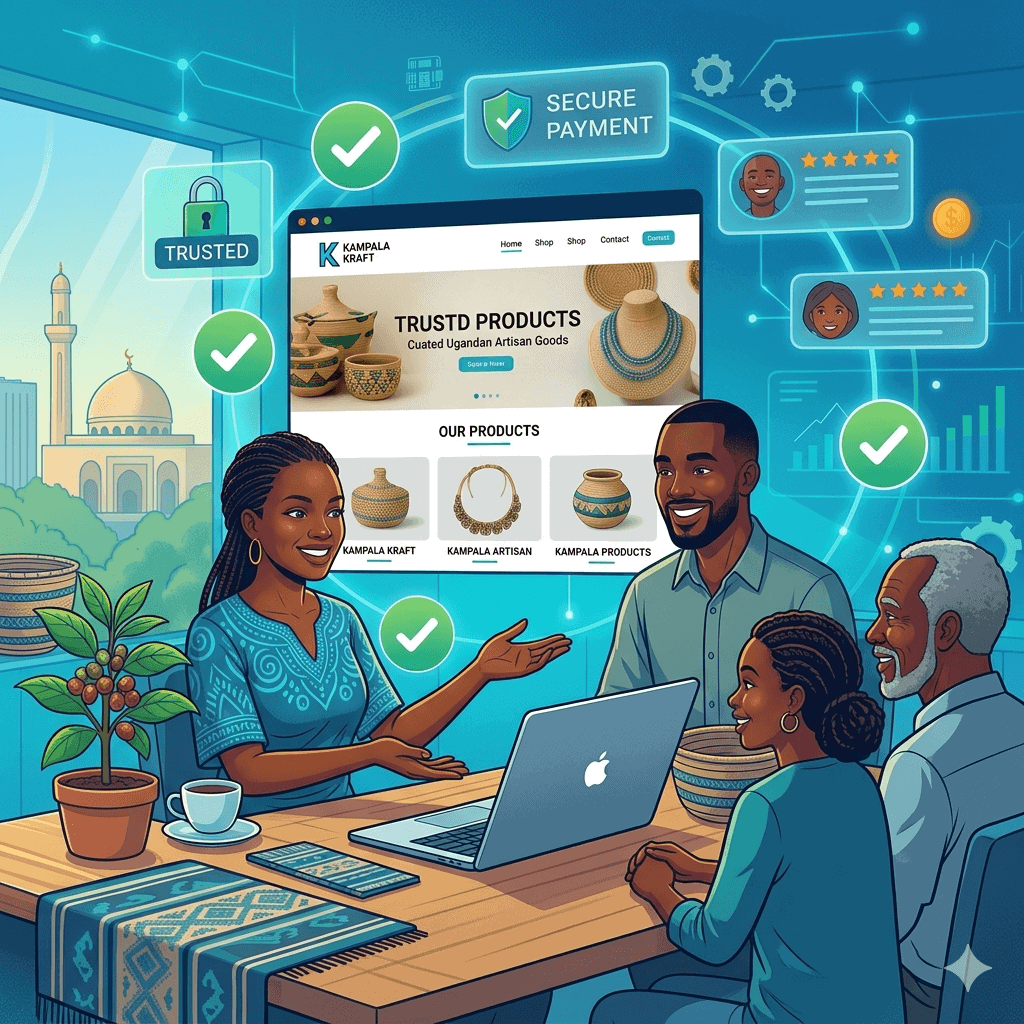
What Is a Custom Business App?
A custom business app is software built specifically for your company’s unique needs not a one-size-fits-all solution you download from an app store. Think of it like having a suit tailored to fit you perfectly, rather than buying one off the rack that’s almost right but not quite. These apps can handle anything from tracking inventory and managing employees to processing customer orders and accepting mobile money payments. Unlike generic software that forces you to adapt your workflow to match its features, custom business apps adapt to how you already work. They’re designed around your processes, your brand, and your customers. For Ugandan businesses, this means you can build an app that understands local payment methods, works offline when internet is spotty, and speaks directly to your market’s specific needs.
Why Ugandan Businesses Are Building Custom Apps
Uganda’s digital transformation is happening fast. Mobile phone penetration has soared past 60%, and more Ugandans now access the internet through smartphones than computers. This shift creates a massive opportunity your customers are already on their phones, waiting for convenient ways to interact with businesses like yours. Competition is also heating up. The businesses that make it easy for customers to browse products, book services, or make payments through an app are pulling ahead of those still relying only on phone calls and walk-ins. Beyond customer-facing benefits, smart business owners are using apps to solve internal headaches too. Manual record-keeping, inventory mix-ups, and communication gaps between field staff and the office these problems drain time and money. A well-designed app can automate these processes, reduce errors, and give you real-time visibility into your operations. As more Ugandan entrepreneurs realize they don’t need Silicon Valley budgets to build effective apps, we’re seeing everyone from agribusinesses to beauty salons going digital.
Benefits of a Custom Business App
Building a custom app for your business delivers advantages that ripple across every part of your operation. First, you dramatically improve customer experience. Instead of making clients call during business hours or visit your physical location, they can browse, order, and pay whenever it’s convenient for them even at midnight. This convenience translates directly into more sales and stronger customer loyalty. Operationally, apps eliminate countless hours of manual work. Imagine automatically tracking every sale, updating inventory in real-time, and generating reports with a single tap instead of spending hours with spreadsheets. Your staff becomes more productive because they’re not bogged down in paperwork. You also gain valuable data insights. A custom app shows you exactly what customers are buying, when they’re most active, and where they drop off in the purchase process. This intelligence helps you make smarter business decisions. Apps also level the playing field with larger competitors by making your business look professional and established, building trust with customers who might otherwise choose bigger brands. Perhaps most importantly for Ugandan businesses, custom apps can integrate perfectly with local systems mobile money platforms, SMS services, and even offline functionality for areas with unreliable internet.
Types of Business Apps Common in Uganda
Customer-Facing Apps (Sales, Booking, Payments)
These apps put your business directly in customers’ pockets. Retail shops use them for browsing products and placing orders. Salons and clinics rely on booking apps to schedule appointments and send reminders. Restaurants offer food delivery apps that compete with larger platforms but keep all the profits in-house. The key advantage is direct customer relationships without paying hefty commissions to third-party marketplaces.
Internal Business Apps (Operations, HR, Inventory)
Not every app needs to face the public to deliver value. Many Ugandan businesses build internal tools that help teams work smarter. Field sales reps use apps to log visits and update client information on the go. Warehouse managers track inventory levels in real-time. HR departments manage leave requests and employee schedules without endless back-and-forth emails. These apps reduce miscommunication and create accountability.
Marketplace and Platform Apps
Some businesses aren’t selling their own products they’re connecting buyers and sellers. Think of local versions of platforms where farmers sell directly to consumers, or where freelancers find clients. These two-sided marketplaces require more complex development but can scale rapidly once they gain traction in their niche.
Fintech and Mobile Money–Integrated Apps
Given Uganda’s high mobile money adoption, fintech apps are booming. Businesses are building loan apps, savings platforms, payment processing tools, and even investment apps tailored to local needs. The magic happens when you integrate Mobile Money, Airtel Money, or bank APIs, making financial transactions seamless for users who may not have traditional bank accounts.
Key Features to Include in a Ugandan Business App
Mobile Money and Local Payment Integrations
If your app doesn’t accept mobile money, you’re leaving money on the table. Period. Most Ugandans prefer Mobile Money or Airtel Money over cards or bank transfers, so integration with these platforms isn’t optional it’s essential. Your app should make payments as simple as entering a phone number and confirming with a PIN. Consider also integrating card payments for the growing middle class and bank transfers for larger B2B transactions.
Offline and Low-Bandwidth Support
Uganda’s internet infrastructure is improving, but connectivity remains inconsistent, especially outside Kampala. Your app needs to function gracefully when internet disappears. Smart offline features cache important data, allow users to browse previously loaded content, and queue actions (like orders or updates) to sync automatically when connection returns. This isn’t just nice to have it’s the difference between an app people actually use and one they delete in frustration.
User Authentication and Security
Ugandans are increasingly savvy about digital security, and rightfully concerned about fraud. Implement secure login methods phone number verification with OTPs works well locally. Protect sensitive data with encryption, especially payment information and personal details. Build trust by being transparent about how you handle user data and comply with privacy regulations.
Admin Dashboards and Analytics
You need visibility into what’s happening in your app. A comprehensive admin dashboard shows you sales figures, user activity, popular products or services, and performance metrics. Good analytics help you spot trends, identify problems early, and make data-driven decisions about where to invest next. Real-time reporting means you’re never operating blind.
Push Notifications and SMS Integration
Staying connected with users drives engagement. Push notifications work great for app updates, special offers, and order status, but don’t underestimate SMS many Ugandans still prefer text messages for important communications. Use notifications strategically (nobody likes spam) to remind customers about abandoned carts, confirm bookings, or announce flash sales.
How to Build a Custom Business App in Uganda
Define the Business Problem and App Goals
Start with clarity, not technology. What specific problem are you solving? Maybe customers complain that calling to make orders is inconvenient, or your sales team wastes hours manually entering data. Write down the exact pain points your app will address and what success looks like. “Increase online orders by 40%” is a clear goal. “Have a cool app” is not. Talk to your customers and employees they’ll reveal problems you might have missed. This foundation ensures you build something useful, not just something digital.
Choose the Right Platform (Android, iOS, Web App)
In Uganda, Android dominates with over 80% market share. For most businesses, starting with Android makes perfect sense you’ll reach the widest audience at the lowest cost. iOS apps target the smaller but often more affluent segment willing to spend more. Web apps (progressive web apps) offer a middle ground they work across all devices through browsers, though with some feature limitations. For many startups, starting with Android and adding iOS later as you grow makes practical sense. Consider where your specific customers are before deciding.
Validate the Idea with an MVP
Don’t build everything at once. Create a Minimum Viable Product the simplest version of your app that solves the core problem. If you’re building a delivery app, your MVP might just handle orders and basic payment without fancy features like loyalty points or AI recommendations. Launch this stripped-down version to real users, gather feedback, and learn what actually matters to them. This approach saves money and time by preventing you from building elaborate features nobody wants. Many successful apps started as basic MVPs that evolved based on user behavior.
Select a Development Approach
You have several paths forward. Mobile app development can happen through native development (separate apps for Android and iOS using their native languages), which delivers the best performance but costs more. Cross-platform frameworks like Flutter or React Native let you write code once and deploy to both Android and iOS, balancing cost and quality. No-code platforms offer the cheapest, fastest route for very simple apps but with limited customization. Choose based on your budget, timeline, and how complex your app needs to be.
Design the User Experience
Your app can have amazing features, but if it’s confusing to use, people will delete it. Invest time in user interface (UI) and user experience (UX) design. Keep navigation simple and intuitive users should accomplish tasks in as few taps as possible. Use familiar patterns that Ugandans already understand from popular apps. Test your design with actual users before development begins; watching someone struggle to complete a basic task reveals problems no amount of guessing will catch. Good design isn’t about looking fancy; it’s about making things effortless.
Develop and Test the App
With plans and designs ready, development begins. This phase typically takes anywhere from two to six months depending on complexity. Work with your development team in sprints short cycles where they build specific features you can review regularly. Don’t wait until everything is finished to start testing. Throughout development, test relentlessly. Check that features work as expected, that the app doesn’t crash, that it handles poor internet gracefully, and that it works across different phone models. Beta testing with a small group of real users before public launch helps catch issues you missed.
Launch and Monitor Performance
Launch day is exciting but it’s really just the beginning. Submit your app to the Google Play Store (and Apple App Store if you built for iOS), making sure your listing has clear descriptions, quality screenshots, and relevant keywords. Once live, monitor everything downloads, user behavior, crash reports, and reviews. Set up analytics tools that show you exactly how people use your app. This data guides your next improvements and helps you understand what’s working and what’s not.
Development Options Available in Uganda
Hiring a Local App Development Company
Uganda has a growing community of professional app development companies with proven track records. These agencies handle everything from initial planning through launch and maintenance. The advantage is expertise they’ve built apps before, understand local market nuances, and can guide you through technical decisions. Costs are higher than freelancers but you get accountability, structured processes, and teams with diverse skills. Look for companies with portfolios showcasing apps similar to what you envision.
Freelance Developers vs Agencies
Freelancers offer flexibility and often lower rates than agencies. A skilled freelance developer can build excellent apps, especially for simpler projects. However, you’re dependent on one person if they get sick or take another project, yours might stall. Freelancers work best when you have some technical knowledge to manage the project yourself. Agencies provide more stability and backup resources but at premium prices. For critical business apps where reliability matters, agencies typically offer more security. Understanding the differences helps when hiring developers for your project.
No-Code and Low-Code Platforms
Platforms like Bubble, Adalo, or Glide let you build apps with minimal coding through visual interfaces dragging and dropping elements like building blocks. These tools democratize app development, allowing non-technical founders to create functional apps quickly and cheaply. The trade-off is limited customization and scalability. For testing ideas, simple internal tools, or very straightforward apps, no-code solutions work wonderfully. For complex, feature-rich apps or those requiring unique functionality, traditional development delivers better results.
Hybrid vs Native Development
Native apps are built specifically for one platform using its preferred language Java or Kotlin for Android, Swift for iOS. They deliver optimal performance and full access to device features. Hybrid apps use frameworks like Flutter or React Native to create one codebase that works on multiple platforms. They’re faster and cheaper to develop but may have slight performance compromises. For most Ugandan businesses, hybrid development offers the best balance good enough quality at significantly lower cost and faster time to market.
Cost of Building a Custom Business App in Uganda
Factors That Affect App Development Cost
App development costs vary wildly based on several factors. Complexity is the biggest driver a simple app with basic features costs far less than one requiring advanced functionality like real-time tracking, complex algorithms, or extensive integrations. Design sophistication matters too; custom, highly polished interfaces cost more than template-based designs. Platform choice affects price building for both Android and iOS costs more than one platform alone. The development team’s experience level impacts rates, with seasoned agencies charging premium prices but often delivering faster and with fewer revisions.
Typical Price Ranges in the Ugandan Market
In Uganda’s current market, expect to pay between UGX 5 million to UGX 15 million (roughly $1,350 to $4,050) for a basic business app with standard features think product listings, shopping cart, mobile money payment, and basic admin panel. Mid-complexity apps with additional features like user accounts, notifications, analytics, and integrations run between UGX 15 million to UGX 40 million ($4,050 to $10,800). Complex, feature-rich apps with sophisticated functionality can exceed UGX 50 million ($13,500). Freelancers typically charge 30-50% less than agencies but with variable reliability. Remember, the cheapest option rarely delivers the best value poorly built apps cost more to fix than they saved initially.
Ongoing Maintenance and Update Costs
Building the app is just the start. Budget for ongoing costs including hosting and server fees (UGX 200,000 to UGX 1 million annually depending on user volume), maintenance and bug fixes (typically 15-20% of the initial development cost per year), feature updates and improvements as user needs evolve, and mobile money transaction fees (usually small percentages per transaction). Many businesses overlook these continuing expenses and find themselves unable to keep their app running smoothly. Factor them into your financial planning from day one.
Legal, Compliance, and Data Considerations in Uganda
Data Protection and Privacy Requirements
Uganda’s Data Protection and Privacy Act regulates how businesses collect, store, and use customer information. Your app must obtain explicit consent before collecting personal data, clearly explain how you’ll use it, and implement security measures to protect it from breaches. You need policies for handling data requests from users who want to see or delete their information. Non-compliance can result in hefty fines, but more importantly, data breaches destroy customer trust. Build privacy protections into your app from the beginning, not as an afterthought.
Business Registration and App Ownership
Ensure your business is properly registered with URSB (Uganda Registration Services Bureau) before launching an app. This isn’t just legal compliance payment integrators and app stores often require proof of legitimate business registration. Clarify ownership terms in contracts with developers; the app code and intellectual property should belong to your business, not the development team. Get this in writing. Also register any trademarks associated with your app name or logo to protect your brand.
Payment and Financial Compliance
If your app processes payments, particularly mobile money transactions, you’ll need agreements with mobile network operators and must comply with financial regulations from Bank of Uganda. Some payment features may require additional licensing depending on your business model. Anti-money laundering regulations apply to certain transaction types. Work with legal advisors familiar with fintech regulations to ensure your app doesn’t inadvertently violate financial laws. Mobile money providers have specific technical and compliance requirements for integration understand these before building payment features.
Common Mistakes to Avoid When Building a Business App
Many Ugandan entrepreneurs enthusiastically jump into app development only to stumble over preventable mistakes. The biggest is building features you assume customers want without actually asking them validate assumptions with real user research first. Another critical error is neglecting mobile money integration or making it an afterthought when it should be central to your payment strategy. Poor offline functionality frustrates users in areas with unstable connections. Skimping on testing leads to buggy apps that crash and get terrible reviews. Overcomplicating the initial version delays launch and wastes money on features that may prove unnecessary. Not planning for marketing means your brilliant app sits undiscovered in the app store. Finally, viewing the app as a one-time project rather than an evolving product leads to stagnation successful apps continuously improve based on user feedback. Learning from these common mistakes that businesses make with system applications helps you avoid costly setbacks.
Tips for Scaling and Improving Your App After Launch
Gathering User Feedback
Your users are your best product development team. Actively collect feedback through in-app surveys, reviews, support tickets, and direct conversations. Watch analytics to see where users struggle or abandon tasks these friction points need attention. Create channels where customers can easily suggest features or report problems. Actually respond to reviews, especially negative ones, showing users you’re listening. This feedback loop transforms good apps into great ones because you’re building what users actually want, not what you think they want.
Adding Features Based on Usage Data
Let data guide your development roadmap. Analytics reveal which features people use constantly and which ones sit ignored. Double down on popular features, making them even better. Consider removing or simplifying features nobody uses they just complicate the app. When planning new features, prioritize based on user requests and behavior patterns, not just what seems cool. This disciplined approach prevents feature bloat while ensuring you invest development resources where they’ll create the most value.
Marketing and User Acquisition Strategies
Building a great app means nothing if nobody downloads it. Invest in app store optimization compelling descriptions, high-quality screenshots, and relevant keywords help people discover your app. Leverage social media marketing, particularly Facebook and Instagram where Ugandans spend significant time. Incorporate tactics like workflow automation to streamline your marketing efforts. Consider influencer partnerships with local personalities who can demonstrate your app to their followers. Offer launch promotions or referral bonuses that incentivize existing users to bring friends. Email marketing to your existing customer base drives downloads. Remember, user acquisition is ongoing, not a one-time launch campaign consistent marketing keeps downloads flowing.
Frequently Asked Questions
How long does it take to build a custom business app in Uganda?
Development timelines vary considerably based on app complexity. A simple app with basic features typically takes two to three months from initial planning through launch. Apps with moderate complexity including multiple integrations, custom features, and polished design usually require four to six months. Sophisticated enterprise apps with extensive functionality can take eight months or longer. These timelines assume you’re working with an experienced development team and can provide timely feedback at each stage. Delays often come from unclear requirements, slow decision-making, or scope changes mid-project. Starting with a well-defined MVP shortens time to market, letting you launch and learn faster.
Do I need technical knowledge to manage an app project?
Not necessarily, but some basic understanding helps tremendously. You don’t need to code, but knowing fundamental concepts about how apps work, realistic timelines, and what’s technically feasible prevents miscommunication with your development team. More important than technical knowledge is clear vision about your business goals and user needs. Many successful app owners are non-technical but compensate by asking good questions, researching carefully, and hiring experts they trust. If you’re completely new to technology, consider bringing on a technical advisor or co-founder who can bridge the gap. Good development partners will also guide you through technical decisions, explaining options in plain language.
Is Android better than iOS for the Ugandan market?
For most Ugandan businesses, Android is the smarter starting point. Android devices dominate the market with over 80% share, particularly in the affordable smartphone segment most Ugandans use. You’ll reach far more potential customers with an Android app. iOS users represent a smaller, more affluent segment valuable if your business targets premium customers willing to spend more. The ideal scenario is eventually having both, but budget constraints usually require choosing. Start where your customers are. If data shows your target market skews heavily toward iPhone users (unlikely but possible for luxury goods or certain B2B sectors), iOS might make sense. For most cases though, Android first, iOS later.
Can a business app work without constant internet access?
Absolutely, and in Uganda, offline functionality isn’t optional it’s essential. Well-designed apps cache data locally on the device, allowing users to browse products, view information, and even create orders while offline. When internet connection returns, the app syncs these actions to your server. Critical features like viewing previously loaded content, reading saved messages, or accessing cached data should work seamlessly offline. Obviously, real-time features like payment processing or fetching new data require connectivity, but the app shouldn’t become completely useless the moment internet drops. Smart offline design dramatically improves user experience in Uganda’s inconsistent connectivity environment.
How much does app maintenance cost annually?
Plan to spend approximately 15-20% of your initial development cost on annual maintenance and updates. If your app cost UGX 20 million to build, budget around UGX 3-4 million yearly for upkeep. This covers regular bug fixes, security updates, compatibility updates when Android or iOS release new versions, server hosting costs, and minor feature improvements. More substantial updates or major new features cost extra. Skimping on maintenance is penny-wise and pound-foolish unmaintained apps deteriorate quickly, becoming buggy and incompatible with newer phones. Regular maintenance keeps your app running smoothly and your users happy.

Can mobile money be integrated into any app?
Technically yes, but it requires meeting specific requirements from mobile money providers. MTN Mobile Money and Airtel Money offer API integrations for businesses, but you’ll need to register as a merchant, meet their technical specifications, and often pay setup fees plus transaction charges. Some payment gateway services simplify this by providing a single integration that connects to multiple mobile money providers. Your app must handle the integration securely, properly confirm transactions, and manage edge cases like failed payments or timeouts. Work with developers experienced in mobile money integration they’ll navigate the technical and administrative requirements smoothly.
Should startups build an app before validating the business idea?
Generally, no. Validate your business model first using simpler, cheaper methods manual processes, spreadsheets, landing pages, or basic websites. Once you’ve proven people will actually pay for your product or service and you understand your customers’ needs, then invest in an app. Too many startups burn cash building elaborate apps for unproven ideas that ultimately fail. The app should solve a validated problem and enhance a working business model, not be the business itself. Exceptions exist some digital businesses are inherently app-based but for most, prove the fundamentals before making a significant app investment. Start small, validate, then scale with technology.
Building a custom business app in Uganda isn’t just for tech giants anymore it’s increasingly accessible for ambitious entrepreneurs who understand their customers and are willing to invest strategically. Whether you’re streamlining operations, reaching new customers, or creating entirely new business models, mobile apps offer powerful opportunities. Success comes from starting with clear goals, building for your specific users’ needs, integrating local payment systems, and continuously improving based on feedback. The Ugandan digital ecosystem is maturing rapidly, with experienced developers, supportive infrastructure, and growing smartphone adoption creating the perfect environment for mobile innovation. Your app journey starts with a single step: defining the specific problem you’ll solve. From there, armed with the insights in this guide, you’re equipped to make smart decisions that transform your business idea into a valuable digital tool that drives real growth.
You’ve invested thousands maybe hundreds of thousands in a new system application. Your team spent months planning, building, and deploying it. And now? It’s slow, clunky, barely used, and already causing more headaches than it solves.
Sound familiar?
You’re not alone. Businesses of all sizes stumble when implementing system applications, often making the same preventable mistakes. The problem isn’t usually the technology itself it’s how organizations approach, plan, and execute these critical projects.
In this guide, we’ll walk through the most common system application mistakes businesses make, why they happen, and what you can do to avoid them. Whether you’re planning your first enterprise system or looking to improve what you already have, you’ll find practical insights that can save you time, money, and frustration.
What Are System Applications in a Business Context
Before we dive into mistakes, let’s clarify what we mean by “system applications.”
System applications are the software tools that power your business operations behind the scenes. Unlike consumer apps on your phone, these are purpose-built platforms that handle critical functions like inventory management, customer relationship tracking, human resources, accounting, or supply chain coordination.
Think of them as the engine room of your business. They might include enterprise resource planning (ERP) systems, custom internal tools, database management platforms, or specialized software designed specifically for your industry. Some businesses buy off-the-shelf solutions like Salesforce or SAP. Others build custom apps tailored to unique workflows.
The key characteristic? These applications aren’t just nice-to-have tools they’re essential infrastructure that your team depends on every single day.
Why Businesses Rely on System Applications
Modern businesses can’t function without reliable system applications. Here’s why they matter so much:
Efficiency at scale. Manual processes that worked for a team of five become impossible with fifty employees. System applications automate repetitive tasks, reduce human error, and free your team to focus on strategic work instead of data entry.
Data-driven decisions. When your customer information lives in spreadsheets across different computers, you’re flying blind. Good system applications centralize data, provide real-time visibility, and help you spot trends before your competitors do.
Consistency and compliance. Whether you’re managing employee records or customer transactions, system applications enforce business rules automatically. They ensure everyone follows the same process and help you meet regulatory requirements without constant oversight.
Competitive advantage. Companies that implement the right systems can respond faster, serve customers better, and operate more leanly than those stuck with outdated processes. The difference between a well-designed system and a poorly implemented one can literally make or break your business.
The stakes are high, which makes avoiding common pitfalls even more critical.
Common Strategic Mistakes Businesses Make
The biggest mistakes often happen before a single line of code is written. Strategic missteps set the wrong foundation and create problems that compound over time.
Treating System Applications as Purely Technical Tools
Too many business leaders delegate system application decisions entirely to IT departments, assuming this is “just a tech thing.” They approve budgets, sign off on vendor contracts, and then disconnect from the process.
Here’s the problem: system applications aren’t just technology they’re business strategy materialized in software. They shape how your team works, what insights you can gather, and how quickly you can adapt to market changes.
When executives treat these projects as IT-only initiatives, the resulting systems often solve technical problems beautifully while completely missing business needs. You end up with elegant code that nobody wants to use.
Failing to Align Applications With Business Objectives
Let me paint a picture. Your sales team complains about tracking leads manually, so you build a customer management system. Sounds logical, right?
Except nobody asked: What are we trying to achieve? Are we trying to close more deals? Improve customer retention? Better forecast revenue? Each goal requires different features, workflows, and metrics.
Without clear alignment to business objectives, you build systems that do things without accomplishing anything meaningful. Features get prioritized based on what’s technically interesting rather than what drives results. Six months later, you have a system that checks all the boxes but moves no needles.
Start with outcomes, not outputs. Define what success looks like in business terms not just system specifications.
Underestimating Long-Term Maintenance and Scaling Costs
The sticker price you see for system implementation? That’s just the beginning.
Most businesses focus intensely on upfront development costs while severely underestimating the ongoing expenses of running, maintaining, and evolving the system. Software isn’t a one-time purchase it’s a living thing that requires continuous care.
Operating systems need updates. Third-party services change their APIs. Business requirements evolve. Security vulnerabilities emerge. User needs shift. All of this requires time, expertise, and money.
What looks like a $50,000 project today might cost $15,000 annually just to keep running properly. And if you want to add new features or scale as your business grows? Those costs multiply quickly.
Smart businesses budget for system maintenance from day one, treating it as a normal operating expense rather than an unexpected burden.
Common Planning and Requirement Mistakes
Even with good strategic alignment, projects derail during the planning phase when teams fail to define clear requirements and processes.
Poor Requirement Definition
“We need a system that manages our inventory.”
That sentence might seem like a clear requirement. It’s not. What kind of inventory? What does “manage” mean tracking quantities, handling reorders, forecasting demand, managing warehouses? Who needs access? What reports do you need?
Vague requirements lead to vague systems. Developers make assumptions. Business users expect different functionality. The gap between expectation and reality grows wider with every sprint.
The fix? Get specific. Document actual workflows. Map out user journeys. Define what data goes in, how it flows through the system, and what outputs you need. Yes, this takes time. But it’s far cheaper than rebuilding features because nobody clarified requirements upfront.
Ignoring Stakeholder and User Input
Here’s a common scenario: Management decides the company needs a new project management system. They research options, pick a solution, and announce the rollout. The first time actual project managers see it? Implementation day.
Unsurprisingly, adoption is terrible. The system doesn’t match how teams actually work. Critical features are missing. Simple tasks require convoluted workarounds.
The people who use your system daily know things leadership doesn’t. They understand the edge cases, the exceptions, the real-world friction points. Excluding them from planning guarantees you’ll build something disconnected from reality.
Involve end users early and often. Run workshops. Observe how they work now. Test prototypes with real people doing real tasks. Their feedback isn’t a nice-to-have it’s essential intelligence.
Overengineering From the Start
There’s a tempting logic that says: “Let’s build everything we might ever need right from the beginning.”
This approach feels smart future-proofing your investment, avoiding technical debt, getting it right the first time. In practice, it’s one of the fastest ways to blow budgets and timelines while building features nobody uses.
You don’t actually know what you’ll need two years from now. Markets change. Business priorities shift. That “essential” feature you spent three months building? Turns out users prefer a simpler approach.
Start with the minimum viable version that solves your core problem. Launch it. Learn from real usage. Then iterate based on actual needs rather than hypothetical scenarios. This approach, common in mobile development, saves money and delivers value faster.
Common UX and Usability Mistakes
A system might work perfectly from a technical standpoint while being absolutely miserable to use. Usability mistakes kill adoption and waste investment.
Designing for Developers Instead of Users
Developers love efficiency. They appreciate clever architecture, powerful features, and technical elegance. These priorities sometimes create interfaces that make perfect sense to engineers but baffle everyone else.
I’ve seen inventory systems where adding a new product required navigating seven screens and understanding database relationships. Technically impressive. Practically unusable.
Your users don’t care about your data model. They care about completing their tasks quickly and without frustration. Design for their mental models, not your database schema.
Overcomplicating Workflows
More features don’t equal better systems. Every button, menu, and option adds cognitive load. When you try to accommodate every possible use case, you create complexity that overwhelms users trying to complete simple tasks.
The 80/20 rule applies here: most users need about 20% of features 80% of the time. Optimize for those common workflows. Make them dead simple. Advanced features can exist, but don’t force everyone to wade through them for basic tasks.
Neglecting Accessibility and User Training
You’ve built the system. Now you assume people will just figure it out, right?
Wrong. Even well-designed applications require some learning. Skipping proper training is like buying someone a car and expecting them to drive without instruction. Some will manage. Most will struggle. Many will give up.
Create clear documentation. Offer hands-on training sessions. Build in-app guidance for new users. Make help easy to access. And please, consider accessibility not everyone uses systems the same way. Screen readers, keyboard navigation, color contrast these aren’t optional extras.
Common Technology and Architecture Mistakes
Technical decisions made early in a project have long-lasting consequences. Choose poorly, and you’ll pay the price for years.
Choosing Technology Based on Trends, Not Fit
Every year brings hot new technologies that everyone’s talking about. Microservices. Blockchain. The latest JavaScript framework. Whatever’s trending on tech news sites.
The problem with trend-chasing? What’s exciting and what’s appropriate for your specific situation are often two very different things.
Your business might need a simple, reliable system built with boring, proven technology. But your developers want to experiment with cutting-edge tools. The result? Unnecessary complexity, a shallow talent pool for maintenance, and solutions that outlive the frameworks they’re built on.
Evaluate technology based on your actual requirements: scalability needs, team expertise, long-term support, ecosystem maturity, and total cost of ownership. Not what won “Framework of the Year.”
Lack of Integration Planning
Your new system doesn’t exist in a vacuum. It needs to talk to your accounting software, pull data from your website, sync with your email platform, and feed information to your analytics tools.
Many businesses treat integration as an afterthought. They build the core system, then discover connecting it to existing tools is way harder than anticipated. Data formats don’t match. APIs don’t exist. Critical information gets trapped in silos.
Just like workflow automation demonstrates, seamless integration is what turns isolated tools into powerful ecosystems. Plan for it from the start. Map out every system that needs to exchange data. Verify integration capabilities before committing to vendors or architectures.
Ignoring Performance and Scalability Early
“We’ll optimize later” is a dangerous assumption.
Performance problems don’t always announce themselves during development with small test datasets. They appear when real users hit the system with real volumes and by then, fixing them often requires significant architectural changes.
Similarly, systems designed for your current team of twenty might completely fall apart when you grow to two hundred. Scalability isn’t something you can easily bolt on later.
Think ahead. Load test early. Build with growth in mind. Understand your performance requirements and validate them throughout development, not after launch.
Common Project Management Mistakes
Even brilliant technical execution fails without proper project management. These organizational mistakes derail otherwise solid initiatives.
Unrealistic Timelines and Budgets
Here’s how it usually goes: Leadership wants the system next quarter. Finance wants it under budget. Both deadlines get set before anyone analyzes what’s actually required.
Developers, pressured to meet impossible targets, either cut corners (shipping buggy, incomplete systems) or miss deadlines entirely (damaging credibility and burning budgets on extended timelines).
The root issue? Optimism bias combined with lack of experience estimating software projects. Everything takes longer than you think, especially when you’re building something new.
Build in buffers. Add contingency for unexpected challenges. Break projects into phases with clear milestones. And when choosing partners, resources like guides on hiring developers can help set realistic expectations around costs and timelines.
Poor Communication Between Business and Technical Teams
Business stakeholders speak one language. Developers speak another. Without translation, you get systems that technically do what was specified but completely miss what was actually needed.
“We need better customer insights” means one thing to a marketing director (detailed behavioral analytics and segmentation tools). It means something else to a developer (a dashboard showing customer count by region).
Bridge this gap with regular cross-functional communication. Use plain language, not jargon. Validate understanding through prototypes and demos. Assign someone to translate between business needs and technical implementation a product manager, business analyst, or technical leader who speaks both languages.
Inadequate Testing and Quality Assurance
Testing feels like it slows things down. It costs money. It delays launches. So businesses cut corners, rushing systems into production with minimal quality checks.
Then reality hits. Users discover bugs in critical workflows. Data integrity issues emerge. Systems crash under load. The cost of fixing problems in production with users already affected far exceeds what proper testing would have cost.
Budget time and resources for thorough testing: unit tests, integration tests, user acceptance testing, performance testing, security testing. Yes, it takes time. But it’s far cheaper than the alternative.
Security and Compliance Mistakes to Avoid
Security breaches and compliance violations can destroy businesses. Yet many organizations treat these concerns as afterthoughts.
Weak Access Control and Permissions
Who can see what data? Who can modify records? Who has administrative access?
Many systems start with loose permissions everyone can access everything with plans to “tighten security later.” Later never comes. Or worse, you implement all-or-nothing access: either full admin rights or no access at all.
The principle of least privilege matters: users should have the minimum access necessary to do their jobs. Finance sees financial data. HR sees personnel records. Sales sees customer information. Implement role-based access control from day one.
Delaying Security Until After Deployment
Security baked into the architecture is relatively straightforward. Security retrofitted onto an insecure system is expensive, disruptive, and often incomplete.
Yet countless businesses deprioritize security during development, treating it as a post-launch enhancement. This creates systems with fundamental vulnerabilities that require significant rework to fix properly.
Think about security from the first planning meeting. Encrypt sensitive data. Validate and sanitize inputs. Keep dependencies updated. Follow security best practices for your technology stack. Conduct security reviews throughout development.
Overlooking Regulatory and Data Protection Requirements
Depending on your industry and location, you might need to comply with GDPR, HIPAA, PCI DSS, or other regulations. These aren’t suggestions they’re legal requirements with serious penalties for violations.
Many businesses discover compliance requirements late in development, forcing expensive changes or delaying launches. Some unknowingly operate non-compliant systems, creating legal exposure.
Understand what regulations apply to your business and data. Factor compliance into requirements from day one. When in doubt, consult with legal and compliance experts. The cost of prevention is trivial compared to fines, lawsuits, and reputation damage.
How to Avoid These Mistakes When Using System Applications
Now that we’ve covered what goes wrong, let’s talk about what doing it right looks like. These practices dramatically improve your odds of success.
Define Clear Business Goals and Success Metrics
Before discussing features or technology, answer these questions:
What business problem are we solving?
How will we measure whether the system succeeds?
What outcomes matter most efficiency, revenue, customer satisfaction, compliance?
What does success look like in concrete, measurable terms?
Document these answers. Refer back to them throughout the project. When scope debates arise, ask: “Does this help us achieve our core objectives?” It’s a remarkably effective filter.
Involve Users Early and Continuously
Your end users are experts in their own workflows. Tap into that expertise throughout the process:
Interview them during planning. What frustrates them about current processes? What do they wish they could do?
Show them prototypes early and often. Watch them interact with designs. Note where they struggle or get confused.
Include them in testing. Real users find issues developers miss because they approach the system differently.
Create feedback channels post-launch. The first version won’t be perfect. Make it easy for users to report issues and suggest improvements.
When users feel heard and see their input shaping the system, adoption improves dramatically.
Choose Scalable, Well-Supported Technologies
Trendy frameworks come and go. Build your system on stable, proven technologies with strong communities and long-term viability.
Consider:
Is there a healthy ecosystem of developers who know this technology?
Will we be able to hire for this skillset in three years?
Is the technology actively maintained with regular updates?
Do established companies use it in production?
What’s the upgrade path when new versions release?
Boring technology that works beats exciting technology that creates ongoing headaches.
Plan for Integration, Maintenance, and Growth
Think beyond launch day. Your system needs to evolve with your business.
Map out integration requirements early. Ensure your architecture supports connecting to other tools, both now and in the future.
Budget for ongoing maintenance. Plan for regular updates, security patches, and technical debt reduction.
Design for scale. You might have a hundred users today, but what happens at a thousand? Ten thousand? Your architecture should accommodate growth without complete rebuilds.
Consider the total cost of ownership over several years, not just the initial implementation.
Establish Strong Governance and Ownership
Someone needs to own this system not just technically, but strategically.
Assign clear ownership. Who makes decisions about features, priorities, and changes? Who’s accountable for the system’s success?
Create governance processes. How do new requirements get evaluated? Who approves changes? How are updates communicated?
Define roles and responsibilities. Who handles support? Who manages training? Who monitors performance and usage?
Without clear governance, systems drift. Priorities become unclear. Technical debt accumulates. Small problems grow into big ones.
Benefits of Getting System Application Implementation Right
When you avoid common mistakes and implement system applications thoughtfully, the payoff is substantial.
Productivity multiplies. Well-designed systems eliminate bottlenecks and automate tedious work. Your team accomplishes more with the same resources. Tasks that took hours happen in minutes.
Decision quality improves. Reliable data, accessible when you need it, means you make decisions based on facts rather than gut feelings. You spot opportunities faster and respond to problems before they escalate.
Customer experience elevates. Internal systems directly impact how you serve customers. Faster response times, fewer errors, more personalized service these advantages come from systems that work properly.
Costs decrease over time. Yes, good systems require investment. But they reduce long-term costs through efficiency gains, fewer errors, less rework, and lower support burdens. The ROI compounds as the system matures.
Competitive positioning strengthens. Organizations with superior operational systems can outmaneuver competitors. They adapt faster, serve better, and operate more efficiently. The gap widens over time.
Key Takeaways for Business Decision-Makers
If you remember nothing else from this article, remember these critical points:
Think strategically, not just technically. System applications are business assets that shape how you compete and operate. Treat them accordingly with appropriate leadership involvement and strategic oversight.
Involve users throughout the entire process. The people who use the system daily have invaluable insights. Ignore them at your peril. Include them in planning, design, testing, and refinement.
Plan for the long term from day one. Budget for maintenance. Design for integration and scalability. Choose proven technologies. The decisions you make today echo for years.
Don’t rush. Unrealistic timelines create poor quality, which costs more to fix than building it right initially. Better to launch later with a solid system than quickly with a broken one.
Security and compliance aren’t optional add-ons. Build them into your foundation. Retrofitting is expensive and risky.
Getting system applications right requires patience, planning, and commitment. But the alternative wasting money on systems that don’t work is far worse.
Frequently Asked Questions
What is the difference between system applications and business applications?
The terms overlap, but there’s a useful distinction. System applications typically refer to foundational software that manages core operational processes inventory systems, ERP platforms, CRM tools, internal databases. They’re the infrastructure that keeps your business running.
Business applications is a broader category that includes system applications plus front-facing tools like your customer portal, mobile apps, and marketing platforms. Essentially, all system applications are business applications, but not all business applications are system applications.
For practical purposes, system applications usually live behind the scenes, used primarily by employees, while business applications might face customers directly.
How do system application mistakes impact ROI?
Every mistake in system application implementation chips away at your return on investment in multiple ways.
Poor planning extends timelines, increasing development costs. Usability issues reduce adoption, meaning you paid for a system people don’t actually use. Performance problems require expensive fixes and create ongoing support burdens. Security gaps lead to breaches with costly legal and reputational consequences.
Perhaps most damaging: opportunity cost. Every month you struggle with a poorly implemented system is a month you’re not realizing the productivity gains, efficiency improvements, and competitive advantages you invested to achieve. The wrong system doesn’t just waste money directly it prevents you from capturing value you should be generating.
When should businesses modernize or replace system applications?
Several signals indicate it’s time to update or replace your current systems.
Performance degradation. If your system regularly crashes, runs slowly, or can’t handle current data volumes, modernization becomes necessary.
Integration difficulties. When connecting your system to new tools requires extensive custom work or proves impossible, you’re limiting business agility.
Maintenance burden. If keeping the system running consumes excessive IT resources or requires specialized knowledge that’s hard to find, replacement might be more cost-effective than ongoing support.
Business constraint. Most critically, when your system prevents you from serving customers well, entering new markets, or adapting to change, it’s actively harming your business.
Technology should enable your business, not constrain it. When the balance tips toward constraint, it’s time for change.
How involved should non-technical stakeholders be in system application decisions?
Very involved but in the right ways.
Non-technical stakeholders shouldn’t make purely technical decisions about architecture, frameworks, or implementation details. But they absolutely should drive strategic decisions about objectives, priorities, user needs, and business requirements.
Think of it as shared ownership with distinct responsibilities. Business leaders define what success looks like, what problems need solving, and what outcomes matter. Technical teams determine how to achieve those goals effectively.
The critical skill is translation. Someone needs to bridge the gap between business language and technical language, ensuring both sides understand each other. This might be a product manager, business analyst, or technical leader with strong communication skills.
Without business stakeholder involvement, you get technically sound systems that miss business needs. Without technical expertise, you get unrealistic expectations and poor architectural decisions.
What role does UX play in internal system applications?
Just as important as in customer-facing apps maybe more so.
Your employees use internal systems for hours every day. Poor UX doesn’t just annoy them it slows down every task, increases errors, requires extensive training, and kills morale.
Think about it: customers can choose not to use your app if it’s frustrating. Your employees can’t. They’re stuck with whatever you give them.
Good UX in internal applications means faster task completion, fewer mistakes, easier onboarding, and higher job satisfaction. It also improves adoption. Even the most powerful system fails if people find workarounds to avoid using it.
Budget for real UX research and design in your internal projects. Test with actual users. Iterate based on feedback. The investment pays for itself through productivity gains.
How can small businesses avoid overinvesting in complex systems?
Start small and grow incrementally. This principle protects against overinvestment while still addressing real needs.
Begin with your biggest pain point. Don’t try to solve everything at once. Identify the single process that, if improved, would deliver the most value. Build or buy a solution for that specific problem.
Use off-the-shelf solutions when possible. For standard business functions like accounting, project management, or basic CRM, established platforms often work fine and cost far less than custom development.
Build custom only when necessary. When your workflows are truly unique or competitive advantage depends on proprietary systems, custom development makes sense. Otherwise, configure existing solutions.
Deploy in phases. Roll out core functionality first. Gather real usage data. Add features based on demonstrated need, not hypothetical scenarios.
Track ROI rigorously. Measure whether investments deliver promised value. If a system isn’t paying for itself through efficiency gains or revenue impact, don’t expand it.
Small businesses can’t afford to waste money on systems they don’t need. Thoughtful, incremental investment prevents this while still modernizing operations.
What security risks are most commonly overlooked?
Several security vulnerabilities fly under the radar until they cause problems.
Insider threats. Businesses focus heavily on external attackers but often neglect controlling internal access. Employees with excessive permissions, whether malicious or simply careless, cause significant damage.
Third-party dependencies. Your system likely uses dozens of libraries and external services. Vulnerabilities in these dependencies compromise your security, yet many businesses never update them or monitor for known issues.
Data at rest. Companies encrypt data during transmission but store it unencrypted in databases. If someone gains database access, everything’s exposed.
Backup security. Backups contain the same sensitive data as production systems but often have weaker security controls. Attackers increasingly target backups.
Session management. Improper handling of user sessions how logins work, how long they last, what happens when they expire creates vulnerabilities that attackers exploit.
Logging and monitoring. Without proper logging, you won’t know you’ve been compromised until significant damage occurs. Real-time monitoring catches intrusions early.
Security isn’t a single feature you implement and forget. It’s an ongoing discipline requiring attention to many interconnected details.
Remember the last time you spent an entire afternoon manually entering data into spreadsheets, only to discover a few errors the next morning? Or when a customer inquiry sat unanswered because it landed in the wrong inbox? These frustrations are daily realities for many Ugandan business owners. But here’s the good news: what once seemed like unavoidable parts of running a business are now completely solvable through workflow automation. Across Kampala, Entebbe, and beyond, forward-thinking SMEs are discovering that automation isn’t just for multinational corporations with massive IT budgets. It’s practical, accessible, and increasingly necessary for staying competitive in today’s fast-paced market. This shift from manual processes to automated workflows isn’t just changing how businesses operate it’s fundamentally transforming what’s possible when your team is freed from repetitive tasks and empowered to focus on growth, innovation, and customer relationships.
What Workflow Automation Means for Businesses
Workflow automation is essentially teaching your business systems to handle repetitive tasks without human intervention. Think of it like setting up dominoes: once you establish the sequence, one action automatically triggers the next. When a customer fills out a contact form on your website, automation can instantly send them a confirmation email, alert your sales team, create a record in your customer database, and schedule a follow-up reminder all without anyone lifting a finger.
For SMEs, workflow automation means replacing time-consuming manual steps with intelligent systems that work 24/7. It’s not about replacing people; it’s about freeing them from mundane tasks so they can focus on work that actually requires human creativity, judgment, and relationship-building. Whether you’re running a logistics company in Jinja or a consultancy in Kampala, business process automation allows you to standardize your operations, reduce errors, and scale without proportionally increasing your workload. The beauty of modern automation tools is that they’ve become remarkably user-friendly, often requiring no coding knowledge whatsoever.
Why Manual Processes Are Holding Ugandan SMEs Back
Manual processes might feel familiar and controllable, but they’re quietly draining resources from your business in ways that aren’t always immediately visible. Many Ugandan entrepreneurs started their businesses with hands-on approaches that worked well initially, but as operations expand, these same methods become bottlenecks that prevent growth and create unnecessary stress.
Time Loss and Operational Delays
When your team manually processes invoices, approves leave requests through email chains, or updates multiple systems with the same information, hours disappear into tasks that create no value for customers. A typical SME might spend 15-20 hours weekly on repetitive administrative work that automation could handle in minutes. These delays don’t just affect internal efficiency they cascade outward, causing slow customer response times, delayed deliveries, and missed business opportunities. In competitive markets, speed matters, and manual processes simply can’t keep pace with customer expectations.
Human Error and Inconsistency
Even your most diligent employee will occasionally transpose numbers, forget a follow-up, or miss a deadline when juggling multiple manual tasks. Data entry errors, miscommunications, and inconsistent processes cost Ugandan businesses both money and reputation. When one person handles client onboarding differently than another, customers notice the lack of professionalism. These inconsistencies create confusion internally too, making it difficult to train new staff or maintain quality standards as your business grows.
Hidden Costs of Repetitive Work
Beyond the obvious time spent on manual tasks, there are less visible costs eroding your bottom line. Employee burnout from monotonous work leads to higher turnover, which means constant recruitment and training expenses. Opportunities slip through the cracks when your team is too busy with administrative work to pursue new leads or develop strategic initiatives. The opportunity cost of having skilled professionals doing work that software could handle is perhaps the most significant hidden expense you’re essentially paying premium wages for tasks that automation tools could perform for a fraction of the cost.
Key Benefits of Workflow Automation for SMEs
The shift to automation for small businesses delivers tangible improvements that directly impact your operations and profitability. These benefits compound over time, creating efficiencies that become competitive advantages in your market.
Time Savings and Faster Turnaround
Automation transforms tasks that once took hours into processes completed in seconds. Invoice generation that previously required manual data entry, calculations, and formatting now happens automatically when you mark a project complete. Customer inquiries get instant acknowledgments with relevant information even outside business hours. Your team reclaims dozens of hours monthly, which can be redirected toward revenue-generating activities like business development, customer service improvements, or strategic planning. Faster internal processes also mean quicker delivery to customers, improving satisfaction and enabling you to serve more clients with the same team size.
Cost Efficiency and Scalability
Business automation solutions reduce operational costs in multiple ways. You’ll need fewer administrative staff to handle the same volume of work, or better yet, your existing team can manage significantly more business without proportional increases in overhead. Software subscriptions for automation tools typically cost far less than hiring additional employees, and these systems never require time off or benefits. Perhaps most importantly, automated workflows scale effortlessly handling 100 orders per month requires essentially the same effort as handling 1,000, allowing your business to grow without the traditional growing pains.
Improved Accuracy and Accountability
Automated systems follow rules precisely every time, eliminating the errors that creep into manual processes. When data flows automatically between systems, there’s no risk of transcription mistakes. Workflow automation for SMEs also creates perfect audit trails, showing exactly when each step was completed and by whom. This accountability is invaluable when troubleshooting issues or ensuring compliance with regulations. Your financial records become more reliable, your customer data stays clean, and your operations become predictable and measurable.
Better Customer Experience
When automation handles routine tasks, your team has more time and energy for meaningful customer interactions. Automated follow-ups ensure no inquiry falls through the cracks, while instant confirmations and updates keep customers informed without requiring staff intervention. Consistency in service delivery improves when automated processes ensure every customer receives the same high-quality experience regardless of which team member they interact with. Faster response times, fewer errors, and more personalized attention all contribute to customer loyalty and positive word-of-mouth that drives business growth.
Common Business Processes That Can Be Automated
Nearly every department in your organization has processes ripe for automation. Understanding where to start helps you prioritize initiatives that deliver the quickest returns on your investment.
Sales and Lead Management
Capturing leads from your website, social media, or advertising campaigns and routing them to the right salesperson happens automatically with modern CRM systems. Follow-up emails can be triggered based on prospect behavior, ensuring timely engagement without manual tracking. Lead scoring systems automatically prioritize hot prospects, so your sales team focuses energy where it’s most likely to convert. Quote generation, proposal tracking, and even contract management can be streamlined, shortening your sales cycle and improving conversion rates.
Finance and Invoicing
Generate and send invoices automatically when deliverables are completed or on recurring schedules for subscription-based services. Payment reminders go out systematically to reduce late payments without awkward manual follow-ups. Expense tracking becomes effortless when receipts are photographed and automatically categorized and entered into your accounting system. Reconciliation processes that once required hours of cross-referencing now happen automatically, giving you real-time visibility into cash flow and financial health.
Human Resources and Payroll
Employee onboarding workflows can automatically provision email accounts, schedule training sessions, and collect necessary documents without HR staff manually coordinating every step. Leave requests flow through approval chains automatically, updating calendars and notifying relevant team members. Payroll processing, including calculating hours, deductions, and generating payment instructions, becomes a largely automated process that reduces errors and ensures timely payments. Performance review cycles can be triggered automatically, sending reminders and collecting feedback systematically.
Customer Support and Communication
Support tickets get automatically categorized and routed to appropriate team members based on issue type and urgency. Automated responses acknowledge receipt and provide initial troubleshooting steps for common problems, satisfying customers immediately while your team handles complex issues. Follow-up surveys trigger automatically after ticket resolution, helping you continuously improve service quality. Marketing automation handles email campaigns, social media posting, and customer segmentation, ensuring consistent communication without manual effort.
How Workflow Automation Works in Practice
Understanding how to automate business workflows helps demystify the process and makes implementation less intimidating. The journey from manual to automated follows a logical sequence that any business can navigate successfully.
Identifying Repetitive Tasks
Start by observing your daily operations with fresh eyes. Which tasks does your team perform repeatedly using the same steps each time? Data entry, report generation, status updates, and approval processes are prime candidates. Ask your team what activities feel most tedious or time-consuming. Often, the processes that frustrate employees most are the ones that benefit most from automation. Track how much time these tasks consume weekly this baseline helps you measure improvement later and justify automation investments to stakeholders.
Mapping Existing Workflows
Document current processes step-by-step, noting who does what, when actions occur, and what triggers each step. This mapping exercise often reveals inefficiencies you weren’t aware of, like unnecessary approval layers or duplicated efforts. Visual workflow diagrams help everyone understand the big picture and identify where automation could have the greatest impact. Don’t skip this step trying to automate a poorly designed process just creates automated chaos. Sometimes simplifying workflows before automating them yields the best results.
Applying Automation Tools and Rules
Choose appropriate business process automation tools based on your specific needs and budget. Configure the systems with “if-this-then-that” rules that mirror your ideal workflow. For example: if a form is submitted, then create a database record, send a confirmation email, and notify the relevant team member. Start simple with basic automations, testing thoroughly before expanding. Custom automation solutions can address unique business requirements that off-the-shelf tools can’t handle, though many SMEs find that standard platforms meet 80% of their needs out of the box.
Monitoring and Refining Processes
Automation isn’t “set it and forget it” successful implementations require ongoing attention. Monitor your automated workflows to ensure they’re performing as expected and delivering the anticipated benefits. Collect feedback from team members and customers about their experiences. Look for bottlenecks that emerge or edge cases your initial automation didn’t account for. Refine rules and add sophistication gradually based on real-world performance. Regular reviews ensure your automation evolves with your business rather than becoming outdated or creating new problems.
Popular Automation Tools Suitable for Ugandan Businesses
The automation tools landscape has expanded dramatically, with options now available for every budget and technical skill level. Ugandan SMEs have access to the same powerful platforms that global enterprises use, often at affordable price points that make adoption practical.
No-Code and Low-Code Platforms
Tools like Zapier, Make (formerly Integromat), and Power Automate allow non-technical users to create sophisticated automations by connecting different applications without writing code. These platforms offer pre-built integrations with hundreds of popular business tools, from email systems to accounting software. Their visual interfaces make it easy to design workflows by dragging and dropping elements. Pricing typically starts free or very affordably, scaling as your automation needs grow. These platforms are ideal for businesses without dedicated IT staff who need to automate business processes quickly.
Accounting and Finance Automation Tools
QuickBooks, Xero, and Wave offer robust automation features specifically for financial management. They automatically categorize transactions, generate reports, and even prepare tax documents based on your activity. Mobile apps let you photograph receipts that are instantly recorded and categorized. Bank feeds automatically import transactions, eliminating manual data entry. These tools integrate with payment processors to reconcile payments automatically, giving you real-time financial visibility without daily bookkeeping marathons.
CRM and Customer Engagement Tools
Platforms like HubSpot, Zoho CRM, and Salesforce automate customer relationship management from first contact through ongoing engagement. They capture leads automatically, score them based on behavior, and trigger appropriate follow-ups. Email sequences nurture prospects without manual intervention, while automated reminders ensure no opportunity slips through the cracks. These automation tools for businesses track every customer interaction, providing insights that inform better sales and marketing decisions while ensuring consistent, timely communication.
How to Start Automating Your Business Step by Step
Beginning your automation journey requires strategic thinking rather than expensive technology. The businesses that succeed with workflow automation in Uganda are those that approach implementation methodically, focusing on practical wins before pursuing complex transformations.
Assessing Readiness and Priorities
Evaluate your current operations honestly. Do you have documented processes, or does everything exist only in employees’ heads? Are your existing systems reasonably up-to-date, or are you working with incompatible legacy tools? Identify your biggest operational pain points whether that’s slow invoice processing, inconsistent customer follow-up, or time-consuming report generation. Prioritize automation opportunities based on potential impact and implementation complexity. Quick wins that require minimal investment build momentum and prove value before tackling more ambitious projects.
Choosing the Right Processes to Automate
Focus initially on high-volume, rules-based processes with clear triggers and outcomes. Invoice generation, appointment scheduling, and email responses are often ideal starting points because they’re frequent, predictable, and easily standardized. Avoid automating processes that change frequently or require significant human judgment these create more frustration than value. Look for processes where mistakes are common or costly, as automation’s consistency delivers immediate benefits. Consider customer-facing processes that improve experience, as these generate visible returns quickly.
Selecting Tools Within Budget
Research business automation solutions thoroughly before committing. Many platforms offer free trials or freemium tiers that let you test functionality before investing. Calculate total cost of ownership, including subscriptions, training, and potential customization expenses. Start with widely-used platforms that have strong user communities and abundant online resources you’ll find help more easily when questions arise. Ensure chosen tools integrate with your existing systems or can be connected through integration platforms. Don’t overbuy features you won’t use soon; you can always upgrade as needs grow.
Training Staff and Managing Change
Successful automation requires buy-in from the people who’ll use these systems daily. Involve team members early in the selection and design process so they feel ownership rather than imposition. Provide hands-on training and create simple documentation they can reference. Address concerns openly some employees fear automation threatens their jobs, so emphasize how it eliminates tedious work and enables more meaningful contributions. Implement changes gradually, allowing time for adjustment and feedback. Celebrate wins publicly to build enthusiasm and encourage adoption.
Real-World Examples of Automation Impact in Local Businesses
Seeing how other Ugandan businesses have benefited from automation makes the concept tangible and builds confidence that similar results are achievable for your organization.
Service-Based Businesses
A Kampala-based legal consultancy automated their client intake process, replacing lengthy email exchanges and manual document collection with an online portal. Prospective clients now submit information through structured forms that automatically create case files and trigger appropriate follow-up sequences. This change reduced onboarding time from two weeks to two days while eliminating lost documents and follow-up failures. The firm handles 40% more clients with the same administrative staff, and client satisfaction scores improved significantly due to faster, more professional service.
Retail and Distribution Companies
A growing retail chain implemented inventory automation that tracks stock levels in real-time across multiple locations. The system automatically generates purchase orders when items reach reorder points and alerts store managers to slow-moving inventory. Sales data flows automatically to accounting systems, eliminating end-of-day reconciliation work that previously consumed hours. The company reduced stockouts by 65%, cut excess inventory by 30%, and freed store managers to focus on customer service rather than paperwork. Digital transformation for SMEs like this demonstrates how automation directly impacts profitability.
Professional and Administrative Firms
An accounting firm serving SMEs across Uganda automated their monthly client reporting process. Rather than manually compiling data from various sources and creating individual reports, their system now pulls information automatically and generates customized reports for each client. What once required three staff members two full weeks now happens overnight, allowing the firm to serve triple the clients without increasing headcount. More importantly, the automated approach eliminated transcription errors that occasionally damaged client relationships, improving both accuracy and trust.
Challenges to Expect and How to Overcome Them\
While automation delivers tremendous benefits, the journey isn’t without obstacles. Understanding common challenges and how to address them helps you navigate implementation more smoothly.
Resistance to Change
Some team members naturally resist new technologies, fearing complexity or job security implications. Combat this by clearly communicating how automation makes their work easier rather than replacing them. Involve skeptical employees in pilot programs where they can experience benefits firsthand. Share specific examples of how automation will eliminate their most frustrating tasks. Create opportunities for early adopters to become internal champions who mentor colleagues. Remember that change takes time patience and consistent support help reluctant team members gradually embrace new approaches.
Limited Technical Skills
Many SME owners worry their team lacks the technical expertise to implement or manage automation tools. Fortunately, modern business process automation tools are specifically designed for non-technical users, with intuitive interfaces and extensive support resources. Start with simple automations that build confidence before tackling complex projects. Invest in training even a few hours of professional instruction pays dividends through faster adoption and more effective use. Consider partnering with local consultants who can provide initial setup and training, leaving ongoing management to your team once foundations are established.
Integration with Existing Systems
Legacy software or disconnected systems can complicate automation efforts, as workflows often span multiple applications. Begin by auditing your current technology stack to understand what integrates natively and where gaps exist. Integration platforms like Zapier can bridge many systems without custom development. In some cases, gradually replacing outdated tools with modern alternatives that offer better integration capabilities makes sense. When integration isn’t feasible, automation can still add value within individual systems. Propers ystem maintenance ensures your automated workflows continue functioning smoothly as software updates and business needs evolve.
The Future of Automation for Growing African Businesses
The automation revolution sweeping through Ugandan businesses is just beginning. As internet connectivity improves and cloud computing becomes more accessible across Africa, even the smallest enterprises will have access to sophisticated automation capabilities that were unimaginable a decade ago. Artificial intelligence is making automation smarter, enabling systems to handle not just repetitive tasks but also increasingly complex decisions that previously required human judgment.
The businesses that embrace workflow automation in Uganda now are positioning themselves for long-term competitive advantage. As customer expectations continue rising and markets become more competitive, manual processes will increasingly become unsustainable. Forward-thinking SMEs are discovering that automation isn’t a luxury for large corporations it’s becoming a necessity for survival and growth regardless of business size.
Looking ahead, we’ll likely see automation extend into areas like predictive analytics, where systems anticipate customer needs before they’re expressed, and intelligent resource allocation, where scheduling and task assignment happen automatically based on real-time conditions. The barrier to entry continues dropping as more affordable, user-friendly tools emerge specifically designed for African business contexts. Those who develop automation capabilities today will be best positioned to capitalize on these advancing technologies tomorrow, turning operational excellence into a sustainable competitive moat.
Frequently Asked Questions
What is the easiest process to automate first?
Email responses and appointment scheduling are typically the easiest starting points for streamline business operations. These processes are high-volume, rules-based, and don’t require integration with complex legacy systems. Tools like automated email responders and calendar booking systems are intuitive, affordable, and deliver immediate time savings that build momentum for more ambitious automation projects later.
Is workflow automation expensive for small businesses?
Not anymore. Many powerful automation tools offer free tiers or affordable monthly subscriptions starting around $10-30 that handle basic needs for most SMEs. The cost of not automating wasted time, errors, and missed opportunities often far exceeds the investment in automation tools. Start small with free or low-cost options and scale as you realize returns from initial implementations.
Do I need technical skills to use automation tools?
Modern no-code automation tools are specifically designed for business users without programming backgrounds. If you can use email and basic business software, you can likely handle most automation platforms. Many offer templates for common workflows that you can customize without starting from scratch. Online tutorials and support communities make learning straightforward, and local consultants can help with initial setup if needed.
How long does it take to see results from automation?
Simple automations can deliver results within days of implementation. For example, automating invoice generation might save hours immediately. More complex workflows involving multiple systems might take weeks to implement and refine, but should show measurable improvements within the first month. The key is starting with quick wins that demonstrate value, then building toward more comprehensive automation as confidence grows.
Can automation work with my existing software?
Most modern business software includes APIs that allow automation tools to connect with them. Integration platforms can bridge virtually any combination of popular business applications without custom coding. Even if direct integration isn’t possible, automation can still add value within individual systems or by using workarounds like email triggers. Assess your specific tools to understand integration options before investing in automation platforms.
Is workflow automation secure?
Reputable automation platforms employ bank-level encryption and security practices to protect your data. However, security depends partly on how you configure and use these tools. Follow best practices like using strong authentication, limiting access permissions appropriately, and choosing established vendors with proven security records. The security risks of automation are generally lower than the risks of manual processes involving email forwarding, shared spreadsheets, and paper documents.
How do I measure the success of automation?
Track metrics like time saved on specific tasks, error rates before and after automation, and customer satisfaction scores. Calculate return on investment by comparing automation costs against the value of reclaimed employee time. Monitor process completion times and identify bottlenecks that automation eliminates. Employee feedback on reduced frustration and improved focus on meaningful work is also valuable. Set clear baselines before implementing automation so improvements are measurable and demonstrable to stakeholders.
The journey from manual processes to automated workflows isn’t just about adopting new technology it’s about fundamentally rethinking how your business operates and positioning yourself for sustainable growth in an increasingly competitive marketplace. Ugandan SMEs that embrace automation today are building operational foundations that will support expansion tomorrow, freeing themselves and their teams from repetitive work to focus on innovation, customer relationships, and strategic thinking that truly drives business forward. The question isn’t whether to automate, but how quickly you can start capturing these benefits for your own organization.
Starting an online business is exciting. But before you upload your first product photo or write that perfect product description, there’s one decision that’ll shape everything else: picking the right e-commerce platform.
Think of your e-commerce platform as the foundation of your house. You wouldn’t build a mansion on a shaky base, right? The same logic applies here. The platform you choose affects how easily you can manage your store, how much you’ll spend, and whether you can grow without hitting roadblocks.
I’ve seen too many store owners get six months in and realize they picked the wrong platform. Maybe it’s too expensive. Maybe it can’t handle the features they need. Maybe it’s just… complicated.
This guide will walk you through everything you need to know about choosing an e-commerce platform that actually fits your business. No technical jargon. No overwhelming lists. Just practical advice to help you make a confident decision.
What an E-commerce Platform Is
An e-commerce platform is the software that powers your online store. It’s what lets you add products, process payments, manage inventory, and handle customer orders all in one place.
Think of it like the operating system on your phone. Just like iOS or Android provides the foundation for all your apps to work, an e-commerce platform provides the foundation for your entire online selling operation.
Some platforms give you a ready-made store where you just fill in the blanks. Others offer more control but require technical knowledge. The key difference is who handles the technical stuff you or the platform provider.
Here’s what makes an e-commerce platform different from just having a website vs social media page: ownership and control. With a platform, you own your customer data, control your branding completely, and aren’t at the mercy of algorithm changes.
Your e-commerce platform handles the heavy lifting secure checkout, shipping calculations, tax management, and customer accounts. You focus on running your business.
The right platform becomes invisible to your customers. They just see a smooth shopping experience. But behind the scenes, it’s working hard to make everything function properly.
Why Choosing the Right Platform Matters
Your platform choice isn’t just about today. It’s about where you’ll be in six months, a year, or five years down the road.
Pick the wrong platform, and you might hit a ceiling when you want to add new features. Or discover that switching platforms later means rebuilding your entire e-commerce store from scratch losing valuable time and potentially customers in the process.
The right platform grows with you. It supports ten products as easily as it supports a thousand. It handles increased traffic without crashing during your biggest sale of the year.
Cost matters too. Some platforms look affordable until you add up transaction fees, app subscriptions, and payment processing charges. What seemed like a $29/month decision can quickly become a $200/month expense.
Then there’s your sanity. A complicated platform turns simple tasks into headaches. You waste time fighting the system instead of serving customers. A user-friendly platform lets you focus on what matters: growing your business.
Your platform also affects customer trust. Slow checkout pages, security issues, or clunky mobile experiences send shoppers running to competitors. The right platform ensures smooth, secure transactions that build confidence.
Key Factors to Consider When Choosing a Platform
Ease of Use and Setup
How quickly can you get your store up and running? If you’re not tech-savvy, this becomes your most important factor.
Some platforms let you launch in a weekend. You pick a template, upload products, connect a payment method, and you’re live. Others require coding knowledge, server setup, and hours of YouTube tutorials just to display your first product.
Look for platforms with drag-and-drop builders, clear dashboards, and helpful onboarding. Can you add a product without pulling your hair out? Can you change your homepage without hiring a developer?
The learning curve matters. You’ll spend enough time on marketing and customer service. Don’t add “fighting with my platform” to that list.
Cost and Pricing Structure
Price isn’t just the monthly subscription. It’s the full picture: transaction fees, payment processing fees, app add-ons, theme costs, and sometimes even hosting costs.
Some platforms charge a monthly fee but add transaction fees on every sale. Others have higher monthly fees but no transaction fees. Which is better? It depends on your sales volume.
Calculate your actual costs. If you expect 100 sales per month at $50 each, and the platform charges 2% transaction fees, that’s $100/month in fees alone. Add that to your subscription, and suddenly that “cheap” platform isn’t so cheap.
Don’t forget hidden costs. Need an abandoned cart feature? That’s an extra $30/month app. Want advanced analytics? Another $20/month. These add up fast.
Design and Customization Options
Your store should look like your brand, not like everyone else using the same template.
Check what themes are available. Are they modern and mobile-friendly? Can you customize colors, fonts, and layouts without coding? Some platforms lock you into rigid designs unless you pay for premium themes or hire a developer.
Customization flexibility matters more as you grow. Today, you might be fine with a basic template. But next year, you might want custom product pages or unique checkout flows.
Payment and Checkout Features
This is where customers decide to buy or bounce. Your platform needs to support the payment methods your customers prefer and make checkout smooth.
Look for platforms that support multiple payment gateways, offer guest checkout options, and remember customer information for repeat purchases. Mobile checkout should be as easy as desktop.
Security is non-negotiable. Your platform should handle PCI compliance and SSL certificates automatically. Customers trust the padlock icon without it, they won’t enter their card details.
Scalability and Growth Potential
Start small, but think big. Can the platform handle 1,000 products as easily as 10? What happens when you go from 50 orders per month to 500?
Some platforms slow down with more products or traffic. Others charge dramatically more as you scale. Look for platforms that grow smoothly without forcing you to migrate later.
Consider future features too. You might not need multi-location inventory today, but what about next year? Choosing a scalable platform saves you from painful migrations down the road.
Security and Reliability
Your store needs to stay online and keep customer data safe. That’s not optional.
Look for platforms with strong uptime guarantees (99.9% or better), automatic backups, and built-in security features like fraud detection and data encryption.
Regular updates matter too. E-commerce security threats evolve, and your platform should stay ahead of them. Hosted platforms typically handle this automatically. Self-hosted options require you to manage updates yourself.
Types of E-commerce Platforms
Hosted Platforms
Hosted platforms are all-in-one solutions. You pay a monthly fee, and they handle everything: servers, security, updates, and maintenance.
Think of it like renting a fully furnished apartment. Everything’s ready to go. You just move in your stuff (products) and start living (selling).
Popular hosted platforms include Shopify, BigCommerce, and Wix. They’re perfect for beginners because there’s no technical setup. You get customer support, automatic updates, and reliable hosting included in your monthly fee.
The tradeoff? Less control. You’re working within their system, using their tools. If they don’t offer a feature you need, you’re either stuck or paying for a third-party app.
Self-Hosted Platforms
Self-hosted platforms give you the software, but you handle everything else: hosting, security, updates, and maintenance.
It’s like buying a house instead of renting. You own it completely and can renovate however you want. But you’re also responsible for fixing the roof, maintaining the plumbing, and keeping everything secure.
WooCommerce (for WordPress) and Magento are popular self-hosted options. They offer unlimited customization and complete control over your data and functionality.
The catch? You need technical skills or budget to hire developers. You’ll also pay separately for hosting, security certificates, and potentially premium extensions. But for businesses with specific needs, that control is worth it.
Marketplace-Based Solutions
Marketplace platforms like Etsy, Amazon, or eBay let you sell within their established ecosystem.
It’s like setting up a stall in a busy shopping mall. There’s already foot traffic, established trust, and built-in payment systems. You just focus on your products.
These work well for testing products or as an additional sales channel. But you don’t control the customer experience, branding is limited, and you’re competing directly with similar sellers in a crowded space.
Many successful online businesses use marketplace platforms alongside their own store, not as a replacement for it.
Popular Platform Options Compared
Let’s look at which platforms work best for different situations. Rather than listing features, I’ll focus on who should actually use each type.
Best for Beginners
If you’ve never built a website before, you need a platform that doesn’t assume technical knowledge.
Platforms like Shopify, Squarespace Commerce, and Wix excel here. They offer visual editors, pre-designed templates, and step-by-step setup guides. You can have a professional-looking store running within hours, not weeks.
These platforms handle all the technical details automatically: SSL certificates, PCI compliance, hosting optimization, and security updates. You just focus on adding products and making sales.
The monthly cost is higher than some alternatives, but you’re paying for simplicity and peace of mind. For beginners, that’s often worth every penny. Compare different selling platforms to see which beginner-friendly options match your specific needs.
Best for Growing Businesses
Once you’re making consistent sales and ready to scale, you need more power and flexibility.
BigCommerce and Shopify Plus offer advanced features like abandoned cart recovery, detailed analytics, wholesale pricing, and multi-currency support. They’re built to handle growing product catalogs and increasing order volumes.
These platforms strike a balance: easier than self-hosted options but more powerful than basic beginner platforms. They grow with you, adding features as you need them without requiring a complete platform switch.
The investment is higher usually $80-$300/month or more but the built-in features often eliminate the need for expensive third-party apps.
Best for Custom or Technical Needs
When you have specific requirements that standard platforms can’t handle, self-hosted solutions shine.
WooCommerce (WordPress) offers incredible flexibility. Need a custom checkout flow? Want to integrate with proprietary inventory systems? Have unique product configuration requirements? WooCommerce can handle it.
Magento serves larger enterprises with complex needs: multiple stores, advanced B2B features, or sophisticated inventory management across many locations.
The tradeoff is complexity. You’ll need a developer or strong technical skills. But if your business has unique requirements, that flexibility becomes essential.
Best for Budget-Conscious Startups
When money’s tight but you need to start selling, affordable options exist.
WooCommerce costs nothing for the software itself, though you’ll pay for hosting (starting around $10-30/month). With a budget hosting plan and free extensions, you can launch for under $50/month total.
Square Online offers a completely free plan with basic features, taking payment fees instead of monthly charges. It’s limited but functional for very small startups.
Big Cartel provides a free plan for up to five products perfect for artists or makers testing the waters. As you grow, paid plans remain affordable compared to enterprise-focused platforms.
The key is understanding what you’re sacrificing. Budget platforms often lack advanced features, require more manual work, or charge higher transaction fees. But they get you started.
How to Choose the Right Platform for Your Business
Making the actual decision requires honest assessment of your situation. Let’s break it down step by step.
Define Your Business Goals
Where do you want to be in a year? Five years? Your timeline affects your platform choice.
If you’re testing a product idea, a simple, low-commitment platform makes sense. If you’re building a brand you plan to grow significantly, invest in a more robust platform from the start.
Consider your product type too. Selling five handmade items is different from managing 500 variations of dropshipped products. Your catalog size and complexity matter.
Assess Your Technical Skills
Be honest: are you comfortable with technology, or does installing an app stress you out?
Non-technical founders should prioritize ease of use over flexibility. You can always hire help later when revenue supports it. Starting with a complex platform you can’t manage just creates frustration.
If you are technical or have a technical co-founder, self-hosted platforms become viable options. You can handle the setup, maintenance, and customization that would otherwise require paying developers.
Set a Realistic Budget
Look beyond just the monthly platform fee. Calculate your all-in costs, including payment processing fees, transaction fees, theme costs, essential apps, and professional help if needed.
Then add 20-30% as a buffer. Costs always run higher than initial estimates. That “free” app you thought you could do without often becomes essential as you grow.
Compare total cost against expected revenue. If your platform costs eat up 10% of revenue, you might need to reconsider. Aim for platform costs around 3-5% of revenue once established.
List Required Features
Make three lists: must-haves, nice-to-haves, and not-important.
Must-haves are deal-breakers. Maybe you need multi-currency support or specific shipping integrations. Focus your search on platforms that offer these essentials.
Nice-to-haves can be added later through apps or workarounds. Don’t let the absence of a minor feature eliminate an otherwise perfect platform.
Not-important features are marketing fluff. Every platform advertises hundreds of features. Most businesses use maybe 20% of them regularly.
Plan for Future Growth
Think twelve months ahead. Will you need inventory management across multiple locations? Plan to sell wholesale alongside retail? Want to expand internationally?
Choose a platform that supports these goals, even if you don’t need those features today. Switching platforms later is expensive, time-consuming, and risky.
However, don’t over-engineer for uncertain futures. If you might possibly maybe one day need a feature, don’t choose a platform solely for that reason. Focus on probable growth, not possible growth. If you need help navigating these decisions, professional e-commerce services can provide guidance tailored to your specific situation.
Common Mistakes to Avoid When Selecting a Platform
The cheapest option rarely saves money long-term. Those $10/month platforms often charge high transaction fees that cost more once you’re making regular sales. Or they lack essential features, forcing you to cobble together expensive app subscriptions.
Calculate total cost of ownership, not just sticker price.
Another mistake: choosing based on what everyone else uses. Your business isn’t everyone else’s business. Just because your competitor uses Shopify doesn’t mean it’s right for you. Evaluate based on your specific needs and goals.
Don’t ignore mobile shopping. Over half of online purchases happen on mobile devices. If a platform’s mobile experience is clunky, you’re losing sales. Test the mobile checkout before committing.
Overlooking customer support is dangerous. When your store breaks at 10 PM on a Saturday during a big sale, you need help fast. Check what support is included: email only? Live chat? Phone support? Response time guarantees?
Many people also underestimate the importance of payment flexibility. If your platform forces you to use their payment processor exclusively (with higher fees), you’ve lost negotiating power as you scale.
Finally, don’t skip the trial period. Most platforms offer free trials. Use them. Add products. Test checkout. Navigate the dashboard. Fifteen minutes on a demo won’t reveal the frustrations you’ll discover after weeks of actual use.
When to Switch or Upgrade Your E-commerce Platform
Sometimes you outgrow your platform. Recognizing the signs early saves headaches.
If you’re constantly fighting platform limitations needing workarounds for basic features or hitting product limits it’s time to evaluate alternatives. Technology should enable your business, not constrain it.
Performance issues are red flags. If your store loads slowly, crashes during traffic spikes, or can’t handle your product catalog, customers notice. Slow sites kill conversions and damage your brand.
Rising costs can trigger a switch too. When your platform expenses grow faster than your revenue, something’s wrong. Maybe transaction fees are eating profits, or app subscriptions have spiraled out of control.
Major business model changes also warrant platform reevaluation. Moving from retail to wholesale? Adding subscription products? Expanding internationally? Your current platform might not support these shifts.
The best time to switch is during slow periods, not during holiday rushes or major promotions. Plan for at least 2-3 months for a proper migration: building the new store, transferring products, testing thoroughly, and redirecting traffic.
But don’t switch rashly. Platform migration is disruptive. Make sure the grass is actually greener, not just different shades of frustration.
Frequently Asked Questions
Which e-commerce platform is easiest for beginners?
Shopify tops the list for beginner-friendliness. Its interface is intuitive, setup is straightforward, and you can launch a functional store in a weekend without coding knowledge. Squarespace Commerce and Wix are also excellent for non-technical users, offering visual builders and clear guidance throughout the process.
How much does it cost to start an online store?
Expect to spend $30-100/month minimum for a basic hosted platform. Add domain costs ($10-15/year), potentially theme costs ($0-180 one-time), and payment processing fees (usually 2.9% + $0.30 per transaction). Self-hosted options can start cheaper at $10-30/month for hosting, but require more technical effort. Budget $500-1,000 for a modest launch including initial setup and learning curve.
Can I change platforms later as my business grows?
Yes, but it’s not trivial. Migration involves transferring products, customer data, order history, and content then redirecting your old URLs to prevent losing search rankings. Most businesses successfully switch platforms, but expect 1-3 months of work and potential temporary disruption. Choose carefully to minimize future migrations.
Do I need technical skills to manage an online store?
It depends on the platform. Hosted solutions like Shopify require minimal technical knowledge if you can use social media and email, you can manage them. Self-hosted platforms like WooCommerce need more technical comfort: understanding hosting, managing updates, and troubleshooting issues. Start with your skill level, not aspirations.
Which platforms are best for mobile shoppers?
Most modern e-commerce platforms offer mobile-responsive themes, but some excel more than others. Shopify, BigCommerce, and Squarespace all prioritize mobile experience with fast-loading themes and smooth mobile checkout. Test any platform’s mobile experience during your trial period add products to cart and complete checkout on your phone.
How important is scalability when starting small?
Very important. Even if you’re launching with 20 products, choose a platform that handles 200 or 2,000 without requiring a complete rebuild. Switching platforms is expensive and risky. Starting with a scalable platform costs slightly more upfront but saves dramatically long-term. Think of it as buying shoes your business can grow into.
What security features should an e-commerce platform have?
At minimum: SSL certificates (the padlock in browsers), PCI DSS compliance for payment processing, automatic security updates, and fraud detection tools. Hosted platforms typically include these automatically. Self-hosted options require you to manage security yourself. Don’t compromise here customer trust depends on security.
How long does it take to set up an online store?
With a beginner-friendly hosted platform, you can have a basic store live in one weekend perhaps 8-12 hours of focused work. A more professional setup with custom design, detailed product descriptions, and proper configuration might take 2-4 weeks. Self-hosted platforms typically require more time: 3-6 weeks for someone learning as they go.
Choosing the right e-commerce platform isn’t about finding the “best” option it’s about finding the best option for your specific situation. Your budget, technical skills, product type, and growth plans all factor into the decision.
Start by being honest about where you are now and where you want to be. Test platforms during free trials. Calculate real costs, not just advertised prices. And remember: the platform should work for you, not create more work.
The perfect platform doesn’t exist. But the right platform for your business definitely does. Take your time, do your research, and choose confidently. Your online store’s foundation deserves that care.